
微小RNA-29a通过靶向肝癌中的SMARCE1促进乙型肝炎病毒复制和表达。
miR-29a promotes hepatitis B virus replication and expression by targeting SMARCE1 in hepatoma carcinoma.
作者信息
Wu Hong-Jie, Zhuo Ya, Zhou Yan-Cai, Wang Xin-Wei, Wang Yan-Ping, Si Chang-Yun, Wang Xin-Hong
机构信息
Hong-Jie Wu, Ya Zhuo, Yan-Cai Zhou, Xin-Wei Wang, Yan-Ping Wang, Chang-Yun Si, Xin-Hong Wang, Department of Infectious Disease, The First Affiliated Hospital of Xinxiang Medical University, Xinxiang 453100, Henan Province, China.
出版信息
World J Gastroenterol. 2017 Jul 7;23(25):4569-4578. doi: 10.3748/wjg.v23.i25.4569.
AIM
To investigate the functional role and underlying molecular mechanism of miR-29a in hepatitis B virus (HBV) expression and replication.
METHODS
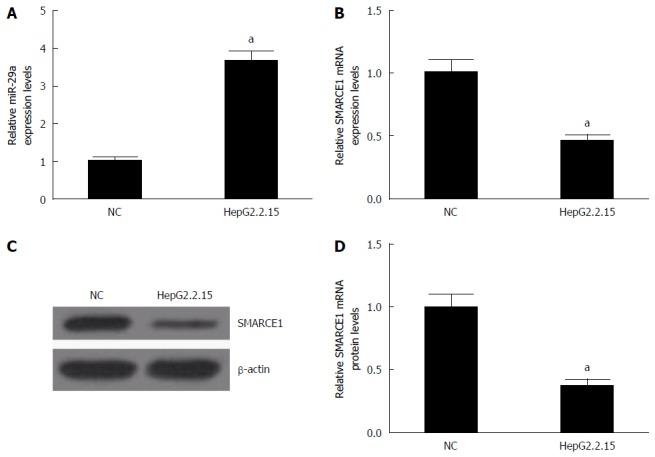
The levels of miR-29a and SMARCE1 in HBV-infected HepG2.2.15 cells were measured by quantitative real-time PCR and western blot analysis. HBV DNA replication was measured by quantitative PCR and Southern blot analysis. The relative levels of hepatitis B surface antigen and hepatitis B e antigen were detected by enzyme-linked immunosorbent assay. The Cell Counting Kit-8 (CCK-8) was used to detect the viability of HepG2.2.15 cells. The relationship between miR-29a and SMARCE1 were identified by target prediction and luciferase reporter analysis.
RESULTS
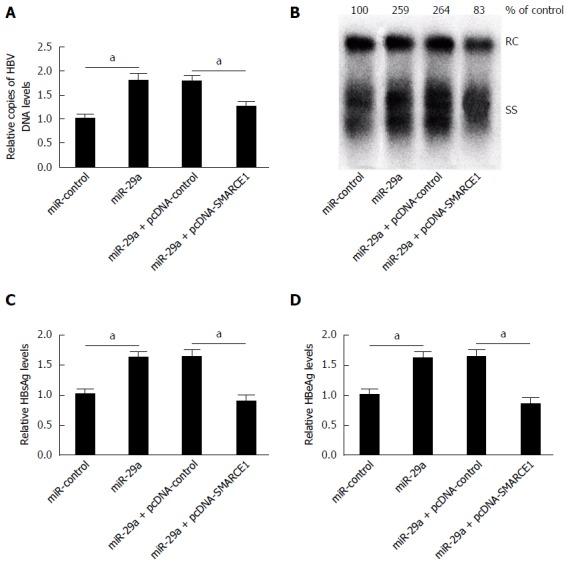
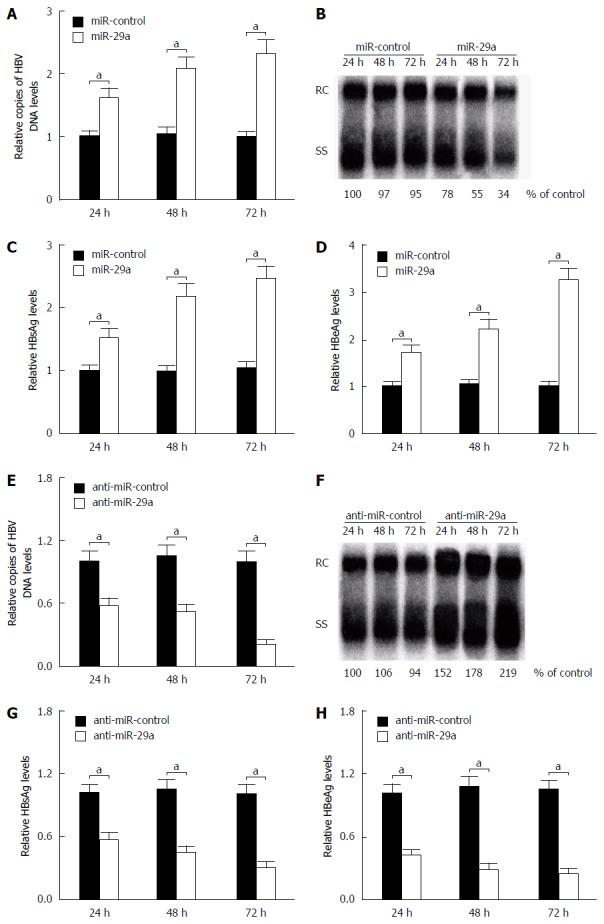
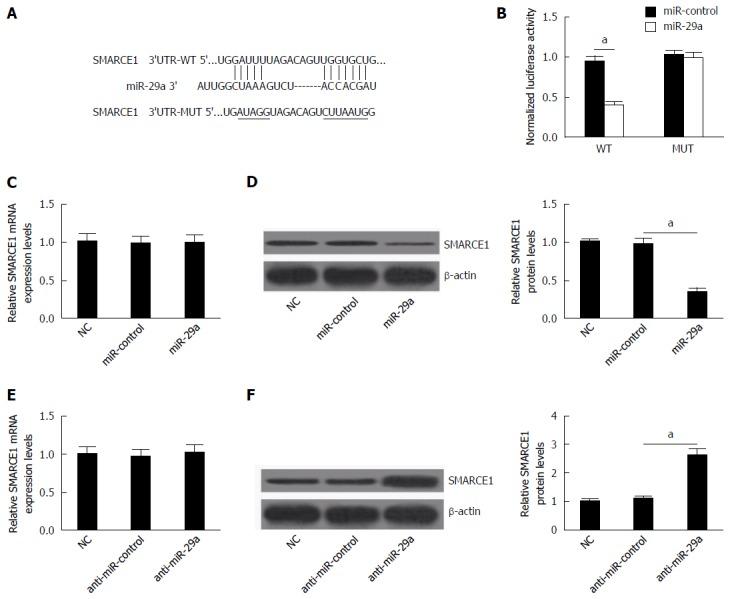
miR-29a promoted HBV replication and expression, while SMARCE1 repressed HBV replication and expression. Cell viability detection indicated that miR-29a transfection had no adverse effect on the host cells. Moreover, SMARCE1 was identified and validated to be a functional target of miR-29a. Furthermore, restored expression of SMARCE1 could relieve the increased HBV replication and expression caused by miR-29a overexpression.
CONCLUSION
miR-29a promotes HBV replication and expression through regulating SMARCE1. As a potential regulator of HBV replication and expression, miR-29a could be a promising therapeutic target for patients with HBV infection.
目的
探讨miR-29a在乙型肝炎病毒(HBV)表达和复制中的功能作用及潜在分子机制。
方法
采用定量实时PCR和蛋白质免疫印迹分析检测HBV感染的HepG2.2.15细胞中miR-29a和SMARCE1的水平。通过定量PCR和Southern印迹分析检测HBV DNA复制情况。采用酶联免疫吸附测定法检测乙型肝炎表面抗原和乙型肝炎e抗原的相对水平。使用细胞计数试剂盒-8(CCK-8)检测HepG2.2.15细胞的活力。通过靶标预测和荧光素酶报告基因分析确定miR-29a与SMARCE1之间的关系。
结果
miR-29a促进HBV复制和表达,而SMARCE1抑制HBV复制和表达。细胞活力检测表明,转染miR-29a对宿主细胞无不良影响。此外,SMARCE1被鉴定并验证为miR-29a的功能靶标。此外,恢复SMARCE1的表达可缓解由miR-29a过表达引起的HBV复制和表达增加。
结论
miR-29a通过调节SMARCE1促进HBV复制和表达。作为HBV复制和表达的潜在调节因子,miR-29a可能是HBV感染患者有前景的治疗靶点。


 Zotero 插件