
一种用于HOXA9和HOXA10启动子的远程交互式DNA甲基化标记物面板可预测乳腺癌患者的生存率。
A long-range interactive DNA methylation marker panel for the promoters of HOXA9 and HOXA10 predicts survival in breast cancer patients.
作者信息
Park Seong-Min, Choi Eun-Young, Bae Mingyun, Choi Jung Kyoon, Kim Youn-Jae
机构信息
Translational Research Branch, Research Institute, National Cancer Center, Goyang, Gyeonggi 10408 Republic of Korea.
Personalized Genomic Medicine Research Center, KRIBB, Daejeon, 34141 Republic of Korea.
出版信息
Clin Epigenetics. 2017 Jul 24;9:73. doi: 10.1186/s13148-017-0373-z. eCollection 2017.
BACKGROUND
Most DNA cancer methylation markers are based on the transcriptional regulation of the promoter-gene relationship. Recently, the importance of long-range interactions between distal CpGs and target genes has been revealed. Here, we attempted to identify methylation markers for breast cancer that interact with distant genes.
RESULTS
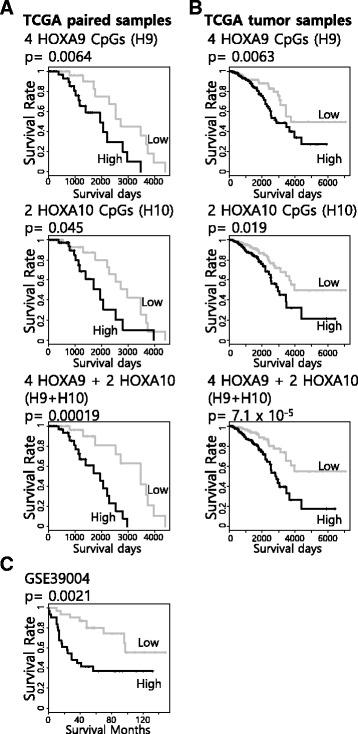
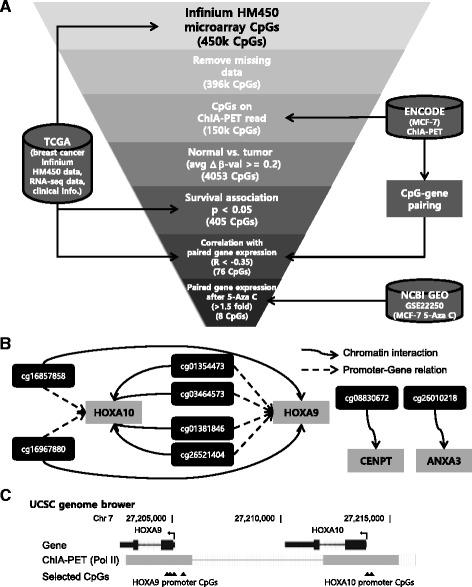
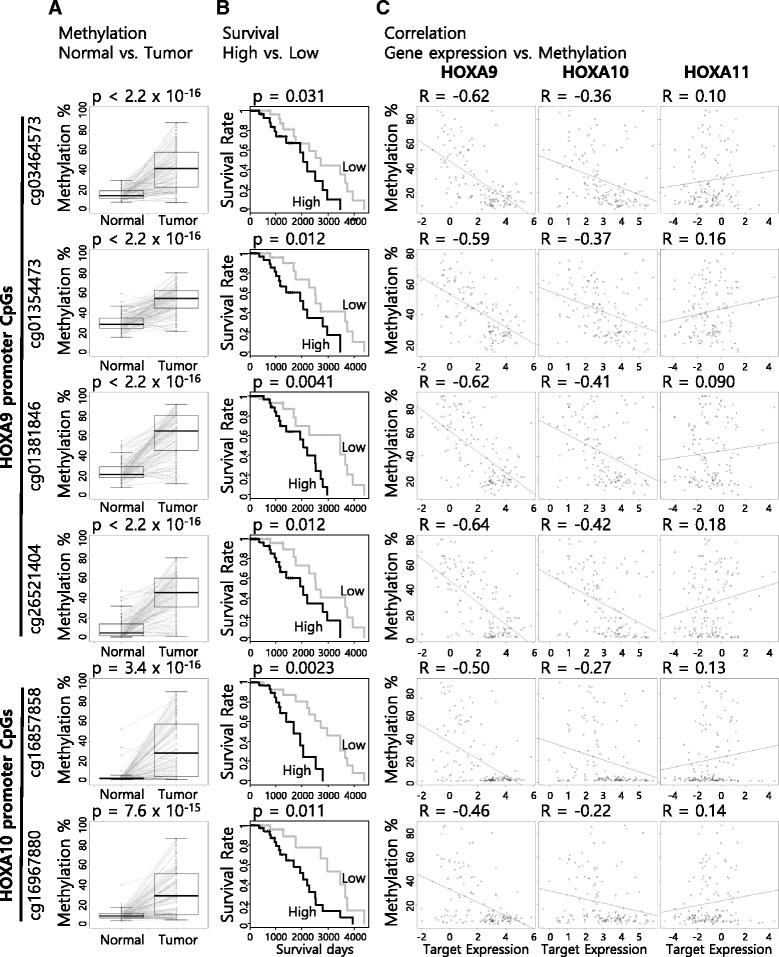
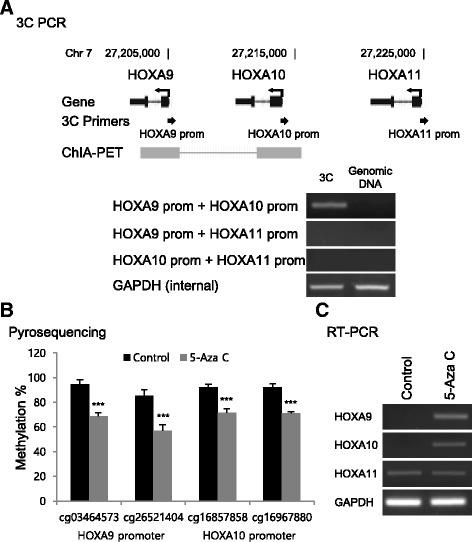
We performed integrated analysis using chromatin interactome data, methylome data, transcriptome data, and clinical information for breast cancer from public databases. Using the chromatin interactome and methylome data, we defined CpG-distant target gene relationships. After determining the differences in methylation between tumor and paired normal samples, the survival association, and the correlation between CpG methylation and distant target gene expression, we selected CpG methylation marker candidates. Using Cox proportional hazards models, we combined the selected markers and evaluated the prognostic model. We identified six methylation markers in HOXA9 and HOXA10 promoter regions and their long-range target genes. We experimentally validated the chromatin interactions, methylation status, and transcriptional regulation. A prognostic model showed that the combination of six methylation markers was highly associated with poor survival in independent datasets. According to our multivariate analysis, the prognostic model showed significantly better prognostic ability than other histological and molecular markers.
CONCLUSIONS
The combination of long-range interacting HOXA9 and HOXA10 promoter CpGs predicted the survival of breast cancer patients, providing a comprehensive and novel approach for discovering new methylation markers.
背景
大多数DNA癌症甲基化标志物基于启动子-基因关系的转录调控。最近,已揭示了远端CpG与靶基因之间长程相互作用的重要性。在此,我们试图鉴定与远距离基因相互作用的乳腺癌甲基化标志物。
结果
我们使用来自公共数据库的乳腺癌染色质相互作用组数据、甲基化组数据、转录组数据和临床信息进行了综合分析。利用染色质相互作用组和甲基化组数据,我们定义了CpG-远距离靶基因关系。在确定肿瘤与配对正常样本之间的甲基化差异、生存关联性以及CpG甲基化与远距离靶基因表达之间的相关性后,我们选择了CpG甲基化标志物候选物。使用Cox比例风险模型,我们将所选标志物进行组合并评估了预后模型。我们在HOXA9和HOXA10启动子区域及其远距离靶基因中鉴定出六个甲基化标志物。我们通过实验验证了染色质相互作用、甲基化状态和转录调控。一个预后模型显示,六个甲基化标志物的组合与独立数据集中的不良生存高度相关。根据我们的多变量分析,该预后模型显示出比其他组织学和分子标志物显著更好的预后能力。
结论
远距离相互作用的HOXA9和HOXA10启动子CpG的组合预测了乳腺癌患者的生存情况,为发现新的甲基化标志物提供了一种全面且新颖的方法。
 Zotero 插件