
CD28+ T 细胞在 T 淋巴细胞刺激过程中端粒长度的维持。
The Maintenance of Telomere Length in CD28+ T Cells During T Lymphocyte Stimulation.
机构信息
Department of Cell Biology, UT Southwestern Medical Center, 5323 Harry Hines Blvd., Dallas, TX, 75390, USA.
出版信息
Sci Rep. 2017 Jul 28;7(1):6785. doi: 10.1038/s41598-017-05174-7.
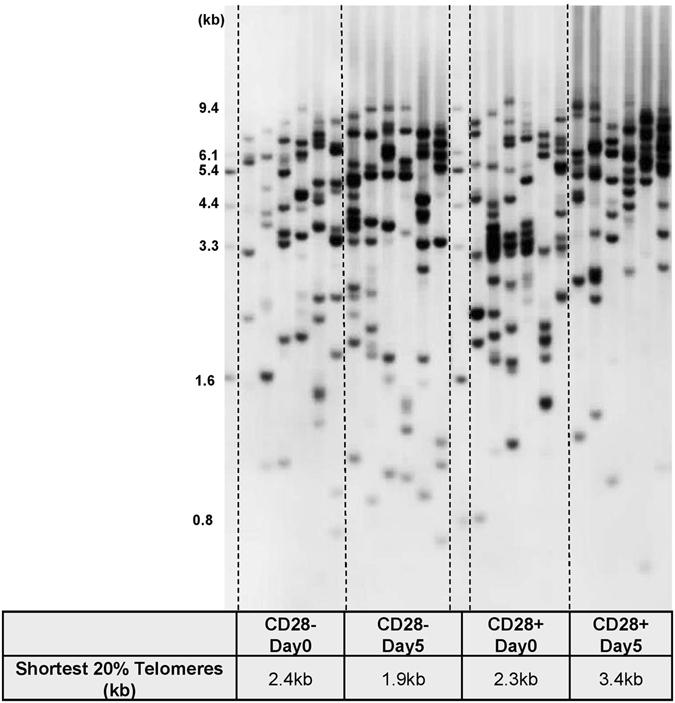
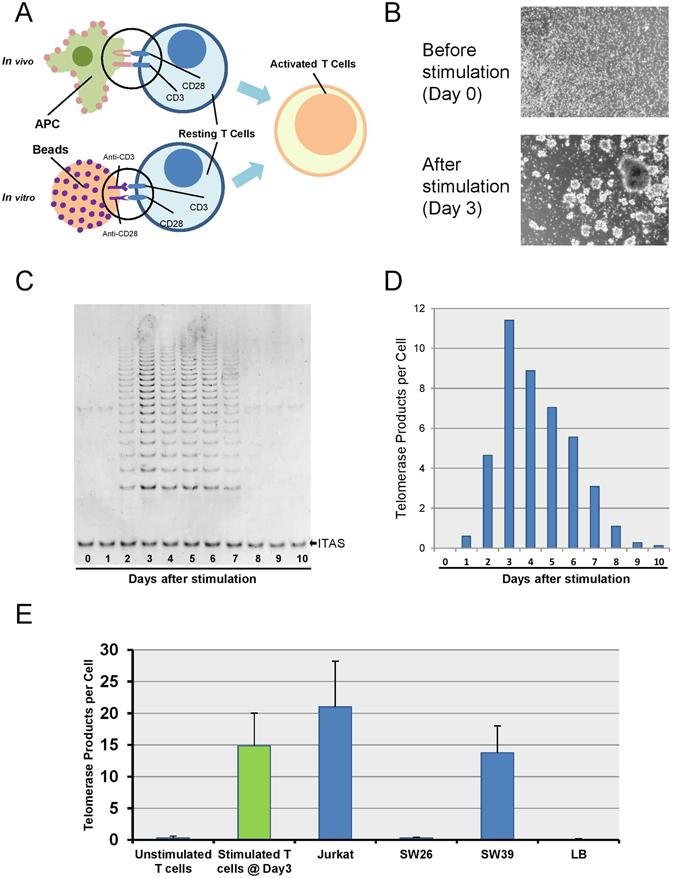
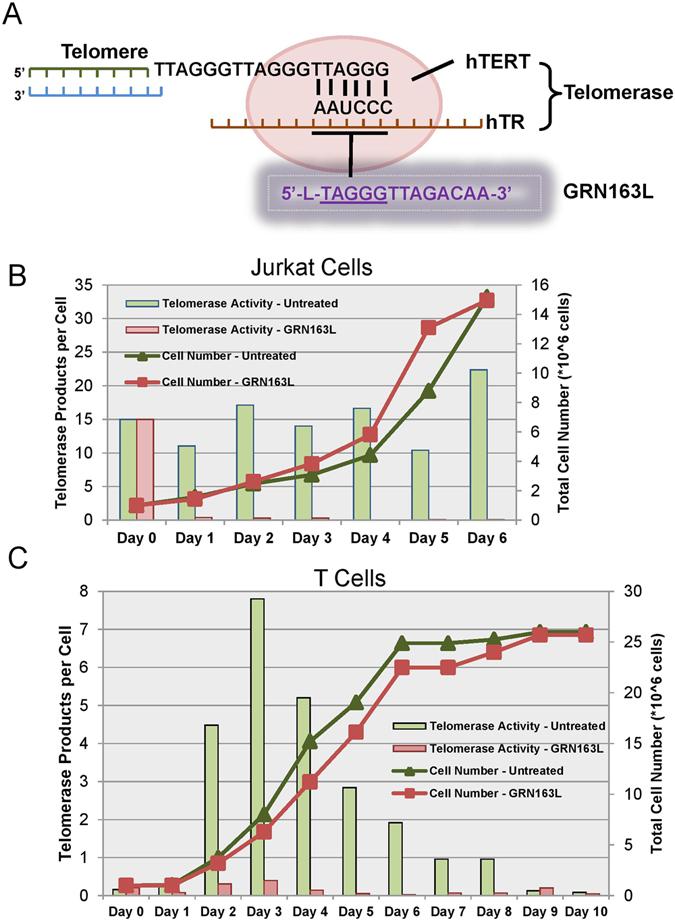
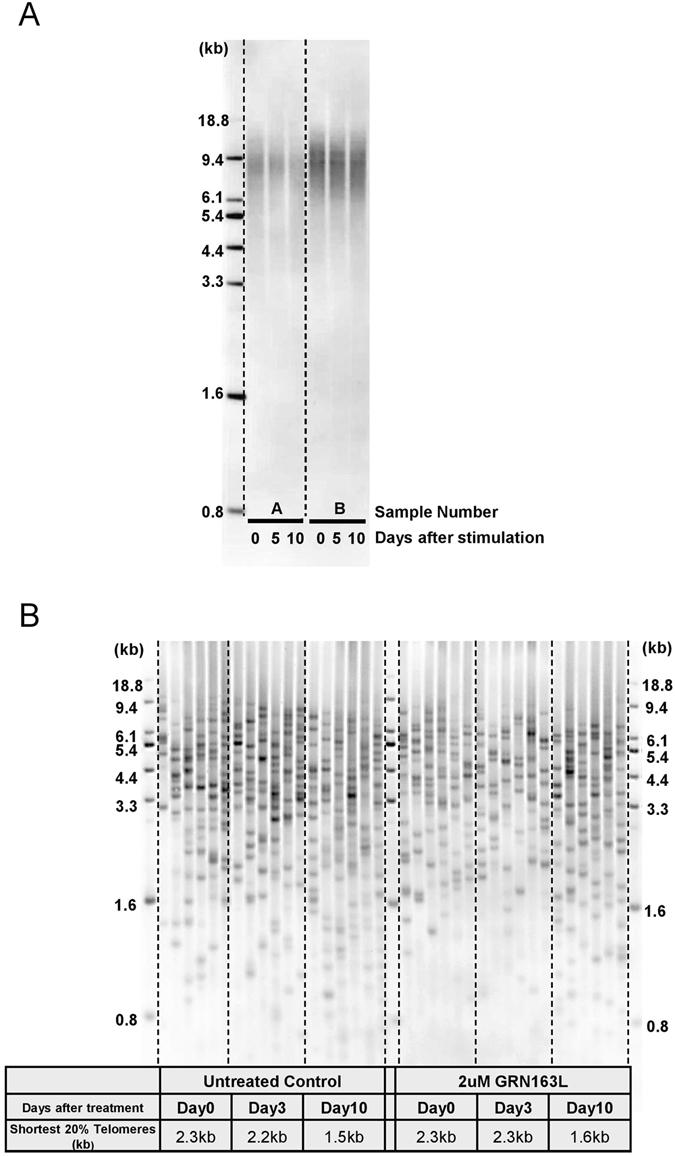
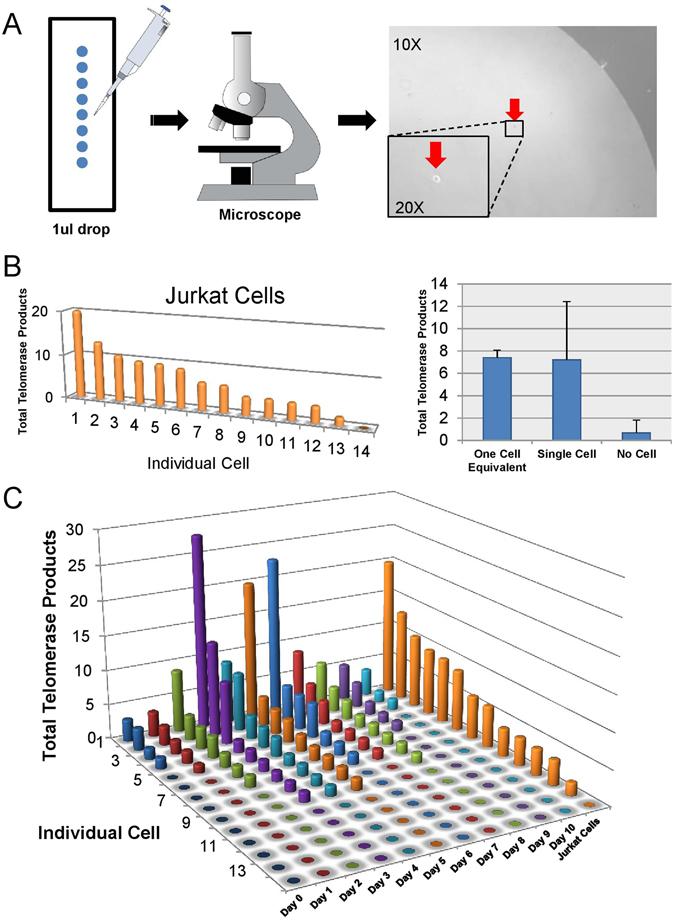
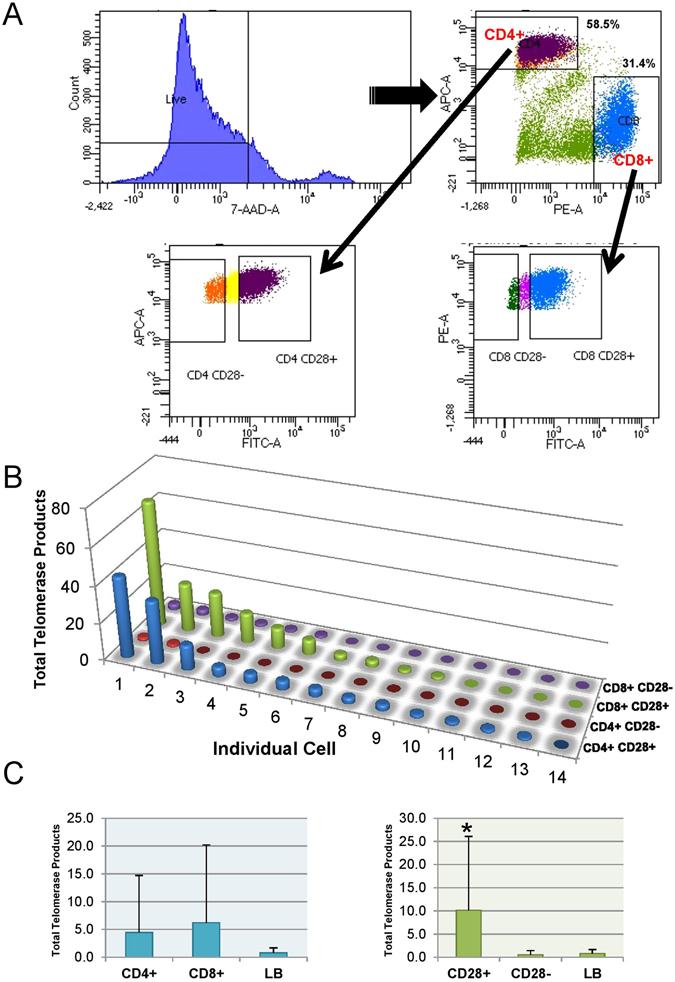
Telomerase activity is not readily detected in resting human T lymphocytes, however upon antigen presentation, telomerase is transiently upregulated. Presently, it is not known if telomerase activation is necessary for the proliferation of T cells or for the maintenance of telomere lengths. In this study, we found that telomerase activation is not required for the short- term proliferation of T cells and that telomeres progressively shorten in a heterogeneous population of T cells, even if telomerase is detected. By measuring telomerase activity at the single-cell level using quantitative ddPCR techniques (ddTRAP) and by monitoring changes in the shortest telomeres with more sensitive telomere length measurement assays, we show that only a subset of CD28+ T-cells have robust telomerase activity upon stimulation and are capable of maintaining their telomere lengths during induced proliferation. The study of this T-cell subset may lead to a better understanding on how telomerase is regulated and functions in immune cells.
端粒酶活性在静息的人类 T 淋巴细胞中不易被检测到,但在抗原呈递后,端粒酶会短暂地上调。目前尚不清楚端粒酶的激活对于 T 细胞的增殖是否必要,或者对于端粒长度的维持是否必要。在这项研究中,我们发现端粒酶的激活对于 T 细胞的短期增殖并不是必需的,而且即使检测到端粒酶,端粒也会在异质的 T 细胞群体中逐渐缩短。通过使用定量 ddPCR 技术(ddTRAP)在单细胞水平上测量端粒酶活性,并通过更敏感的端粒长度测量测定来监测最短端粒的变化,我们表明只有一部分 CD28+T 细胞在受到刺激时具有强大的端粒酶活性,并且能够在诱导增殖期间维持其端粒长度。对这一 T 细胞亚群的研究可能有助于更好地理解端粒酶在免疫细胞中的调控和功能。
 Zotero 插件