
眼表疾病中干眼的致病因素分析与治疗
Analysis of the Pathogenic Factors and Management of Dry Eye in Ocular Surface Disorders.
作者信息
Nebbioso Marcella, Del Regno Paola, Gharbiya Magda, Sacchetti Marta, Plateroti Rocco, Lambiase Alessandro
机构信息
Department of Sense Organs, Policlinico Umberto I, Sapienza University of Rome, Piazzale Aldo Moro 5, 00185 Rome, Italy.
出版信息
Int J Mol Sci. 2017 Aug 13;18(8):1764. doi: 10.3390/ijms18081764.
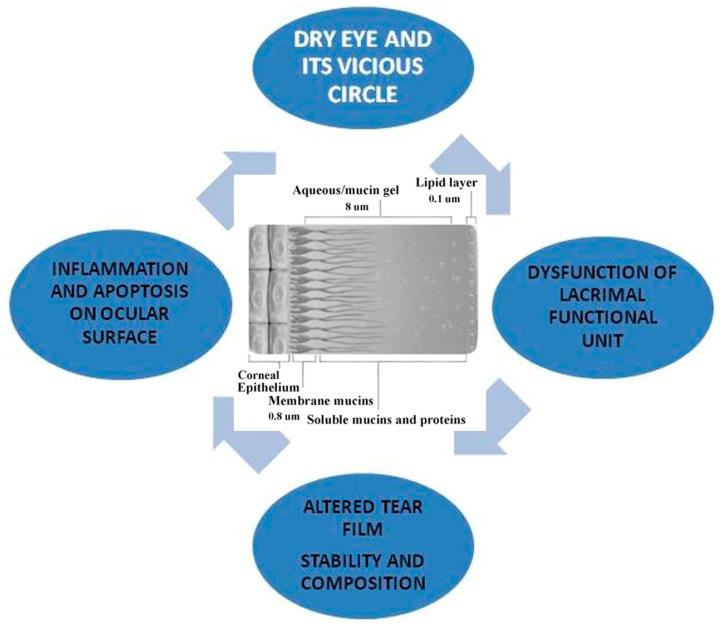
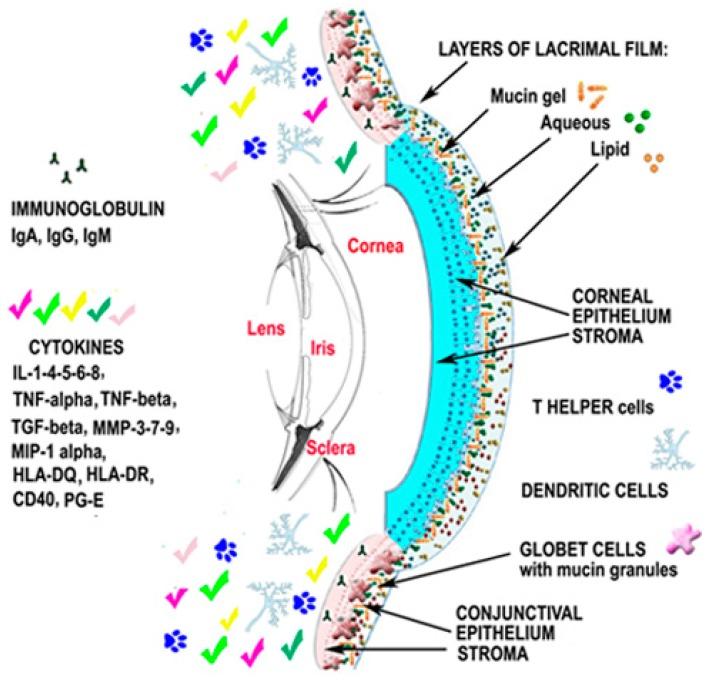
The tear film represents the interface between the eye and the environment. The alteration of the delicate balance that regulates the secretion and distribution of the tear film determines the dry eye (DE) syndrome. Despite having a multifactorial origin, the main risk factors are female gender and advanced age. Likewise, morphological changes in several glands and in the chemical composition of their secretions, such as proteins, mucins, lipidics, aqueous tears, and salinity, are highly relevant factors that maintain a steady ocular surface. Another key factor of recurrence and onset of the disease is the presence of local and/or systemic inflammation that involves the ocular surface. DE syndrome is one of the most commonly encountered diseases in clinical practice, and many other causes related to daily life and the increase in average life expectancy will contribute to its onset. This review will consider the disorders of the ocular surface that give rise to such a widespread pathology. At the end, the most recent therapeutic options for the management of DE will be briefly discussed according to the specific underlying pathology.
泪膜代表眼睛与外界环境的界面。调节泪膜分泌和分布的微妙平衡发生改变会引发干眼(DE)综合征。尽管干眼综合征有多种成因,但主要风险因素是女性性别和高龄。同样,多个腺体及其分泌物的化学成分(如蛋白质、黏蛋白、脂质、水样泪液和盐度)发生形态变化,也是维持眼表稳定的重要因素。疾病复发和发病的另一个关键因素是涉及眼表的局部和/或全身炎症。干眼综合征是临床实践中最常见的疾病之一,许多与日常生活及平均预期寿命增加相关的其他因素也会导致其发病。本综述将探讨引发这种广泛病理状况的眼表疾病。最后,将根据具体潜在病理情况简要讨论干眼治疗的最新选择。

 Zotero 插件