
糖尿病急性缺血性脑卒中患者血糖变异性范围及3个月预后
Range of glucose as a glycemic variability and 3-month outcome in diabetic patients with acute ischemic stroke.
作者信息
Kim Young Seo, Kim Chulho, Jung Keun-Hwa, Kwon Hyung-Min, Heo Sung Hyuk, Kim Beom Joon, Kim Young Dae, Kim Jeong-Min, Lee Seung-Hoon
机构信息
Department of Neurology, Hanyang University School of Medicine, Seoul, Republic of Korea.
Department of Neurology, Chuncheon Sacred Heart Hospital, Chuncheon, Republic of Korea.
出版信息
PLoS One. 2017 Sep 7;12(9):e0183894. doi: 10.1371/journal.pone.0183894. eCollection 2017.
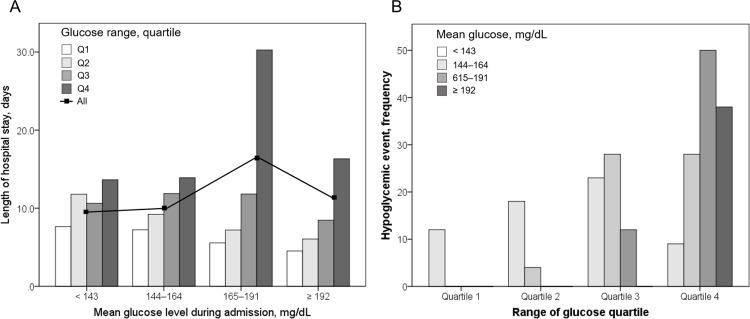
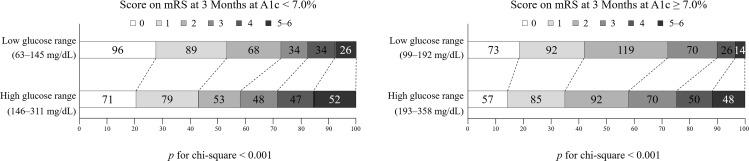
Glycemic variability (GV) is reportedly a predictor for poor outcome in various clinical conditions. We aimed to assess whether GV during hospital admission is associated with poor outcomes in patients with acute ischemic stroke (AIS) and diabetes. We prospectively enrolled consecutive patients with AIS from the registry of 6 tertiary hospitals between January 2013 and December 2014. For the GV index, we used a glucose level range that was divided into 4 quartiles. Multivariable binary and ordinal logistic regression analyses were performed to determine the association between GV and the modified Rankin Scale score (3-6) at 3 months. We enrolled 1,504 patients with AIS and diabetes (mean age, 68.1 years; male, 57.2%), of which 35.1% had poor outcomes at 3 months. An increasing glucose range quartile was positively associated with initial neurologic severity and development of hypoglycemia during hospital admission. Multivariable analysis showed that the glucose level range quartile was associated with poor outcomes, even after adjusting for the number of glucose measurement and hypoglycemia (odds ratio [OR] Q2 vs. Q1: 1.50, 95% confidence interval [CI]: 1.02-2.18; OR Q3 vs. Q1: 2.01, 95% CI: 1.34-3.01; OR Q4 vs. Q1: 1.98, 95% CI: 1.22-3.23). These associations remained significant after dichotomization according to glycated hemoglobin levels at admission. An increasing glucose level range as a GV index during hospital admission was associated with poor functional outcomes at 3 months in patients with AIS and diabetes.
据报道,血糖变异性(GV)是各种临床情况下预后不良的预测指标。我们旨在评估住院期间的GV是否与急性缺血性卒中(AIS)合并糖尿病患者的不良预后相关。我们前瞻性地纳入了2013年1月至2014年12月期间6家三级医院登记的连续AIS患者。对于GV指数,我们使用了分为4个四分位数的血糖水平范围。进行多变量二元和有序逻辑回归分析,以确定GV与3个月时改良Rankin量表评分(3 - 6分)之间的关联。我们纳入了1504例AIS合并糖尿病患者(平均年龄68.1岁;男性占57.2%),其中35.1%在3个月时预后不良。血糖范围四分位数增加与初始神经功能严重程度及住院期间低血糖的发生呈正相关。多变量分析显示,即使在调整血糖测量次数和低血糖因素后,血糖水平范围四分位数仍与不良预后相关(比值比[OR]:Q2与Q1相比为1.50,95%置信区间[CI]:1.02 - 2.18;OR Q3与Q1相比为2.01,95% CI:1.34 - 3.01;OR Q4与Q1相比为1.98,95% CI:1.22 - 3.23)。根据入院时糖化血红蛋白水平进行二分法分析后,这些关联仍然显著。住院期间作为GV指数的血糖水平范围增加与AIS合并糖尿病患者3个月时的不良功能预后相关。

 Zotero 插件