
对 282 例儿童低级别和高级别神经胶质瘤的全面基因组分析揭示了基因组驱动因素、肿瘤突变负担和超突变特征。
Comprehensive Genomic Profiling of 282 Pediatric Low- and High-Grade Gliomas Reveals Genomic Drivers, Tumor Mutational Burden, and Hypermutation Signatures.
机构信息
Foundation Medicine, Inc., Morrisville, North Carolina and Cambridge, Massachusetts, USA.
Department of Neurosurgery, University of Texas Health Science Center, Houston, Texas, USA.
出版信息
Oncologist. 2017 Dec;22(12):1478-1490. doi: 10.1634/theoncologist.2017-0242. Epub 2017 Sep 14.
BACKGROUND
Pediatric brain tumors are the leading cause of death for children with cancer in the U.S. Incorporating next-generation sequencing data for both pediatric low-grade (pLGGs) and high-grade gliomas (pHGGs) can inform diagnostic, prognostic, and therapeutic decision-making.
MATERIALS AND METHODS
We performed comprehensive genomic profiling on 282 pediatric gliomas (157 pHGGs, 125 pLGGs), sequencing 315 cancer-related genes and calculating the tumor mutational burden (TMB; mutations per megabase [Mb]).
RESULTS
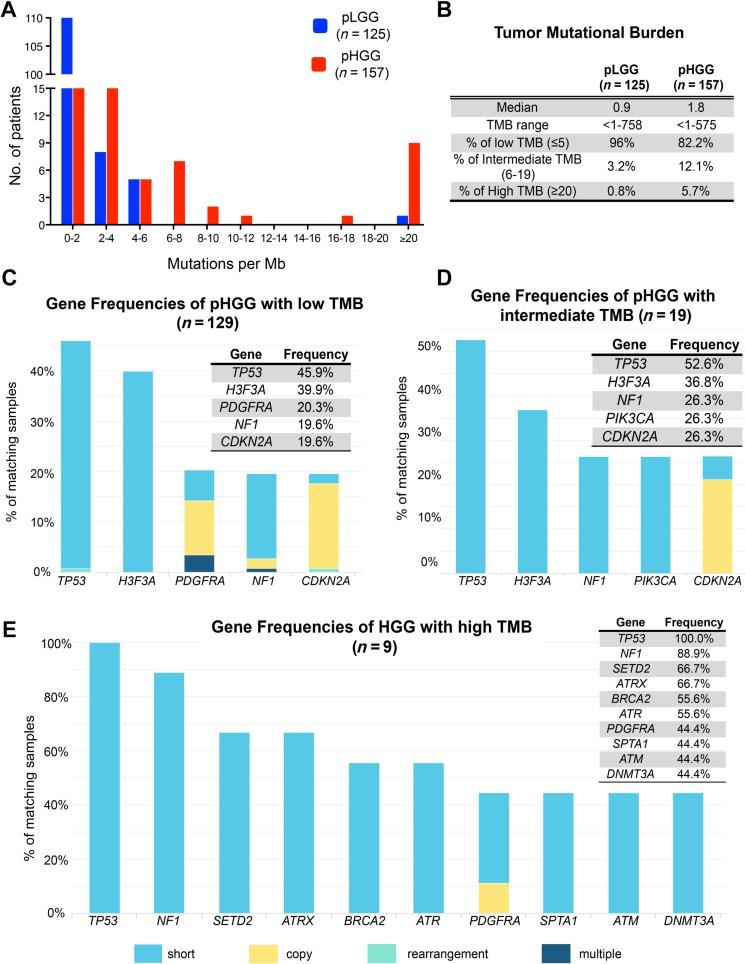
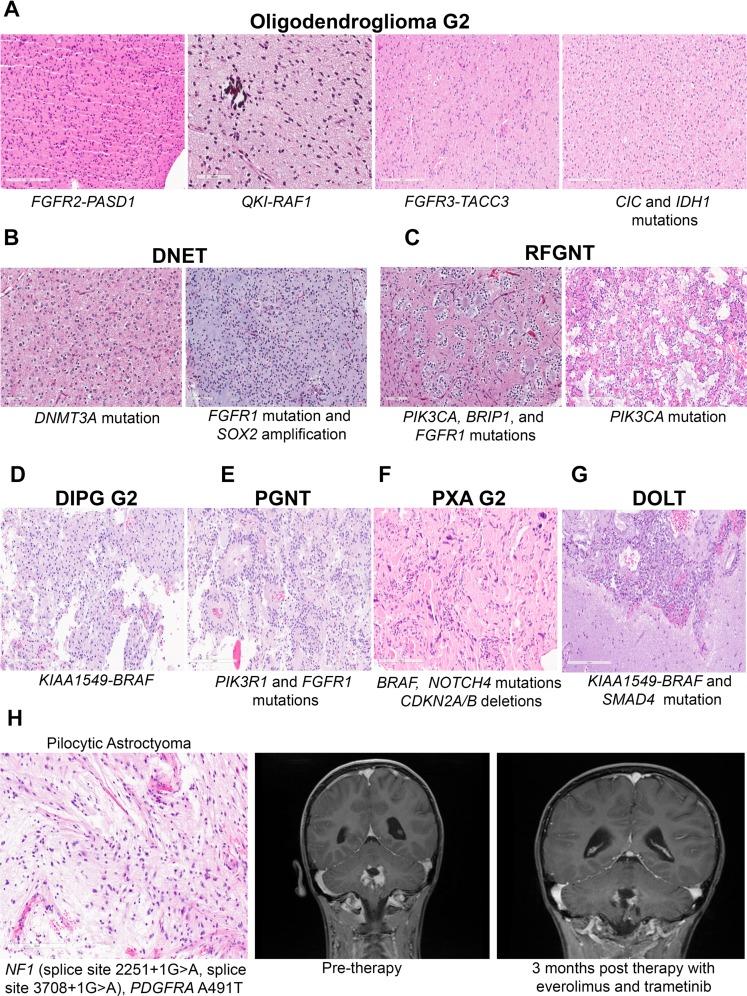
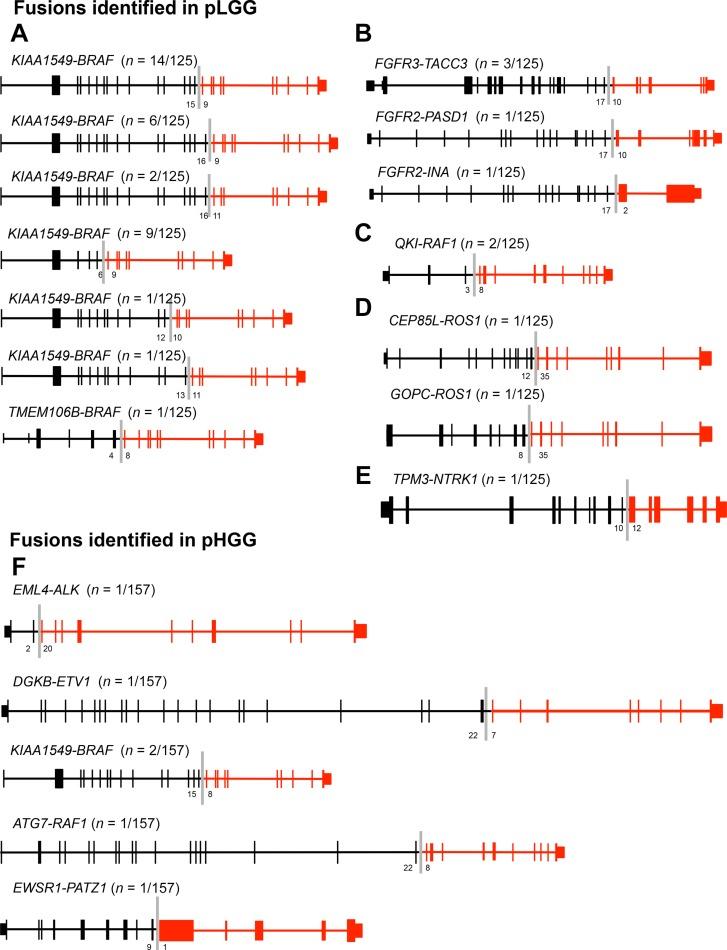
In pLGGs, we detected genomic alterations (GA) in 95.2% (119/125) of tumors. was most frequently altered (48%; 60/125), and missense (17.6%; 22/125), loss of function (8.8%; 11/125), and (5.6%; 7/125) mutations were also detected. Rearrangements were identified in 35% of pLGGs, including , , , , and fusions. Among pHGGs, GA were identified in 96.8% (152/157). The genes most frequently mutated were (49%; 77/157), (37.6%; 59/157), (24.2%; 38/157), (22.2%; 35/157), and (21.7%; 34/157). Interestingly, most mutations (81.4%; 35/43) were the variant K28M. Midline tumor analysis revealed mutations (40%; 40/100) consisted solely of the K28M variant. Pediatric high-grade gliomas harbored oncogenic , , , and fusions. Six percent (9/157) of pHGGs were hypermutated (TMB >20 mutations per Mb; range 43-581 mutations per Mb), harboring mutations deleterious for DNA repair in , and genes (78% of cases).
CONCLUSION
Comprehensive genomic profiling of pediatric gliomas provides objective data that promote diagnostic accuracy and enhance clinical decision-making. Additionally, TMB could be a biomarker to identify pediatric glioblastoma (GBM) patients who may benefit from immunotherapy.
IMPLICATIONS FOR PRACTICE
By providing objective data to support diagnostic, prognostic, and therapeutic decision-making, comprehensive genomic profiling is necessary for advancing care for pediatric neuro-oncology patients. This article presents the largest cohort of pediatric low- and high-grade gliomas profiled by next-generation sequencing. Reportable alterations were detected in 95% of patients, including diagnostically relevant lesions as well as novel oncogenic fusions and mutations. Additionally, tumor mutational burden (TMB) is reported, which identifies a subpopulation of hypermutated glioblastomas that harbor deleterious mutations in DNA repair genes. This provides support for TMB as a potential biomarker to identify patients who may preferentially benefit from immune checkpoint inhibitors.
背景
小儿脑肿瘤是美国儿童癌症死亡的主要原因。纳入下一代测序数据,用于小儿低级别(pLGGs)和高级别神经胶质瘤(pHGGs),可以为诊断、预后和治疗决策提供信息。
材料和方法
我们对 282 例小儿神经胶质瘤(157 例 pHGGs,125 例 pLGGs)进行了全面的基因组分析,对 315 个与癌症相关的基因进行了测序,并计算了肿瘤突变负荷(TMB;每兆碱基 [Mb] 的突变数)。
结果
在 pLGGs 中,我们检测到 95.2%(119/125)的肿瘤存在基因组改变(GA)。 是最常改变的基因(48%;60/125),其次是 错义(17.6%;22/125)、 功能丧失(8.8%;11/125)和 缺失(5.6%;7/125)突变。35%的 pLGGs 存在重排,包括 、 、 、 和 融合。在 pHGGs 中,GA 发生在 96.8%(152/157)的肿瘤中。最常突变的基因是 (49%;77/157)、 (37.6%;59/157)、 (24.2%;38/157)、 (22.2%;35/157)和 (21.7%;34/157)。有趣的是,大多数 突变(81.4%;35/43)是变体 K28M。中线肿瘤分析显示,40%(40/100)的 突变仅包含 K28M 变体。小儿高级别神经胶质瘤存在致癌的 、 、 和 融合。6%(9/157)的 pHGGs 高度突变(TMB >20 个突变/Mb;范围为 43-581 个突变/Mb),其 DNA 修复基因 中的有害突变, 和 基因(78%的病例)。
结论
对小儿神经胶质瘤的全面基因组分析提供了客观数据,可提高诊断准确性并增强临床决策。此外,TMB 可能是识别可能受益于免疫治疗的小儿脑胶质瘤(GBM)患者的生物标志物。
意义
为支持诊断、预后和治疗决策提供客观数据,全面的基因组分析是小儿神经肿瘤学患者护理进步的必要条件。本文介绍了迄今为止最大的一组经下一代测序分析的小儿低级别和高级别神经胶质瘤。在 95%的患者中检测到可报告的改变,包括具有诊断意义的病变以及新的致癌融合和突变。此外,还报告了肿瘤突变负荷(TMB),它识别出一个亚组高度突变的胶质母细胞瘤,其 DNA 修复基因中存在有害突变。这为 TMB 作为一种潜在的生物标志物,用于识别可能优先受益于免疫检查点抑制剂的患者提供了支持。



 Zotero 插件