
利用凝血酶生成试验探索潜在的抗凝血药物制剂。
Exploring potential anticoagulant drug formulations using thrombin generation test.
作者信息
Zavyalova Elena, Kopylov Alexey
机构信息
Chemistry Department of Lomonosov Moscow State University, 'Apto-Pharm' LTD, Moscow, Russian Federation.
出版信息
Biochem Biophys Rep. 2015 Dec 1;5:111-119. doi: 10.1016/j.bbrep.2015.11.011. eCollection 2016 Mar.
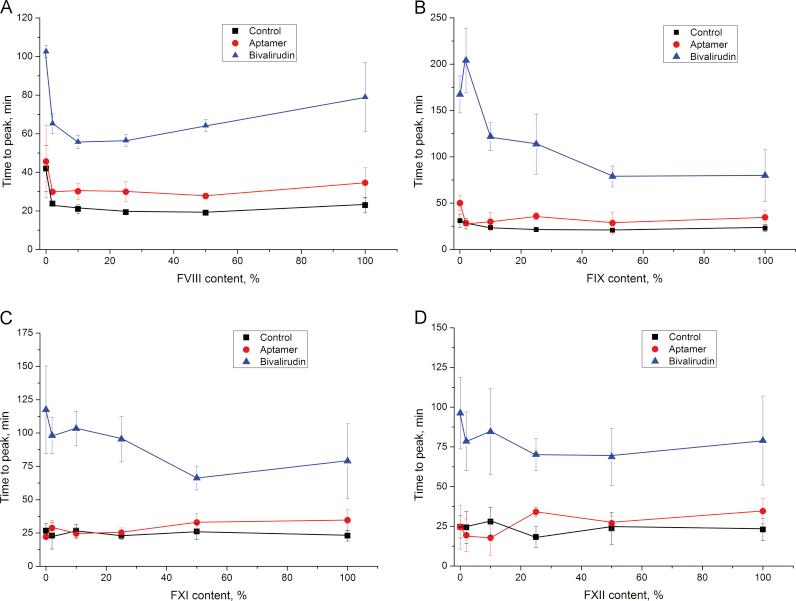
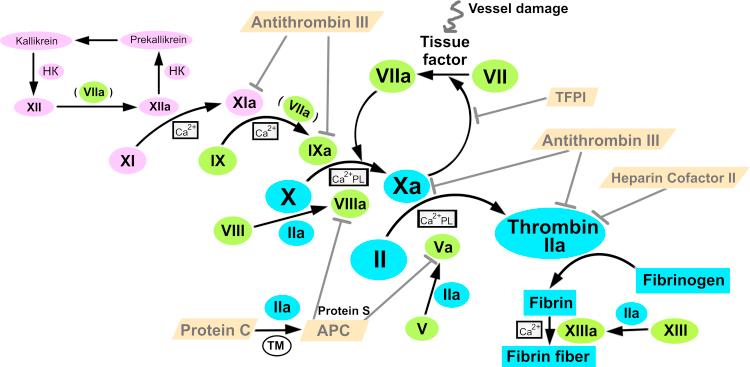
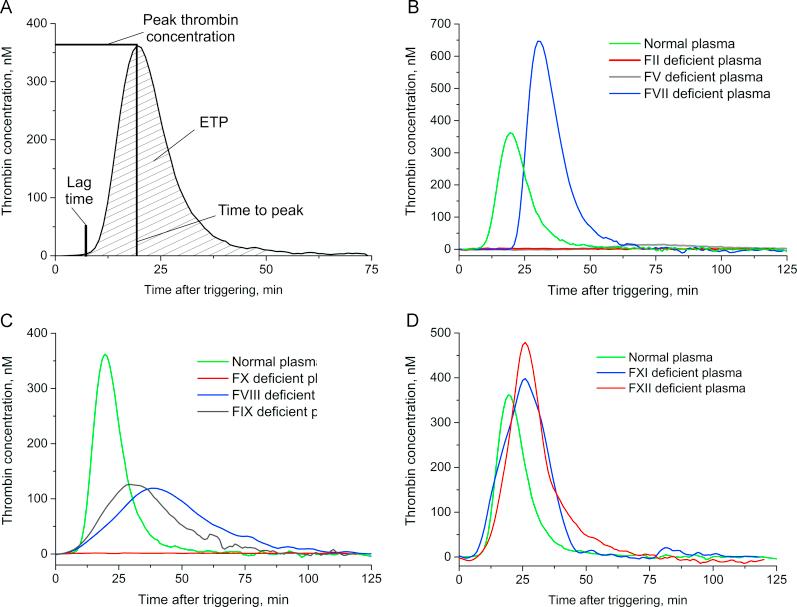
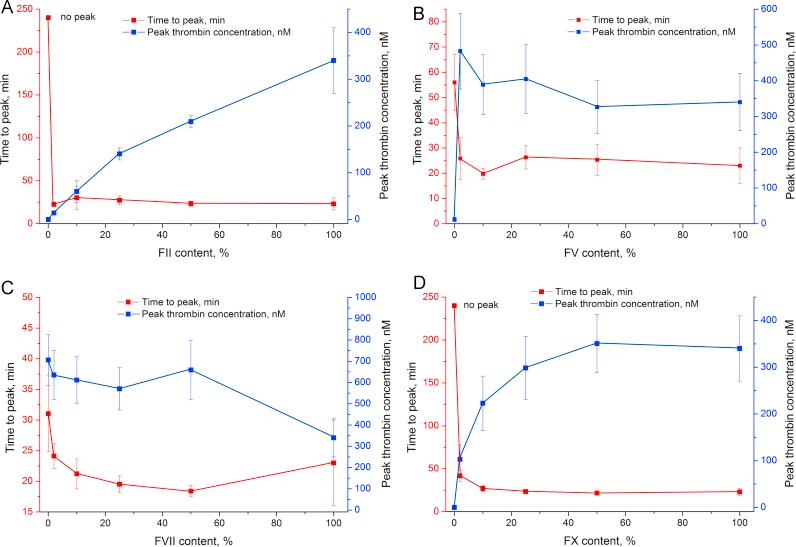
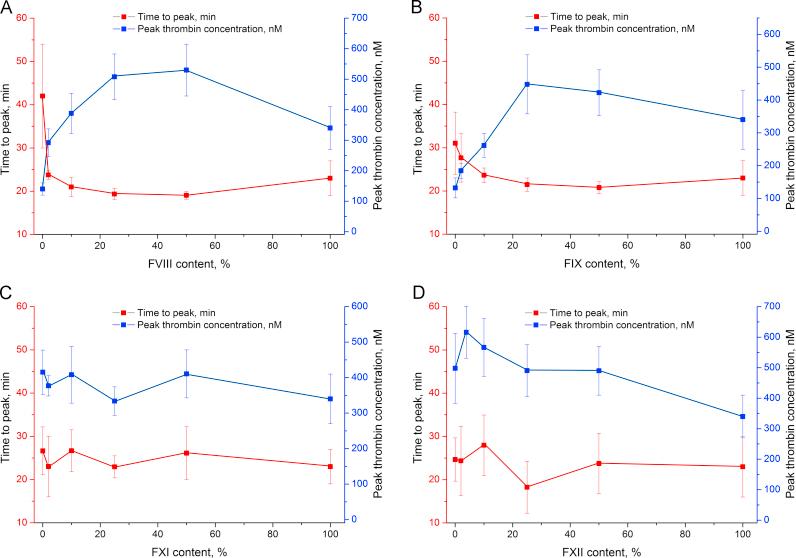
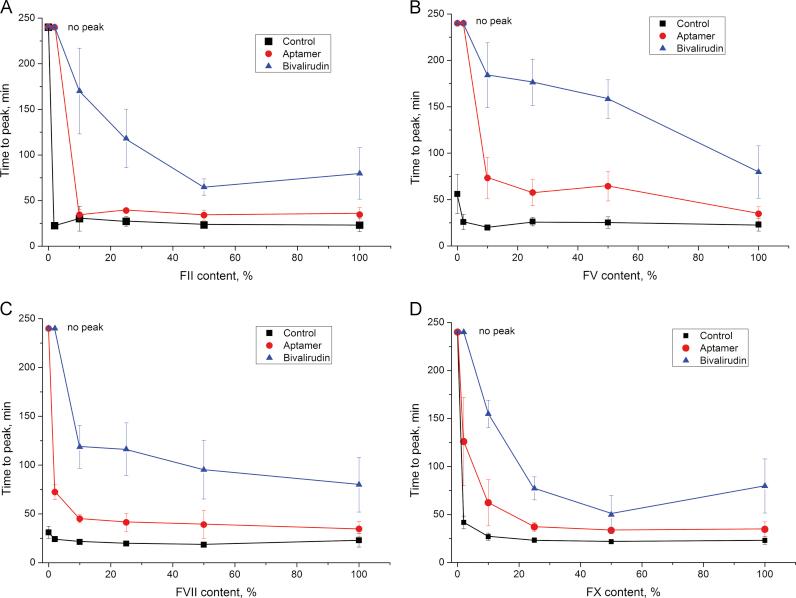
Many anticoagulant drugs inhibiting proteins of the coagulation cascade have been developed. The main targets of anticoagulant drugs are thrombin and factor Xa; inhibiting these factors delays thrombus growth, thus preventing thrombosis while increasing bleeding risk. A balance between thrombosis and bleeding is ensured in the 'therapeutic window' of the anticoagulant drug concentration range. Novel anticoagulant drugs and combinations thereof are being developed. We rank coagulation factors as potential anticoagulant drug targets in combination with thrombin inhibitors, aptamer HD1 and bivalirudin, providing a background for several promising dual target treatment strategies. The thrombin generation test was used to assess the whole coagulation cascade in normal and factor-deficient human blood plasma. Potential therapeutic windows were estimated for coagulation factors, ranking them as targets for anticoagulant drugs. Thrombin and factor Xa have been revealed as the most promising targets, which fully agrees with the current drug development strategy. Inhibitors of factors Va and VIIa are expected to have narrow therapeutic windows. Inhibitors of factors VIIIa and IXa are expected to have a moderate anticoagulant effect. Factors XI and XII are poor targets for anticoagulant drugs. Compared with plasma that is deficient in factor II, the thrombin inhibitors bivalirudin and aptamer HD1 had increased activity. Both inhibitors were tested in deficient plasma providing a model of potential drug combination. The most promising combinations were anti-thrombin with anti-V/Va and also anti-thrombin with anti-IX/IXa. Each combination had an incremental dose-effect dependence that is promising from the standpoint of the therapeutic window.
目前已研发出多种抑制凝血级联反应蛋白的抗凝药物。抗凝药物的主要靶点是凝血酶和Xa因子;抑制这些因子可延缓血栓形成,从而预防血栓形成,但同时会增加出血风险。在抗凝药物浓度范围的“治疗窗”内可确保血栓形成与出血之间的平衡。新型抗凝药物及其组合正在研发中。我们将凝血因子与凝血酶抑制剂、适配体HD1和比伐卢定联合作为潜在的抗凝药物靶点进行排序,为几种有前景的双靶点治疗策略提供背景。凝血酶生成试验用于评估正常和缺乏因子的人血浆中的整个凝血级联反应。估计了凝血因子的潜在治疗窗,并将它们列为抗凝药物的靶点。凝血酶和Xa因子已被证明是最有前景的靶点,这与当前的药物研发策略完全一致。预计Va因子和VIIa因子抑制剂的治疗窗较窄。预计VIIIa因子和IXa因子抑制剂具有中等抗凝作用。XI因子和XII因子不是抗凝药物的理想靶点。与缺乏II因子的血浆相比,凝血酶抑制剂比伐卢定和适配体HD1的活性增强。两种抑制剂均在缺乏因子的血浆中进行了测试,提供了潜在药物组合的模型。最有前景的组合是抗凝血酶与抗V/Va以及抗凝血酶与抗IX/IXa。从治疗窗的角度来看,每种组合都具有递增的剂量效应依赖性,很有前景。

 Zotero 插件