
孕产妇和儿童补充基于脂质的营养补充剂(但并非仅儿童补充)在某些情况下可降低自我报告的家庭粮食不安全状况。
Maternal and Child Supplementation with Lipid-Based Nutrient Supplements, but Not Child Supplementation Alone, Decreases Self-Reported Household Food Insecurity in Some Settings.
作者信息
Adams Katherine P, Ayifah Emmanuel, Phiri Thokozani E, Mridha Malay K, Adu-Afarwuah Seth, Arimond Mary, Arnold Charles D, Cummins Joseph, Hussain Sohrab, Kumwenda Chiza, Matias Susana L, Ashorn Ulla, Lartey Anna, Maleta Kenneth M, Vosti Stephen A, Dewey Kathryn G
机构信息
Departments of Nutrition and
Department of Economics, School of Economic and Business Sciences, University of the Witwatersrand, Johannesburg, South Africa.
出版信息
J Nutr. 2017 Dec;147(12):2309-2318. doi: 10.3945/jn.117.257386. Epub 2017 Oct 4.
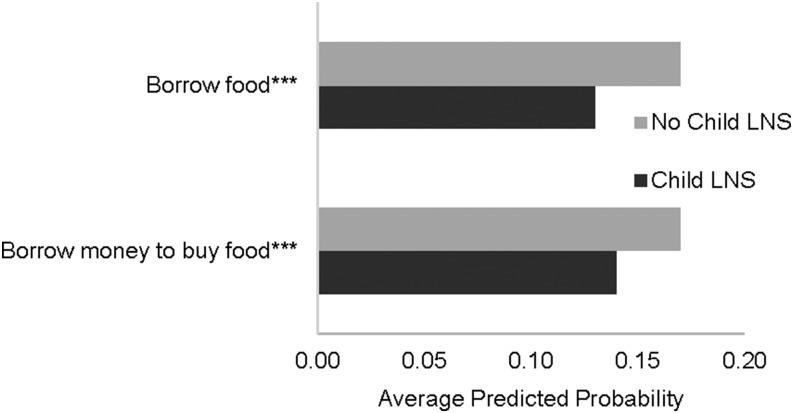
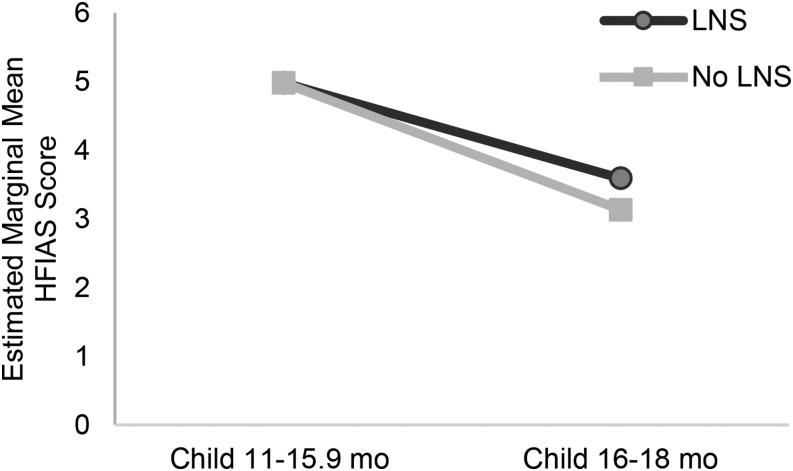
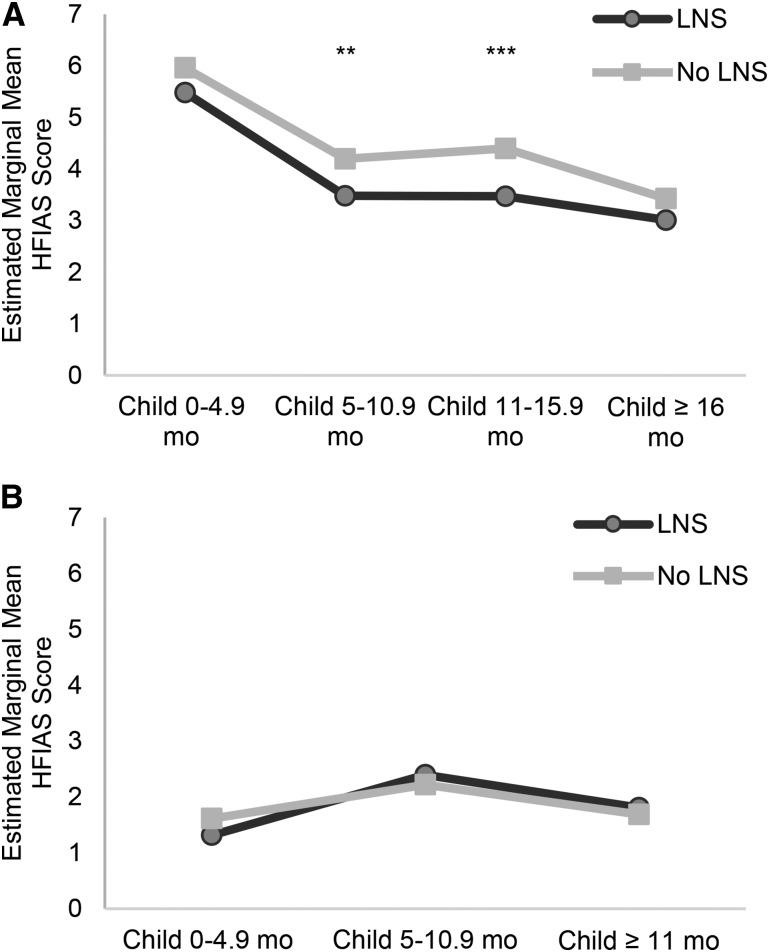
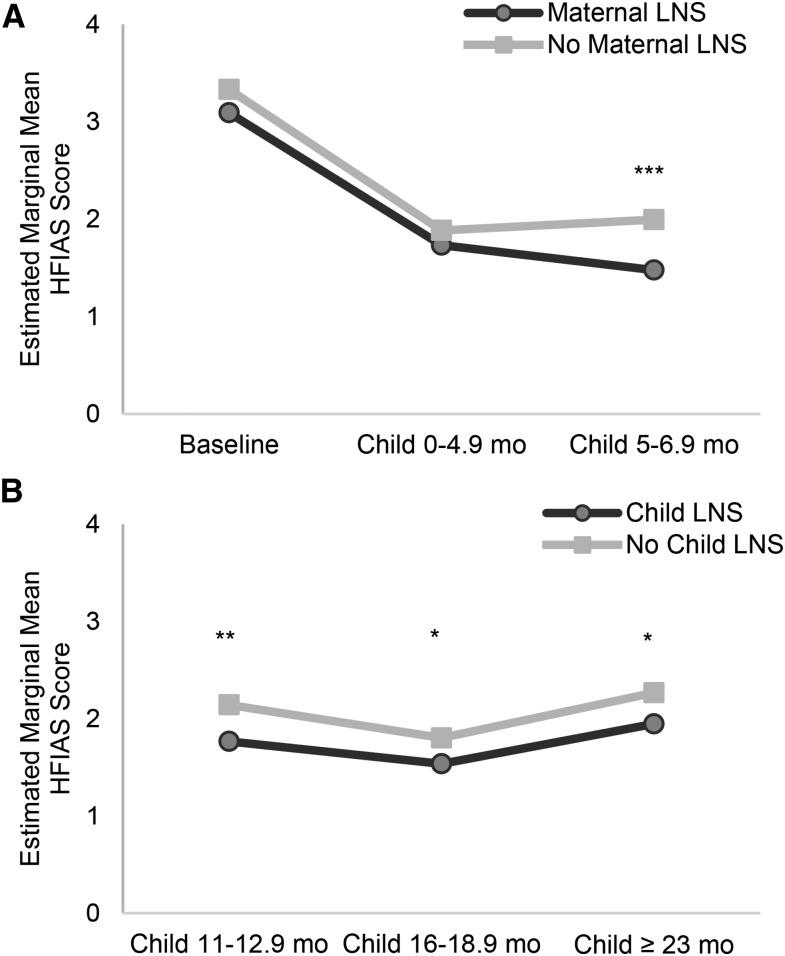
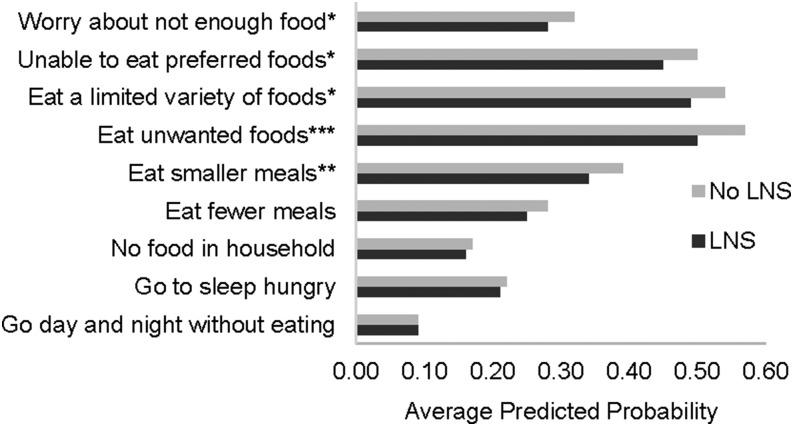
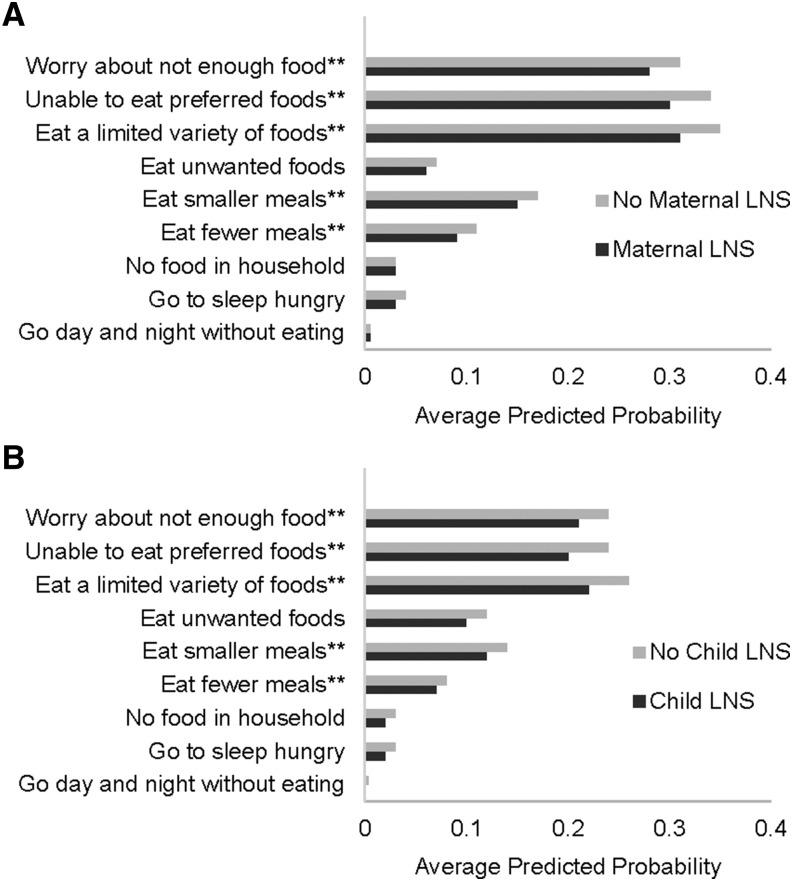
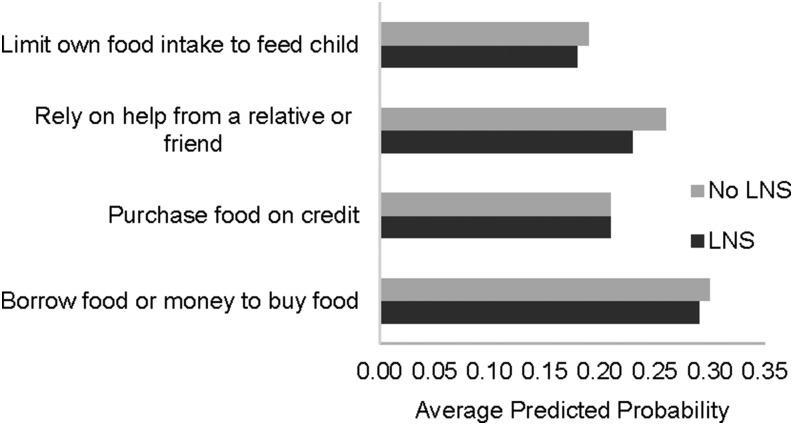
It is unknown whether self-reported measures of household food insecurity change in response to food-based nutrient supplementation. We assessed the impacts of providing lipid-based nutrient supplements (LNSs) to women during pregnancy and postpartum and/or to their children on self-reported household food insecurity in Malawi [DOSE and DYAD trial in Malawi (DYAD-M)], Ghana [DYAD trial in Ghana (DYAD-G)], and Bangladesh [Rang-Din Nutrition Study (RDNS) trial]. Longitudinal household food-insecurity data were collected during 3 individually randomized trials and 1 cluster-randomized trial testing the efficacy or effectiveness of LNSs (generally 118 kcal/d). Seasonally adjusted Household Food Insecurity Access Scale (HFIAS) scores were constructed for 1127 DOSE households, 732 DYAD-M households, 1109 DYAD-G households, and 3671 RDNS households. The impact of providing LNSs to women during pregnancy and the first 6 mo postpartum and/or to their children from 6 to 18-24 mo on seasonally adjusted HFIAS scores was assessed by using negative binomial models (DOSE, DYAD-M, and DYAD-G trials) and mixed-effect negative binomial models (RDNS trial). In the DOSE and DYAD-G trials, seasonally adjusted HFIAS scores were not different between the LNS and non-LNS groups. In the DYAD-M trial, the average household food-insecurity scores were 14% lower ( = 0.01) in LNS households than in non-LNS households. In the RDNS trial, compared with non-LNS households, food-insecurity scores were 17% lower ( = 0.02) during pregnancy and the first 6 mo postpartum and 15% lower ( = 0.02) at 6-24 mo postpartum in LNS households. The daily provision of LNSs to mothers and their children throughout much of the "first 1000 d" may improve household food security in some settings, which could be viewed as an additional benefit that may accrue in households should policy makers choose to invest in LNSs to promote child growth and development. These trials were registered at clinicaltrials.gov as NCT00945698 (DOSE) NCT01239693 (DYAD-M), NCT00970866 (DYAD-G) and NCT01715038 (RDNS).
尚不清楚基于食物的营养补充是否会使自我报告的家庭粮食不安全状况发生变化。我们评估了在马拉维[马拉维剂量与双组试验(DYAD - M)]、加纳[加纳双组试验(DYAD - G)]和孟加拉国[朗丁营养研究(RDNS)试验]中,在孕期和产后向妇女和/或其子女提供基于脂质的营养补充剂(LNS)对自我报告的家庭粮食不安全状况的影响。在3项个体随机试验和1项整群随机试验中收集了纵向家庭粮食不安全数据,这些试验用于测试LNS(通常为每日118千卡)的疗效或效果。为1127个剂量试验家庭、732个DYAD - M家庭、1109个DYAD - G家庭和3671个RDNS家庭构建了经季节调整的家庭粮食不安全获取量表(HFIAS)分数。通过使用负二项模型(剂量试验、DYAD - M试验和DYAD - G试验)和混合效应负二项模型(RDNS试验),评估了在孕期和产后头6个月向妇女和/或6至18 - 24个月的儿童提供LNS对经季节调整的HFIAS分数的影响。在剂量试验和DYAD - G试验中,LNS组和非LNS组的经季节调整的HFIAS分数没有差异。在DYAD - M试验中,LNS家庭的平均家庭粮食不安全得分比非LNS家庭低14%(P = 0.01)。在RDNS试验中,与非LNS家庭相比,LNS家庭在孕期和产后头6个月的粮食不安全得分低17%(P = 0.02),在产后6至24个月低15%(P = 0.02)。在“最初1000天”的大部分时间里,每天向母亲及其子女提供LNS可能会在某些情况下改善家庭粮食安全,这可被视为如果政策制定者选择投资LNS以促进儿童生长发育,家庭可能获得的一项额外益处。这些试验在clinicaltrials.gov上注册为NCT00945698(剂量试验)、NCT01239693(DYAD - M)、NCT00970866(DYAD - G)和NCT01715038(RDNS)。
 Zotero 插件