
1 型糖尿病患者淋巴细胞基因表达多组织分析揭示的剪接特异性偏差和组织特异性失调。
Disease-specific biases in alternative splicing and tissue-specific dysregulation revealed by multitissue profiling of lymphocyte gene expression in type 1 diabetes.
机构信息
Department of Molecular Genetics and Microbiology, University of Florida, Gainesville, Florida 32610, USA.
Department of Microbiology and Cell Science, Institute for Food and Agricultural Sciences, University of Florida, Gainesville, Florida 32610, USA.
出版信息
Genome Res. 2017 Nov;27(11):1807-1815. doi: 10.1101/gr.217984.116. Epub 2017 Oct 12.
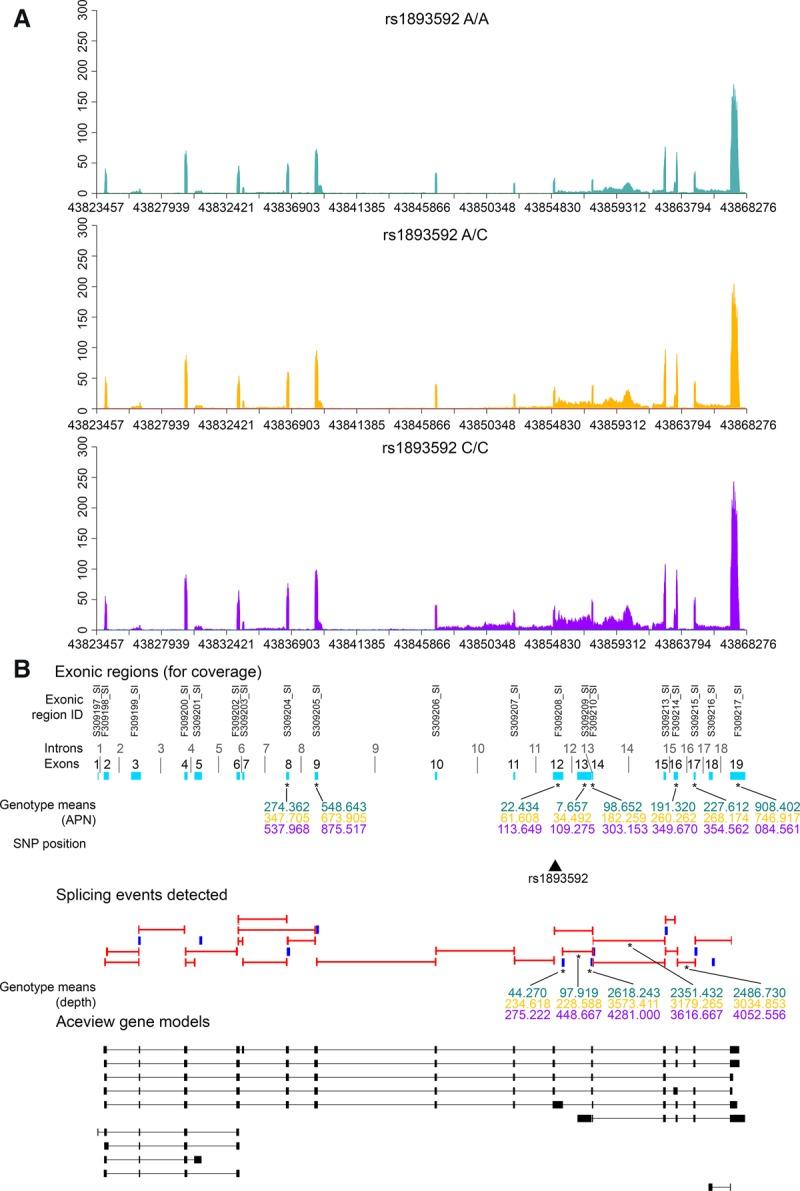
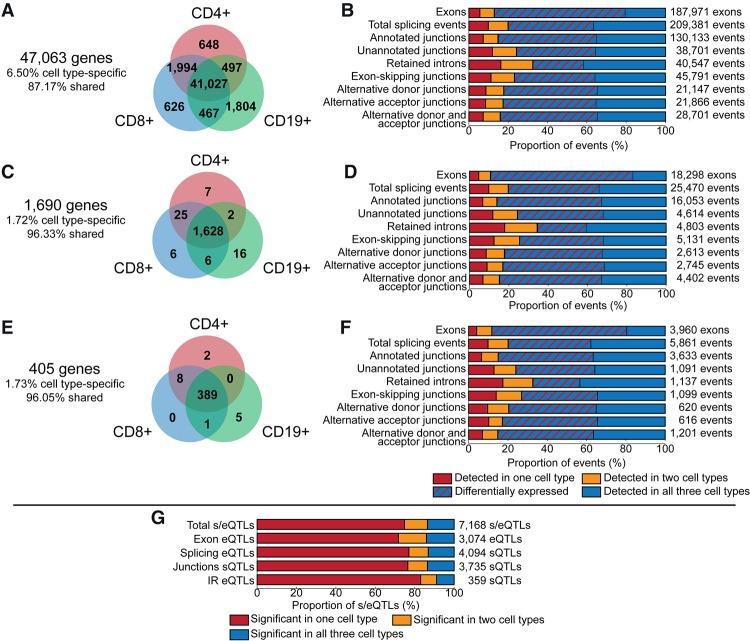
Genome-wide association studies (GWAS) have identified multiple, shared allelic associations with many autoimmune diseases. However, the pathogenic contributions of variants residing in risk loci remain unresolved. The location of the majority of shared disease-associated variants in noncoding regions suggests they contribute to risk of autoimmunity through effects on gene expression in the immune system. In the current study, we test this hypothesis by applying RNA sequencing to CD4, CD8, and CD19 lymphocyte populations isolated from 81 subjects with type 1 diabetes (T1D). We characterize and compare the expression patterns across these cell types for three gene sets: all genes, the set of genes implicated in autoimmune disease risk by GWAS, and the subset of these genes specifically implicated in T1D. We performed RNA sequencing and aligned the reads to both the human reference genome and a catalog of all possible splicing events developed from the genome, thereby providing a comprehensive evaluation of the roles of gene expression and alternative splicing (AS) in autoimmunity. Autoimmune candidate genes displayed greater expression specificity in the three lymphocyte populations relative to other genes, with significantly increased levels of splicing events, particularly those predicted to have substantial effects on protein isoform structure and function (e.g., intron retention, exon skipping). The majority of single-nucleotide polymorphisms within T1D-associated loci were also associated with one or more -expression quantitative trait loci (-eQTLs) and/or splicing eQTLs. Our findings highlight a substantial, and previously underrecognized, role for AS in the pathogenesis of autoimmune disorders and particularly for T1D.
全基因组关联研究(GWAS)已经确定了多种与许多自身免疫性疾病相关的等位基因。然而,风险位点中变异体的致病贡献仍未得到解决。大多数共享疾病相关变异位于非编码区域,这表明它们通过对免疫系统中基因表达的影响,导致自身免疫的风险。在目前的研究中,我们通过对 81 名 1 型糖尿病(T1D)患者的 CD4、CD8 和 CD19 淋巴细胞群体进行 RNA 测序,来检验这一假设。我们对这三个基因集在这些细胞类型中的表达模式进行了特征描述和比较:所有基因、GWAS 中与自身免疫疾病风险相关的基因集,以及这些基因中专门与 T1D 相关的亚集。我们进行了 RNA 测序,并将读取与人类参考基因组和从基因组开发的所有可能剪接事件的目录进行了比对,从而全面评估了基因表达和选择性剪接(AS)在自身免疫中的作用。自身免疫候选基因在三种淋巴细胞群体中的表达特异性相对其他基因更高,剪接事件水平显著增加,特别是那些预测对蛋白质同工型结构和功能有重大影响的事件(例如,内含子保留、外显子跳跃)。T1D 相关位点内的大多数单核苷酸多态性也与一个或多个表达数量性状基因座(eQTLs)和/或剪接 eQTLs 相关。我们的发现突出了 AS 在自身免疫性疾病发病机制中的重要作用,尤其是在 T1D 中。
 Zotero 插件