
一种靶向骨吸收表面的纳米颗粒,用于递送抗miR214治疗骨质疏松症。
A bone-resorption surface-targeting nanoparticle to deliver anti-miR214 for osteoporosis therapy.
作者信息
Cai Mingxiang, Yang Li, Zhang Shufan, Liu Jiafan, Sun Yao, Wang Xiaogang
机构信息
Engineering Research Center of Tooth Restoration and Regeneration, Department of Oral Implantology, School of Stomatology, Tongji University, Shanghai.
Department of Cell Biology, Institute of Biomedicine, College of Life Science and Technology, Jinan University, Guangzhou, China.
出版信息
Int J Nanomedicine. 2017 Oct 13;12:7469-7482. doi: 10.2147/IJN.S139775. eCollection 2017.
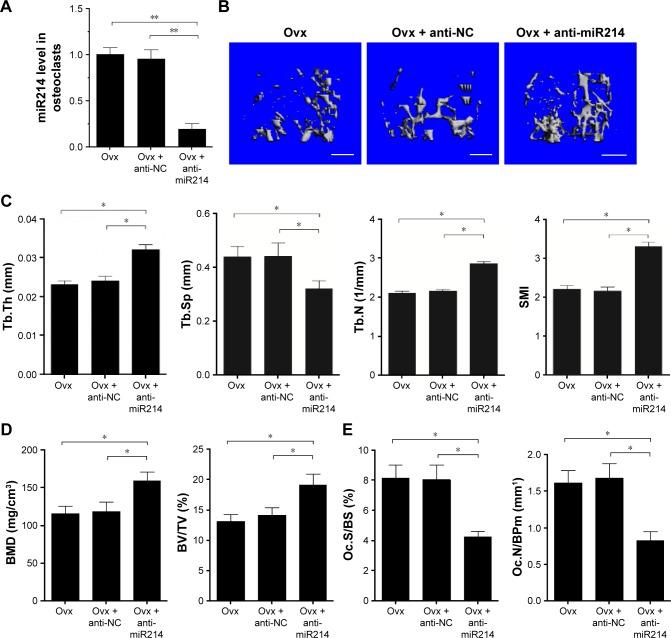
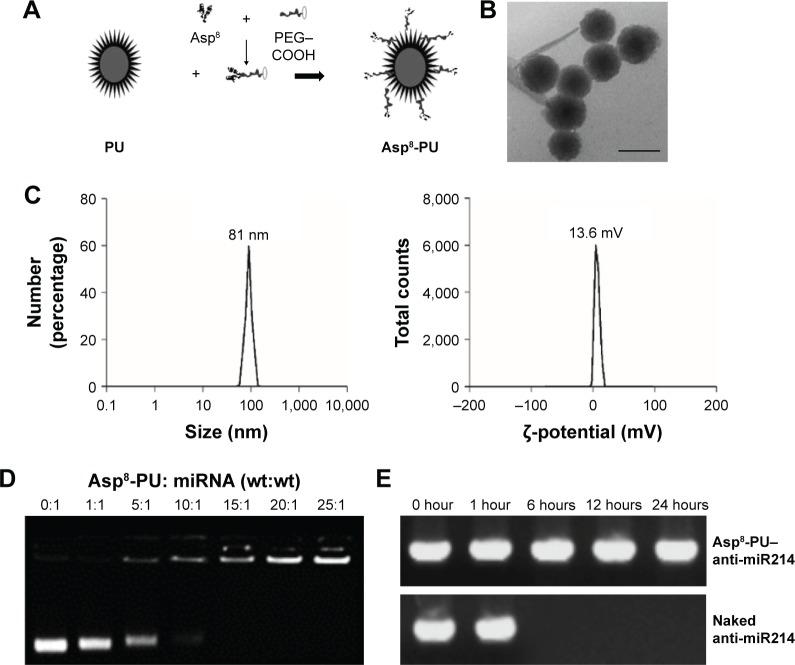
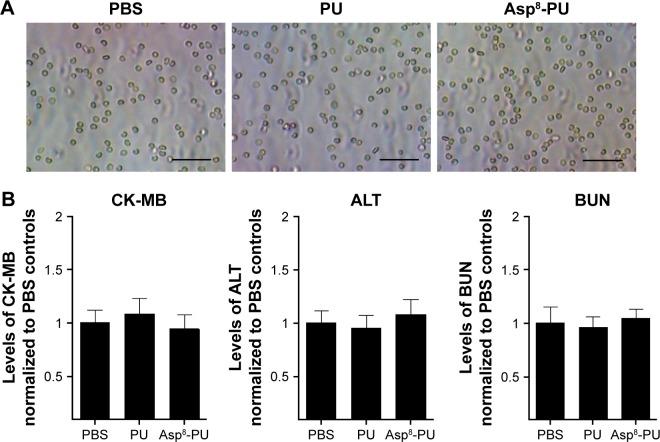
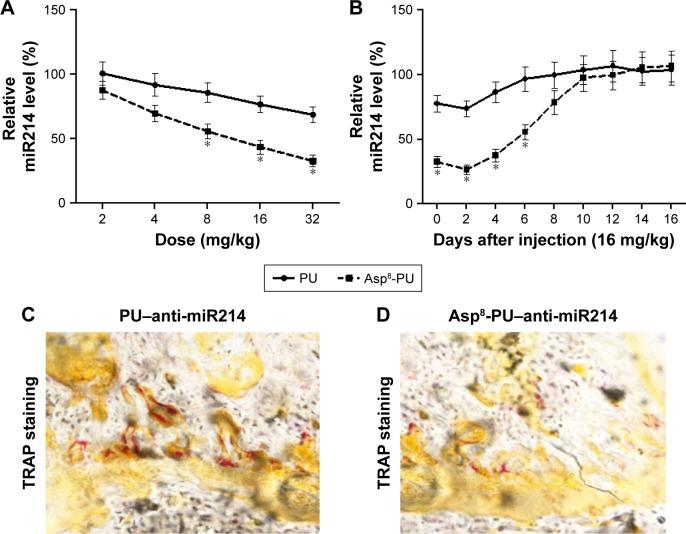
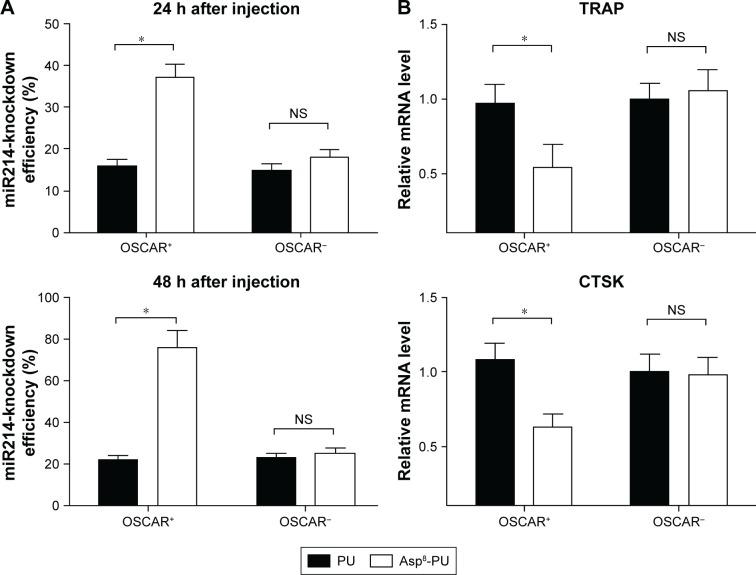
With increasing fracture risks due to fragility, osteoporosis is a global health problem threatening postmenopausal women. In these patients, osteoclasts play leading roles in bone loss and fracture. How to inhibit osteoclast activity is the key issue for osteoporosis treatment. In recent years, miRNA-based gene therapy through gene regulation has been considered a potential therapeutic method. However, in light of the side effects, the use of therapeutic miRNAs in osteoporosis treatment is still limited by the lack of tissue/cell-specific delivery systems. Here, we developed polyurethane (PU) nanomicelles modified by the acidic peptide Asp. Our data showed that without overt toxicity or eliciting an immune response, this delivery system encapsulated and selectively deliver miRNAs to OSCAR osteoclasts at bone-resorption surface in vivo. With the Asp-PU delivery system, anti-miR214 was delivered to osteoclasts, and bone microarchitecture and bone mass were improved in ovariectomized osteoporosis mice. Therefore, Asp-PU could be a useful bone-resorption surface-targeting delivery system for treatment of osteoclast-induced bone diseases and aging-related osteoporosis.
由于脆性导致骨折风险增加,骨质疏松症是一个威胁绝经后女性的全球性健康问题。在这些患者中,破骨细胞在骨质流失和骨折中起主要作用。如何抑制破骨细胞活性是骨质疏松症治疗的关键问题。近年来,基于微小RNA(miRNA)的通过基因调控的基因治疗被认为是一种潜在的治疗方法。然而,鉴于副作用,治疗性miRNA在骨质疏松症治疗中的应用仍然受到缺乏组织/细胞特异性递送系统的限制。在此,我们开发了由酸性肽天冬氨酸(Asp)修饰的聚氨酯(PU)纳米胶束。我们的数据表明,该递送系统在体内没有明显毒性或引发免疫反应的情况下,能将miRNA包裹并选择性地递送至骨吸收表面的破骨细胞特异性免疫球蛋白样受体(OSCAR)破骨细胞。使用Asp-PU递送系统,抗miR214被递送至破骨细胞,并且去卵巢骨质疏松症小鼠的骨微结构和骨量得到改善。因此,Asp-PU可能是一种用于治疗破骨细胞诱导的骨疾病和与衰老相关的骨质疏松症的有用的骨吸收表面靶向递送系统。

 Zotero 插件