
2-氨基-5-硝基噻唑衍生的氨基脲作为单胺氧化酶和胆碱酯酶双重抑制剂的设计、合成及药理评价:芳基结合位点大小的影响
Design, synthesis, and pharmacological evaluation of 2-amino-5-nitrothiazole derived semicarbazones as dual inhibitors of monoamine oxidase and cholinesterase: effect of the size of aryl binding site.
作者信息
Tripathi Rati K P, M Sasi Vishnu, Gupta Sukesh K, Krishnamurthy Sairam, Ayyannan Senthil R
机构信息
a Pharmaceutical Chemistry Research Laboratory, Department of Pharmaceutical Engineering & Technology , Indian Institute of Technology (Banaras Hindu University) , Varanasi , India.
b Neurotherapeutics Research Laboratory, Department of Pharmaceutical Engineering & Technology , Indian Institute of Technology (Banaras Hindu University) , Varanasi , India.
出版信息
J Enzyme Inhib Med Chem. 2018 Dec;33(1):37-57. doi: 10.1080/14756366.2017.1389920.
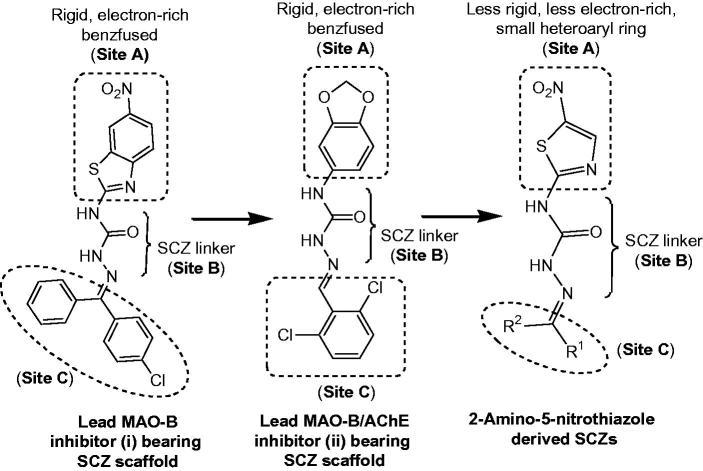
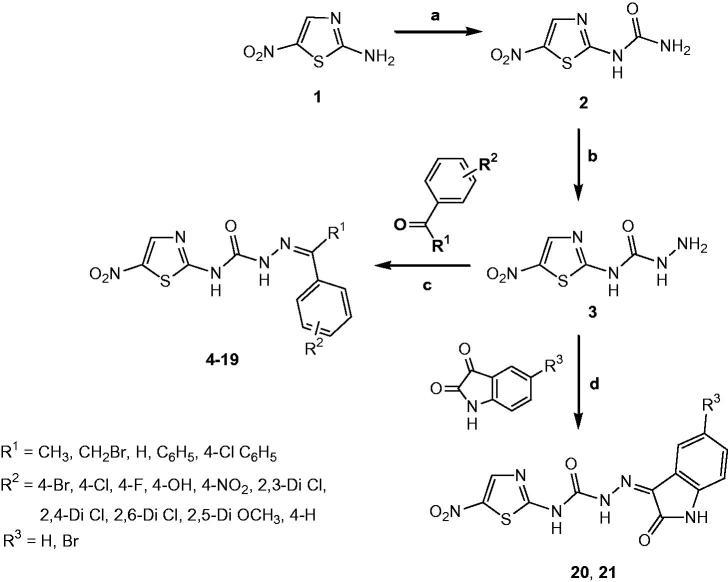
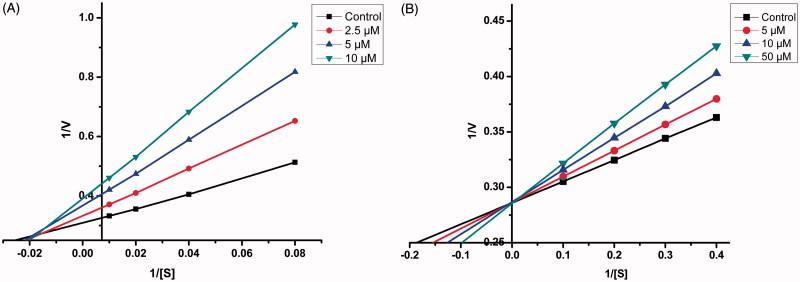
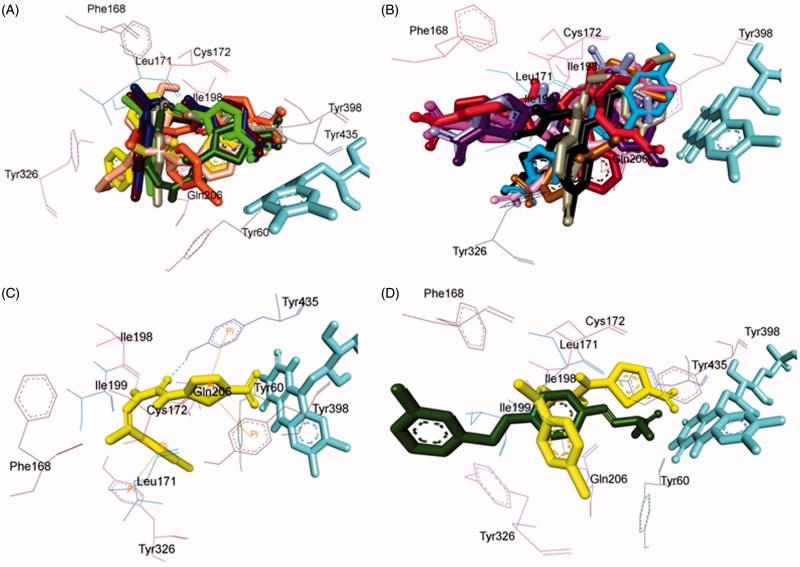
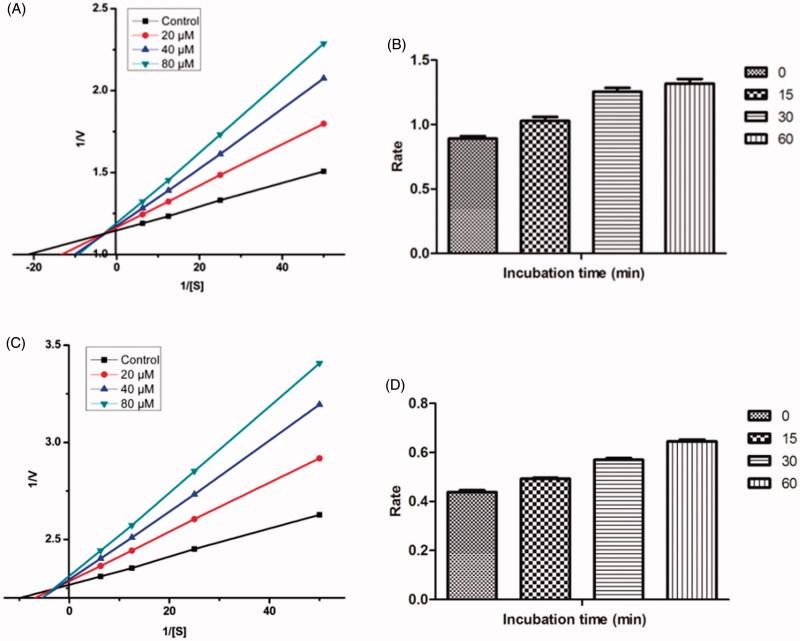
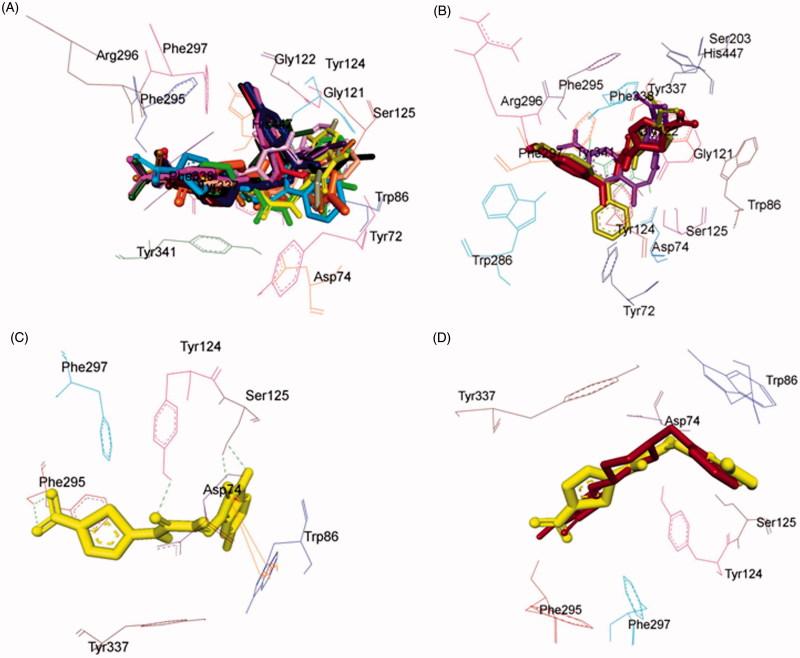
A series of 2-amino-5-nitrothiazole derived semicarbazones were designed, synthesised and investigated for MAO and ChE inhibition properties. Most of the compounds showed preferential inhibition towards MAO-B. Compound 4, (1-(1-(4-Bromophenyl)ethylidene)-4-(5-nitrothiazol-2-yl)semicarbazide) emerged as lead candidate (IC = 0.212 µM, SI = 331.04) against MAO-B; whereas compounds 21 1-(5-Bromo-2-oxoindolin-3-ylidene)-4-(5-nitrothiazol-2-yl)semicarbazide (IC = 0.264 µM) and 17 1-((4-Chlorophenyl) (phenyl)methylene)-4-(5-nitrothiazol-2-yl)semicarbazide (IC = 0.024 µM) emerged as lead AChE and BuChE inhibitors respectively; with activity of compound 21 almost equivalent to tacrine. Kinetic studies indicated that compound 4 exhibited competitive and reversible MAO-B inhibition while compounds 21 and 17 showed mixed-type of AChE and BuChE inhibition respectively. Docking studies revealed that these compounds were well-accommodated within MAO-B and ChE active sites through stable hydrogen bonding and/or hydrophobic interactions. This study revealed the requirement of small heteroaryl ring at amino terminal of semicarbazone template for preferential inhibition and selectivity towards MAO-B. Our results suggest that 5-nitrothiazole derived semicarbazones could be further exploited for its multi-targeted role in development of anti-neurodegenerative agents. [Formula: see text] A library of 2-amino-5-nitrothiazole derived semicarbazones (4-21) was designed, synthesised and evaluated for in vitro MAO and ChE inhibitory activity. Compounds 4, 21 and 17 (shown) have emerged as lead MAO-B (IC:0.212 µM, competitive and reversible), AChE (IC:0.264 µM, mixed and reversible) and BuChE (IC:0.024 µM, mixed and reversible) inhibitor respectively. SAR studies disclosed several structural aspects significant for potency and selectivity and indicated the role of size of aryl binding site in potency and selectivity towards MAO-B. Antioxidant activity and neurotoxicity screening results further suggested their multifunctional potential for the therapy of neurodegenerative diseases.
设计、合成并研究了一系列2-氨基-5-硝基噻唑衍生的氨基脲对单胺氧化酶(MAO)和胆碱酯酶(ChE)的抑制特性。大多数化合物对MAO-B表现出优先抑制作用。化合物4(1-(1-(4-溴苯基)亚乙基)-4-(5-硝基噻唑-2-基)氨基脲)成为抗MAO-B的先导候选物(IC = 0.212 μM,SI = 331.04);而化合物21(1-(5-溴-2-氧代吲哚啉-3-基亚乙基)-4-(5-硝基噻唑-2-基)氨基脲,IC = 0.264 μM)和化合物17(1-((4-氯苯基)(苯基)亚甲基)-4-(5-硝基噻唑-2-基)氨基脲,IC = 0.024 μM)分别成为AChE和BuChE的先导抑制剂;化合物21的活性几乎与他克林相当。动力学研究表明,化合物4对MAO-B表现出竞争性和可逆性抑制,而化合物21和17分别对AChE和BuChE表现出混合型抑制。对接研究表明,这些化合物通过稳定的氢键和/或疏水相互作用很好地容纳在MAO-B和ChE的活性位点内。该研究揭示了氨基脲模板氨基末端的小杂芳基环对于优先抑制和对MAO-B的选择性的必要性。我们的结果表明,5-硝基噻唑衍生的氨基脲因其在抗神经退行性疾病药物开发中的多靶点作用而可被进一步开发利用。[化学式:见原文]设计、合成并评估了一系列2-氨基-5-硝基噻唑衍生的氨基脲(4-21)的体外MAO和ChE抑制活性。化合物4、21和17(如图所示)分别成为MAO-B(IC:0.212 μM,竞争性和可逆性)、AChE(IC:0.264 μM,混合型和可逆性)和BuChE(IC:0.024 μM,混合型和可逆性)的先导抑制剂。构效关系(SAR)研究揭示了几个对效力和选择性有重要意义的结构方面,并表明芳基结合位点的大小在对MAO-B的效力和选择性中的作用。抗氧化活性和神经毒性筛选结果进一步表明了它们在神经退行性疾病治疗中的多功能潜力。





 Zotero 插件