
肩袖撕裂急性期冈上肌收缩功能受损。
Impaired contractile function of the supraspinatus in the acute period following a rotator cuff tear.
作者信息
Valencia Ana P, Iyer Shama R, Spangenburg Espen E, Gilotra Mohit N, Lovering Richard M
机构信息
Department of Orthopaedics, University of Maryland School of Medicine, AHB, Rm 540, 100 Penn St., Baltimore, MD, 21201, USA.
Department of Kinesiology, University of Maryland School of Public Health, College Park, USA.
出版信息
BMC Musculoskelet Disord. 2017 Nov 9;18(1):436. doi: 10.1186/s12891-017-1789-5.
BACKGROUND
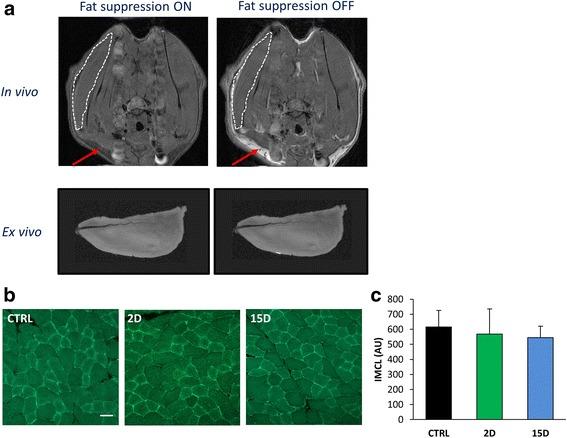
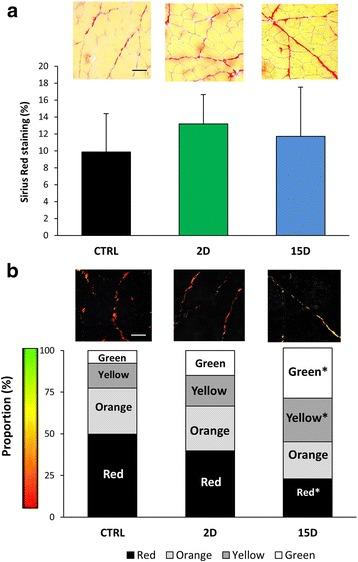
Rotator cuff (RTC) tears are a common clinical problem resulting in adverse changes to the muscle, but there is limited information comparing histopathology to contractile function. This study assessed supraspinatus force and susceptibility to injury in the rat model of RTC tear, and compared these functional changes to histopathology of the muscle.
METHODS
Unilateral RTC tears were induced in male rats via tenotomy of the supraspinatus and infraspinatus. Maximal tetanic force and susceptibility to injury of the supraspinatus muscle were measured in vivo at day 2 and day 15 after tenotomy. Supraspinatus muscles were weighed and harvested for histologic analysis of the neuromuscular junction (NMJ), intramuscular lipid, and collagen.
RESULTS
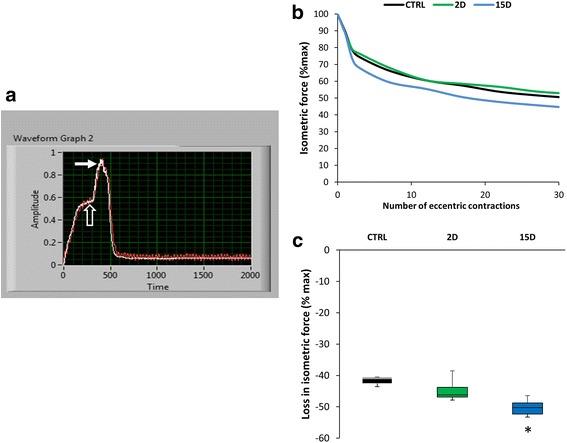
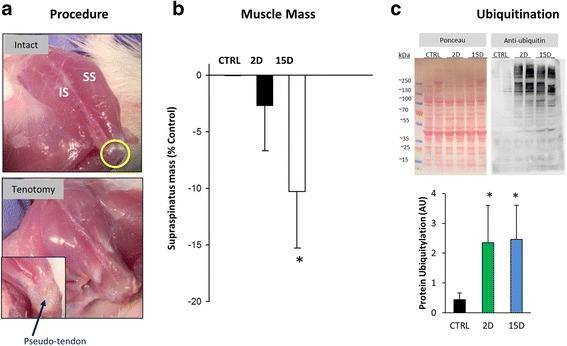
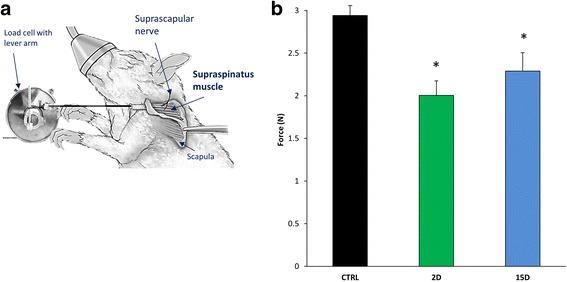
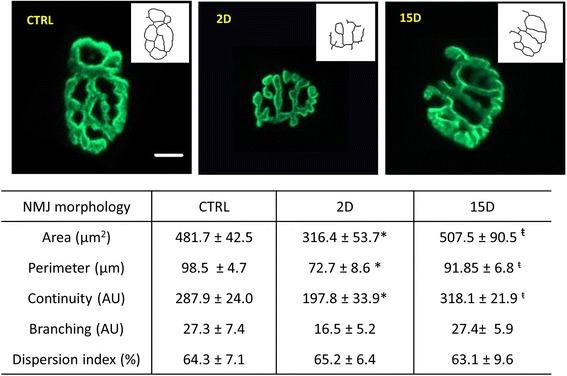
Tenotomy resulted in eventual atrophy and weakness. Despite no loss in muscle mass at day 2 there was a 30% reduction in contractile force, and a decrease in NMJ continuity and size. Reduced force persisted at day 15, a time point when muscle atrophy was evident but NMJ morphology was restored. At day 15, torn muscles had decreased collagen-packing density and were also more susceptible to contraction-induced injury.
CONCLUSION
Muscle size and histopathology are not direct indicators of overall RTC contractile health. Changes in NMJ morphology and collagen organization were associated with changes in contractile function and thus may play a role in response to injury. Although our findings are limited to the acute phase after a RTC tear, the most salient finding is that RTC tenotomy results in increased susceptibility to injury of the supraspinatus.
背景
肩袖(RTC)撕裂是一个常见的临床问题,会导致肌肉出现不良变化,但将组织病理学与收缩功能进行比较的信息有限。本研究评估了RTC撕裂大鼠模型中冈上肌的力量和损伤易感性,并将这些功能变化与肌肉的组织病理学进行了比较。
方法
通过切断雄性大鼠的冈上肌和冈下肌诱导单侧RTC撕裂。在切断术后第2天和第15天在体内测量冈上肌的最大强直力和损伤易感性。称取冈上肌重量并取材,用于神经肌肉接头(NMJ)、肌内脂质和胶原蛋白的组织学分析。
结果
切断术最终导致萎缩和无力。尽管在第2天肌肉质量没有损失,但收缩力降低了30%,并且NMJ的连续性和大小减小。在第15天,力量持续降低,此时肌肉萎缩明显,但NMJ形态恢复。在第15天,撕裂的肌肉胶原蛋白堆积密度降低,并且对收缩诱导的损伤也更敏感。
结论
肌肉大小和组织病理学不是RTC整体收缩健康的直接指标。NMJ形态和胶原蛋白组织的变化与收缩功能的变化相关,因此可能在损伤反应中起作用。尽管我们的研究结果仅限于RTC撕裂后的急性期,但最显著的发现是RTC切断术导致冈上肌损伤易感性增加。
 Zotero 插件