
长非编码 RNA 中的表观转录组暗面:化学修饰。
The Dark Side of the Epitranscriptome: Chemical Modifications in Long Non-Coding RNAs.
机构信息
Faculty of Medicine, Martin-Luther-University Halle-Wittenberg, 06120 Halle (Saale), Germany.
出版信息
Int J Mol Sci. 2017 Nov 10;18(11):2387. doi: 10.3390/ijms18112387.
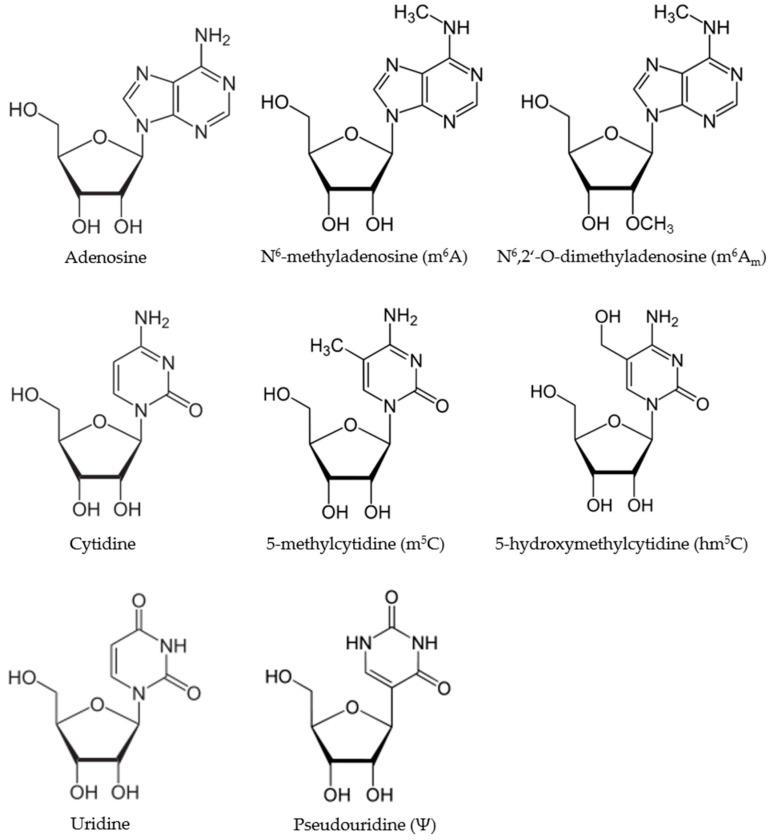
The broad application of next-generation sequencing technologies in conjunction with improved bioinformatics has helped to illuminate the complexity of the transcriptome, both in terms of quantity and variety. In humans, 70-90% of the genome is transcribed, but only ~2% carries the blueprint for proteins. Hence, there is a huge class of non-translated transcripts, called long non-coding RNAs (lncRNAs), which have received much attention in the past decade. Several studies have shown that lncRNAs are involved in a plethora of cellular signaling pathways and actively regulate gene expression via a broad selection of molecular mechanisms. Only recently, sequencing-based, transcriptome-wide studies have characterized different types of post-transcriptional chemical modifications of RNAs. These modifications have been shown to affect the fate of RNA and further expand the variety of the transcriptome. However, our understanding of their biological function, especially in the context of lncRNAs, is still in its infancy. In this review, we will focus on three epitranscriptomic marks, namely pseudouridine (Ψ), ⁶-methyladenosine (m⁶A) and 5-methylcytosine (m⁵C). We will introduce writers, readers, and erasers of these modifications, and we will present methods for their detection. Finally, we will provide insights into the distribution and function of these chemical modifications in selected, cancer-related lncRNAs.
下一代测序技术与改进的生物信息学的广泛应用,有助于阐明转录组的复杂性,无论是在数量还是种类方面。在人类中,基因组的 70-90%被转录,但只有约 2%携带蛋白质的蓝图。因此,有一大类非翻译转录物,称为长非编码 RNA(lncRNA),在过去十年中受到了广泛关注。有几项研究表明,lncRNA 参与了大量的细胞信号通路,并通过广泛的分子机制积极调节基因表达。直到最近,基于测序的转录组范围的研究才对 RNA 的不同类型的转录后化学修饰进行了特征描述。这些修饰已被证明会影响 RNA 的命运,并进一步扩展转录组的多样性。然而,我们对它们的生物学功能的理解,特别是在 lncRNA 的背景下,还处于起步阶段。在这篇综述中,我们将重点介绍三种表观转录组标记,即假尿嘧啶(Ψ)、6-甲基腺嘌呤(m⁶A)和 5-甲基胞嘧啶(m⁵C)。我们将介绍这些修饰的写入器、读取器和擦除器,并介绍它们的检测方法。最后,我们将深入了解这些化学修饰在选定的癌症相关 lncRNA 中的分布和功能。


 Zotero 插件