
遗传性肾性尿崩症:病理生理学和可能的治疗。更新。
Hereditary Nephrogenic Diabetes Insipidus: Pathophysiology and Possible Treatment. An Update.
机构信息
Department of Biosciences, Biotechnologies and Biopharmaceutics, University of Bari, 70126 Bari, Italy.
Department of Sciences, University of Basilicata, 85100 Potenza, Italy.
出版信息
Int J Mol Sci. 2017 Nov 10;18(11):2385. doi: 10.3390/ijms18112385.
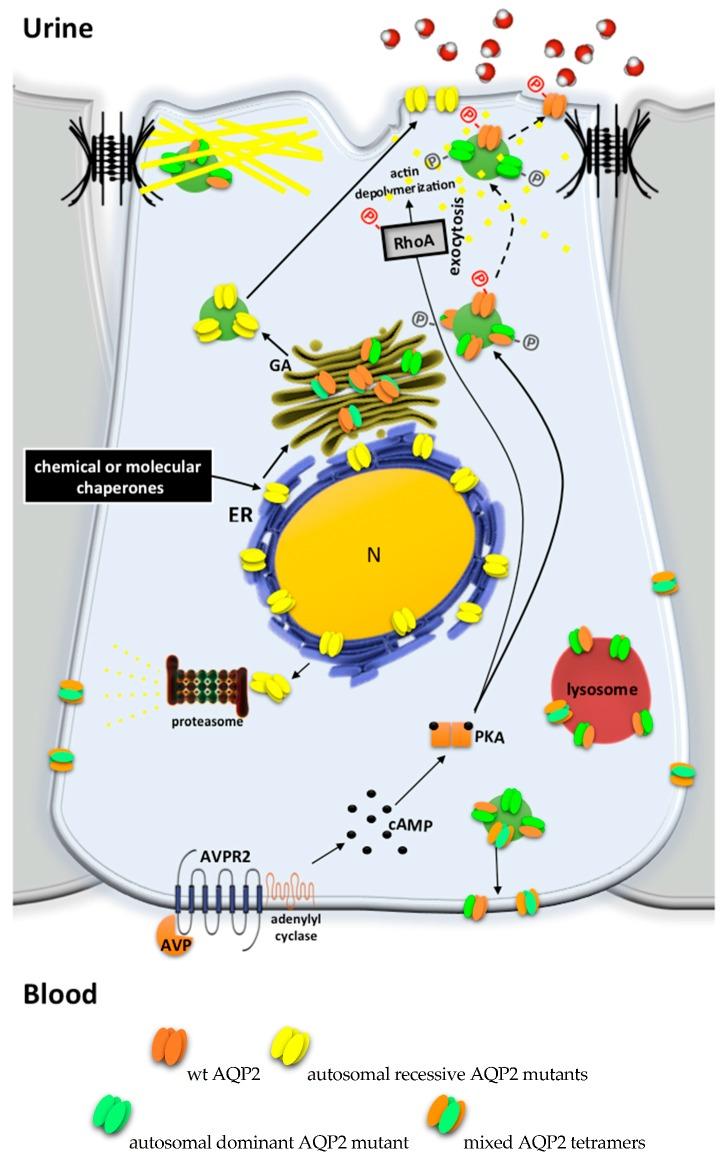
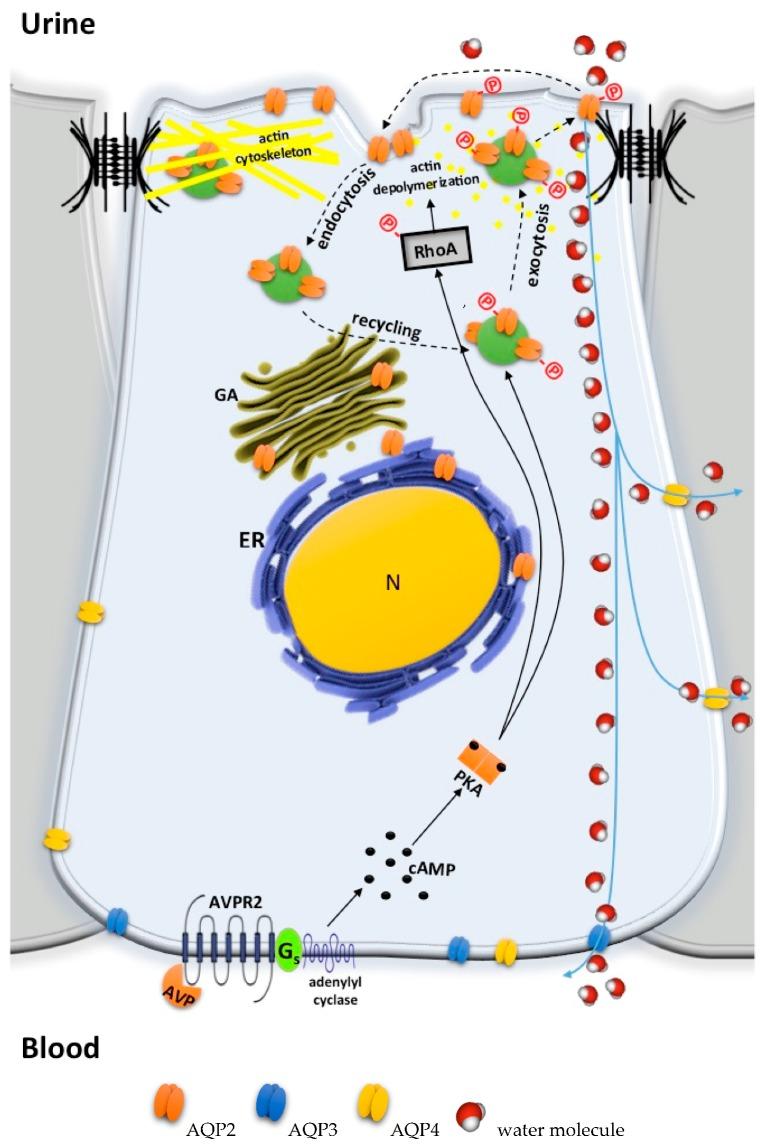
Under physiological conditions, excessive loss of water through the urine is prevented by the release of the antidiuretic hormone arginine-vasopressin (AVP) from the posterior pituitary. In the kidney, AVP elicits a number of cellular responses, which converge on increasing the osmotic reabsorption of water in the collecting duct. One of the key events triggered by the binding of AVP to its type-2 receptor (AVPR2) is the exocytosis of the water channel aquaporin 2 (AQP2) at the apical membrane the principal cells of the collecting duct. Mutations of either AVPR2 or AQP2 result in a genetic disease known as nephrogenic diabetes insipidus, which is characterized by the lack of responsiveness of the collecting duct to the antidiuretic action of AVP. The affected subject, being incapable of concentrating the urine, presents marked polyuria and compensatory polydipsia and is constantly at risk of severe dehydration. The molecular bases of the disease are fully uncovered, as well as the genetic or clinical tests for a prompt diagnosis of the disease in newborns. A real cure for nephrogenic diabetes insipidus (NDI) is still missing, and the main symptoms of the disease are handled with s continuous supply of water, a restrictive diet, and nonspecific drugs. Unfortunately, the current therapeutic options are limited and only partially beneficial. Further investigation in vitro or using the available animal models of the disease, combined with clinical trials, will eventually lead to the identification of one or more targeted strategies that will improve or replace the current conventional therapy and grant NDI patients a better quality of life. Here we provide an updated overview of the genetic defects causing NDI, the most recent strategies under investigation for rescuing the activity of mutated AVPR2 or AQP2, or for bypassing defective AVPR2 signaling and restoring AQP2 plasma membrane expression.
在生理条件下,通过尿液释放抗利尿激素精氨酸血管加压素 (AVP) 可防止水的过度流失。在后脑垂体中,AVP 引发许多细胞反应,这些反应集中在增加集合管中水的渗透重吸收。AVP 与其 2 型受体 (AVPR2) 结合触发的关键事件之一是水通道 aquaporin 2 (AQP2) 在主细胞的顶膜上的胞吐作用。AVPR2 或 AQP2 的突变会导致一种称为肾源性尿崩症的遗传疾病,其特征是集合管对 AVP 的抗利尿作用无反应。受影响的个体无法浓缩尿液,表现出明显的多尿和代偿性多饮,并经常面临严重脱水的风险。该疾病的分子基础已完全阐明,以及用于新生儿疾病快速诊断的遗传或临床检测。肾源性尿崩症 (NDI) 的真正治疗方法仍未找到,主要症状通过持续供水、限制饮食和非特异性药物来处理。不幸的是,目前的治疗选择有限,且仅部分有效。进一步的体外研究或使用现有疾病动物模型,结合临床试验,最终将确定一种或多种靶向策略,这些策略将改善或替代当前的常规治疗,并为 NDI 患者提供更好的生活质量。在这里,我们提供了导致 NDI 的遗传缺陷的最新概述,以及正在研究的用于恢复突变的 AVPR2 或 AQP2 活性的最新策略,或用于绕过有缺陷的 AVPR2 信号并恢复 AQP2 质膜表达的策略。

 Zotero 插件