
通过虚拟筛选工业化学品鉴定潜在的芳香烃受体配体。
Identification of potential aryl hydrocarbon receptor ligands by virtual screening of industrial chemicals.
机构信息
Department of Chemistry, Umeå University, SE-901 87, Umeå, Sweden.
Department of Earth and Environmental Sciences, University of Milano-Bicocca, Piazza della Scienza 1, 20126, Milan, Italy.
出版信息
Environ Sci Pollut Res Int. 2018 Jan;25(3):2436-2449. doi: 10.1007/s11356-017-0437-9. Epub 2017 Nov 10.
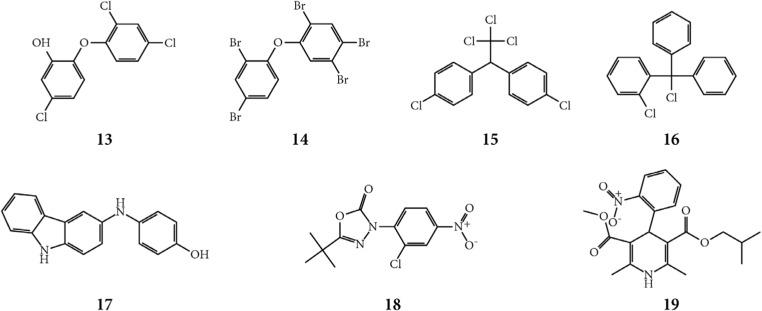
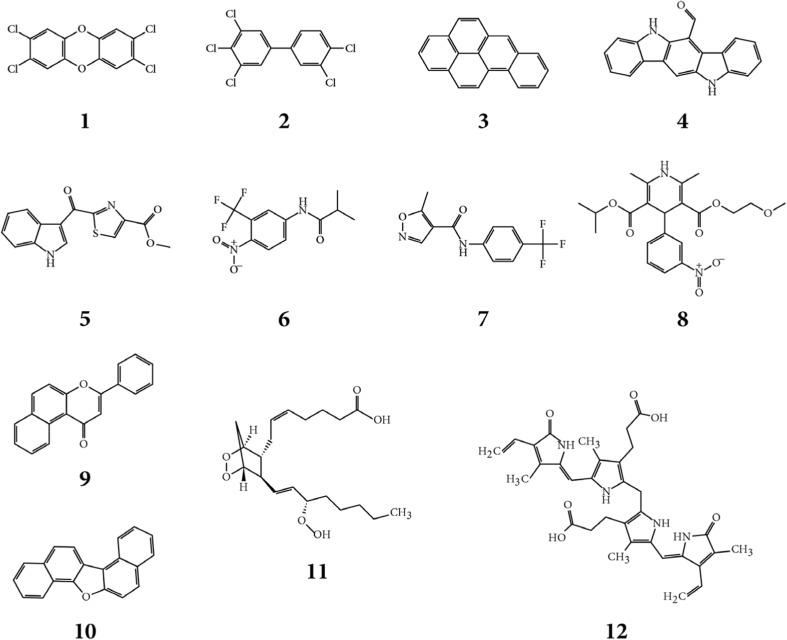
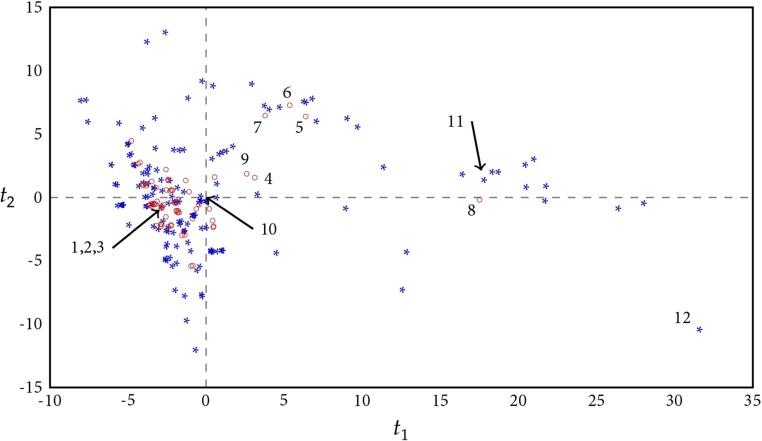
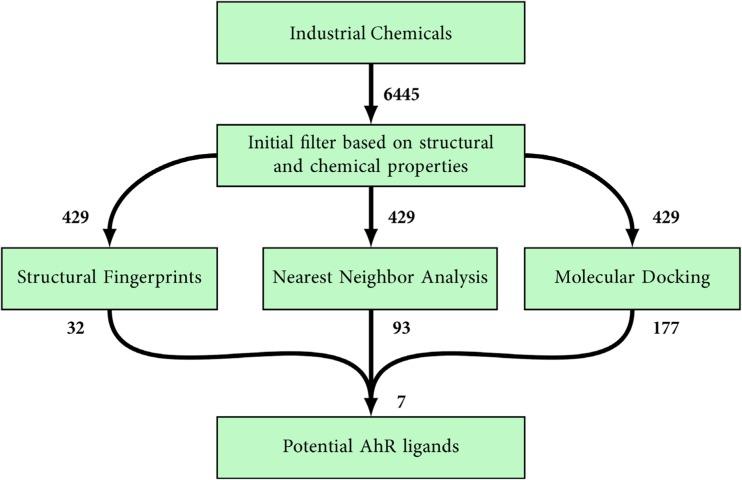
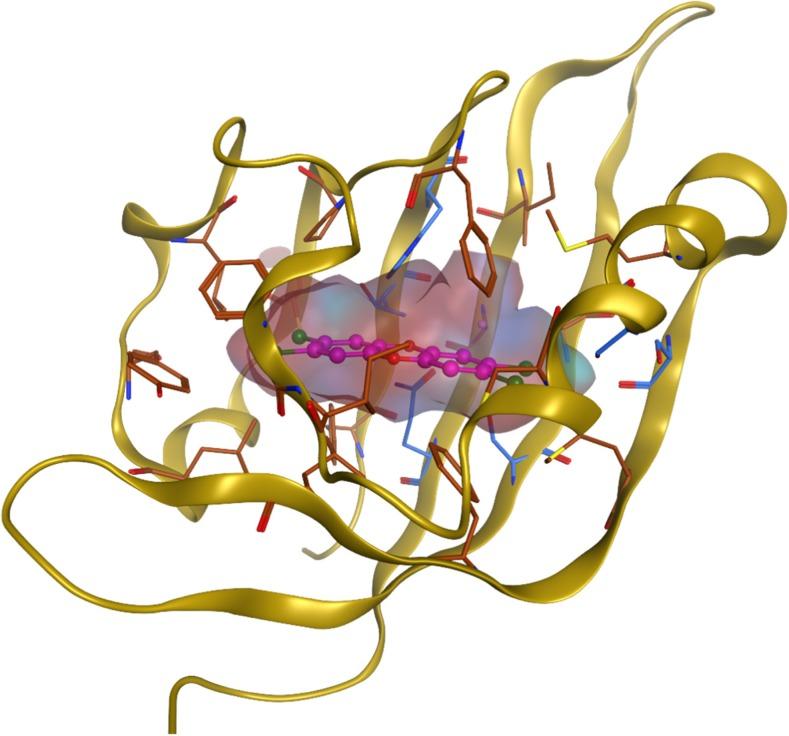
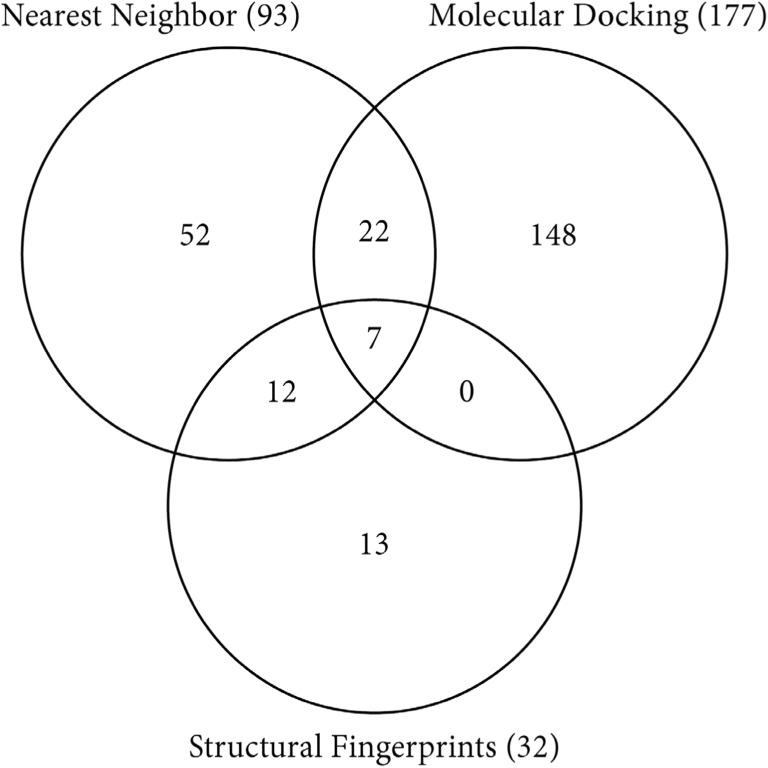
We have developed a virtual screening procedure to identify potential ligands to the aryl hydrocarbon receptor (AhR) among a set of industrial chemicals. AhR is a key target for dioxin-like compounds, which is related to these compounds' potential to induce cancer and a wide range of endocrine and immune system-related effects. The virtual screening procedure included an initial filtration aiming at identifying chemicals with structural similarities to 66 known AhR binders, followed by 3 enrichment methods run in parallel. These include two ligand-based methods (structural fingerprints and nearest neighbor analysis) and one structure-based method using an AhR homology model. A set of 6445 commonly used industrial chemicals was processed, and each step identified unique potential ligands. Seven compounds were identified by all three enrichment methods, and these compounds included known activators and suppressors of AhR. Only approximately 0.7% (41 compounds) of the studied industrial compounds was identified as potential AhR ligands and among these, 28 compounds have to our knowledge not been tested for AhR-mediated effects or have been screened with low purity. We suggest assessment of AhR-related activities of these compounds and in particular 2-chlorotrityl chloride, 3-p-hydroxyanilino-carbazole, and 3-(2-chloro-4-nitrophenyl)-5-(1,1-dimethylethyl)-1,3,4-oxadiazol-2(3H)-one.
我们开发了一种虚拟筛选程序,以从一组工业化学品中识别潜在的芳基烃受体 (AhR) 配体。AhR 是二恶英类化合物的关键靶标,这些化合物可能具有诱导癌症以及广泛的内分泌和免疫系统相关效应的潜力。虚拟筛选程序包括初步筛选,旨在识别与 66 种已知 AhR 结合物具有结构相似性的化学品,然后平行运行 3 种富集方法。这些方法包括两种基于配体的方法(结构指纹和最近邻分析)和一种基于 AhR 同源模型的结构方法。处理了一组 6445 种常用的工业化学品,每个步骤都确定了独特的潜在配体。有七种化合物被所有三种富集方法识别出来,这些化合物包括已知的 AhR 激活剂和抑制剂。只有约 0.7%(41 种化合物)的研究工业化合物被鉴定为潜在的 AhR 配体,其中 28 种化合物据我们所知尚未测试过 AhR 介导的效应,或者用低纯度进行了筛选。我们建议评估这些化合物的 AhR 相关活性,特别是 2-氯三苯甲基氯、3-p-羟基苯胺基咔唑和 3-(2-氯-4-硝基苯基)-5-(1,1-二甲基乙基)-1,3,4-恶二唑-2(3H)-酮。
 Zotero 插件