
一种高亲和力钾转运体正向调控水稻对干旱胁迫的响应。
, a High-Affinity Potassium Transporter, Positively Regulates Responses to Drought Stress in Rice.
作者信息
Chen Guang, Liu Chaolei, Gao Zhenyu, Zhang Yu, Jiang Hongzhen, Zhu Li, Ren Deyong, Yu Ling, Xu Guohua, Qian Qian
机构信息
State Key Lab for Rice Biology, China National Rice Research Institute, Hangzhou, China.
State Key Laboratory of Crop Genetics and Germplasm Enhancement, MOA Key Laboratory of Plant Nutrition and Fertilization in Lower-Middle Reaches of the Yangtze River, Nanjing Agricultural University, Nanjing, China.
出版信息
Front Plant Sci. 2017 Nov 1;8:1885. doi: 10.3389/fpls.2017.01885. eCollection 2017.
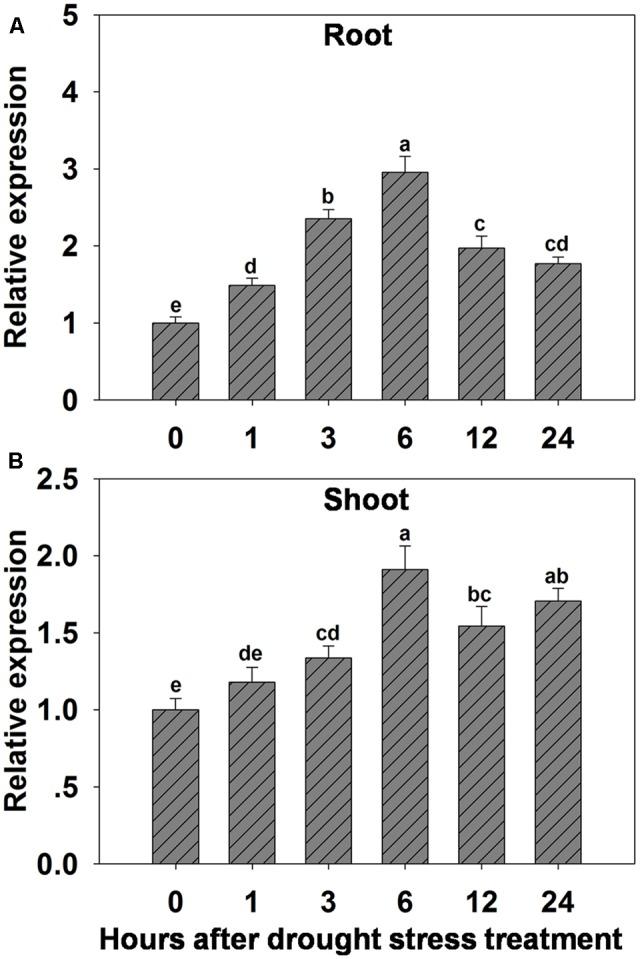
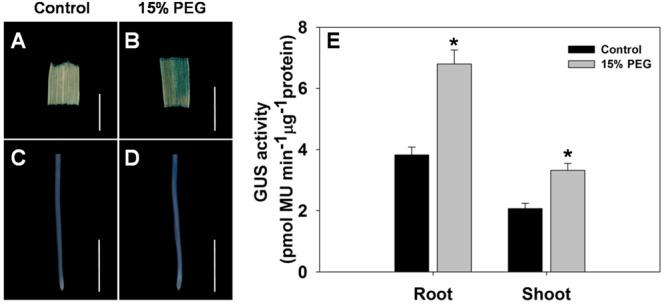
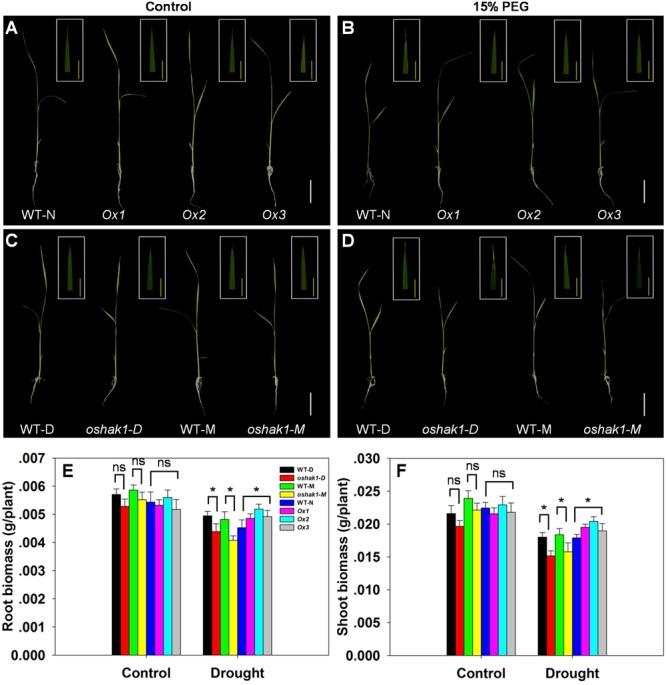
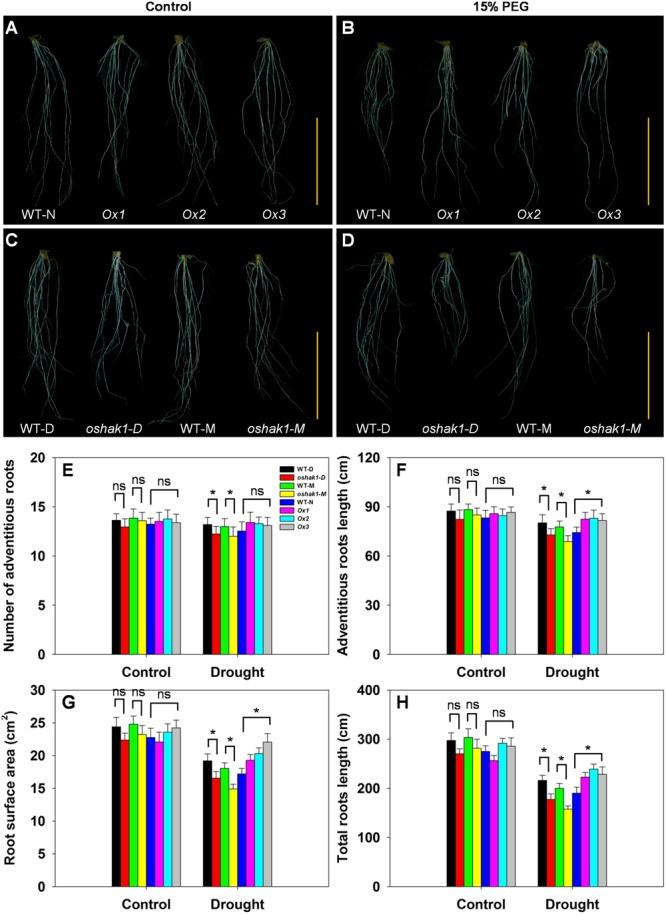
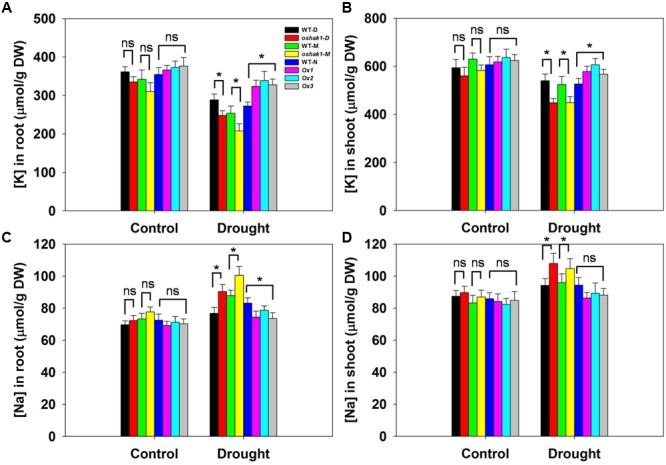
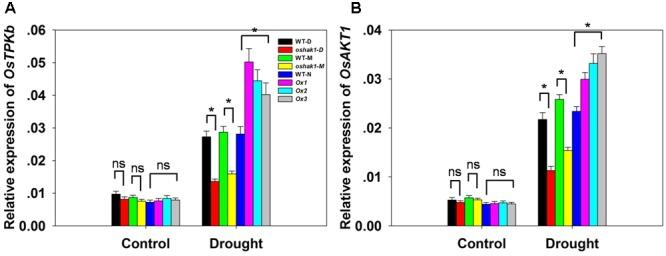
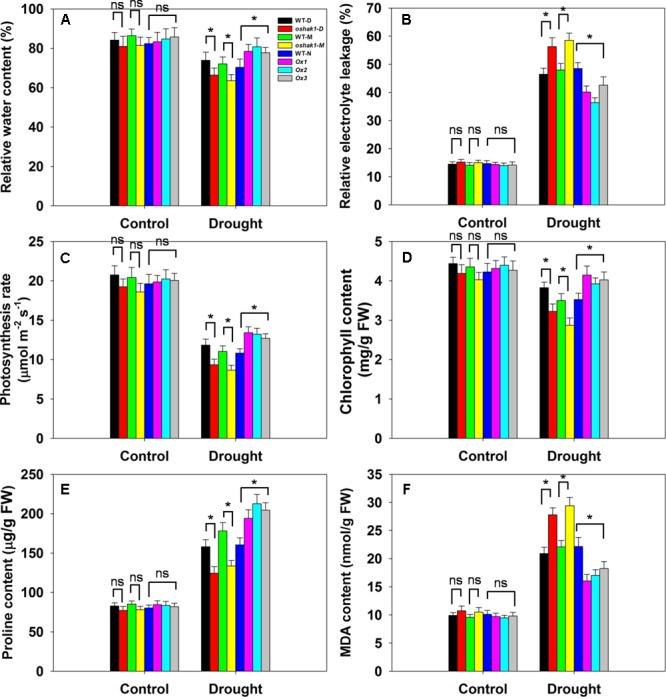
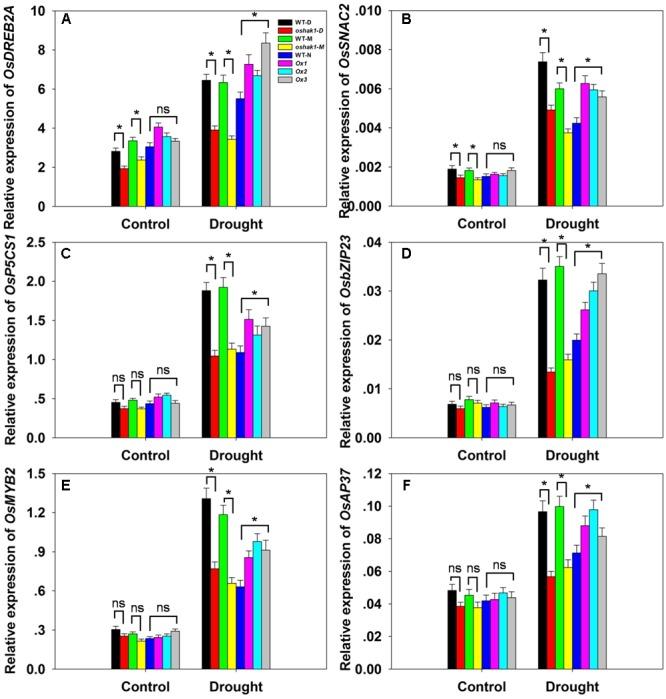
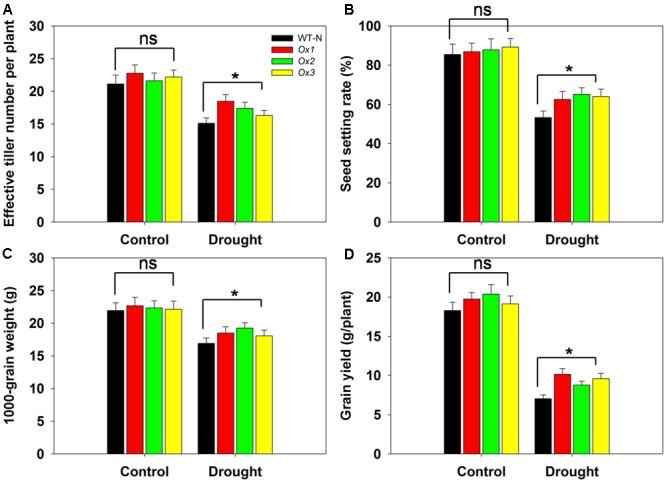
Drought is one of the environmental factors that severely restrict plant distribution and crop production. Recently, we reported that the high-affinity potassium transporter OsHAK1 plays important roles in K acquisition and translocation in rice over low and high K concentration ranges, however, knowledge on the regulatory roles of OsHAK1 in osmotic/drought stress is limited. Here, transcript levels of were found transiently elevated by water deficit in roots and shoots, consistent with the enhanced GUS activity in transgenic plants under stress. Under drought conditions, knockout mutants (KO) presented lower tolerance to the stress and displayed stunted growth at both the vegetative and reproductive stages. Phenotypic analysis of overexpression seedlings (Ox) demonstrated that they present better tolerance to drought stress than wild-type (WT). Compared to WT seedlings, overexpressors had lower level of lipid peroxidation, higher activities of antioxidant enzymes (POX and CAT) and higher proline accumulation. Furthermore, qPCR analysis revealed that act as a positive regulator of the expression of stress-responsive genes as well as of two well-known rice channel genes ( and ) involved in K homeostasis and stress responses in transgenic plants under dehydration. Most important, -Ox plants displayed enhanced drought tolerance at the reproductive stage, resulting in 35% more grain yield than WT under drought conditions, and without exhibiting significant differences under normal growth conditions. Consequently, can be considered to be used in molecular breeding for improvement of drought tolerance in rice.
干旱是严重限制植物分布和作物产量的环境因素之一。最近,我们报道了高亲和钾转运体OsHAK1在水稻低、高钾浓度范围内的钾吸收和转运中发挥重要作用,然而,关于OsHAK1在渗透/干旱胁迫中的调控作用的了解有限。在这里,发现其转录水平在根和茎中因水分亏缺而短暂升高,这与胁迫下转基因植物中增强的GUS活性一致。在干旱条件下,敲除突变体(KO)对胁迫的耐受性较低,在营养生长和生殖生长阶段均表现出生长受阻。过表达幼苗(Ox)的表型分析表明,它们对干旱胁迫的耐受性比野生型(WT)更好。与WT幼苗相比,过表达植株的脂质过氧化水平较低,抗氧化酶(POX和CAT)活性较高,脯氨酸积累量较高。此外,qPCR分析表明,在脱水条件下的转基因植物中,它作为胁迫响应基因以及两个参与钾稳态和胁迫响应的著名水稻通道基因(和)表达的正调控因子。最重要的是,-Ox植株在生殖阶段表现出增强的耐旱性,在干旱条件下的籽粒产量比WT高35%,并且在正常生长条件下没有表现出显著差异。因此,可以考虑将其用于水稻耐旱性改良的分子育种。


 Zotero 插件