
基于氨基酸分解代谢的生物燃料生产:对模型驱动系统工程的洞察
Amino acid catabolism-directed biofuel production in An insight into model-driven systems engineering.
作者信息
Sangavai C, Chellapandi P
机构信息
Molecular Systems Engineering Lab, Department of Bioinformatics, School of Life Sciences, Bharathidasan University, Tiruchirappalli, 620 024, Tamil Nadu, India.
出版信息
Biotechnol Rep (Amst). 2017 Nov 8;16:32-43. doi: 10.1016/j.btre.2017.11.002. eCollection 2017 Dec.
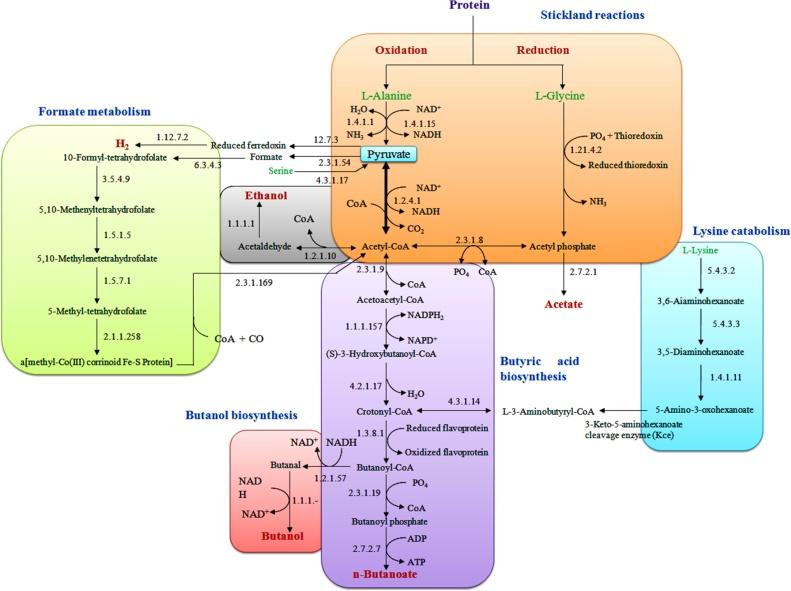
Model-driven systems engineering has been more fascinating process for the microbial production of biofuel and bio-refineries in chemical and pharmaceutical industries. Genome-scale modeling and simulations have been guided for metabolic engineering of Clostridium species for the production of organic solvents and organic acids. Among them, is one of the potential organisms to be exploited as a microbial cell factory for biofuel production. It is a hyper-ammonia producing bacterium and is able to catabolize amino acids as important carbon and energy sources via Stickland reactions and the development of the specific pathways. Current genomic and metabolic aspects of this bacterium are comprehensively reviewed herein, which provided information for learning about protein catabolism-directed biofuel production. It has a metabolic potential to drive energy and direct solventogenesis as well as acidogenesis from protein catabolism. It produces by-products such as ethanol, acetate, -butanol, -butyrate and hydrogen from amino acid catabolism. Model-driven systems engineering of this organism would improve the performance of the industrial sectors and enhance the industrial economy by using protein-based waste in environment-friendly ways.
模型驱动的系统工程对于化学和制药行业中生物燃料的微生物生产以及生物炼制来说,一直是一个更具吸引力的过程。基因组规模的建模和模拟已被用于指导梭菌属物种的代谢工程,以生产有机溶剂和有机酸。其中,[具体物种名称缺失]是作为生物燃料生产的微生物细胞工厂而被开发利用的潜在生物体之一。它是一种高氨产生菌,能够通过斯特克兰反应以及特定途径的发展,将氨基酸作为重要的碳源和能源进行分解代谢。本文全面综述了该细菌当前的基因组和代谢方面,为了解蛋白质分解代谢导向的生物燃料生产提供了信息。它具有驱动能量以及从蛋白质分解代谢直接进行溶剂生成和产酸的代谢潜力。它从氨基酸分解代谢中产生乙醇、乙酸、丁醇、丁酸和氢气等副产品。对这种生物体进行模型驱动的系统工程将通过以环境友好的方式利用基于蛋白质的废物来提高工业部门的性能并增强工业经济。


 Zotero 插件