
甘蔗转录组变异与含糖量的关联。
Association of variation in the sugarcane transcriptome with sugar content.
机构信息
Queensland Alliance for Agriculture and Food Innovation, The University of Queensland, St. Lucia, QLD, 4072, Australia.
ICAR - Sugarcane Breeding Institute, Coimbatore, Tamil Nadu, India.
出版信息
BMC Genomics. 2017 Nov 25;18(1):909. doi: 10.1186/s12864-017-4302-5.
BACKGROUND
Sugarcane is a major crop of the tropics cultivated mainly for its high sucrose content. The crop is genetically less explored due to its complex polyploid genome. Sucrose synthesis and accumulation are complex processes influenced by physiological, biochemical and genetic factors, and the growth environment. The recent focus on the crop for fibre and biofuel has led to a renewed interest on understanding the molecular basis of sucrose and biomass traits. This transcriptome study aimed to identify genes that are associated with and differentially regulated during sucrose synthesis and accumulation in the mature stage of sugarcane. Patterns of gene expression in high and low sugar genotypes as well as mature and immature culm tissues were studied using RNA-Seq of culm transcriptomes.
RESULTS
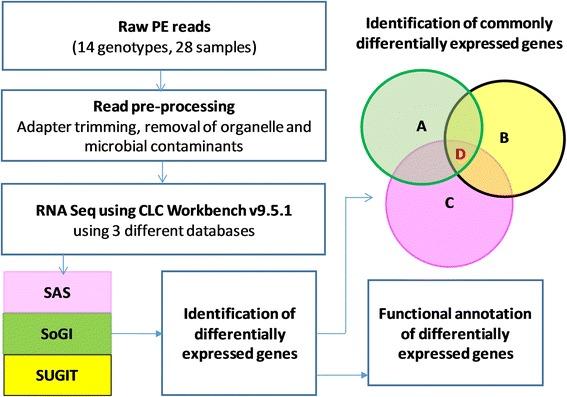
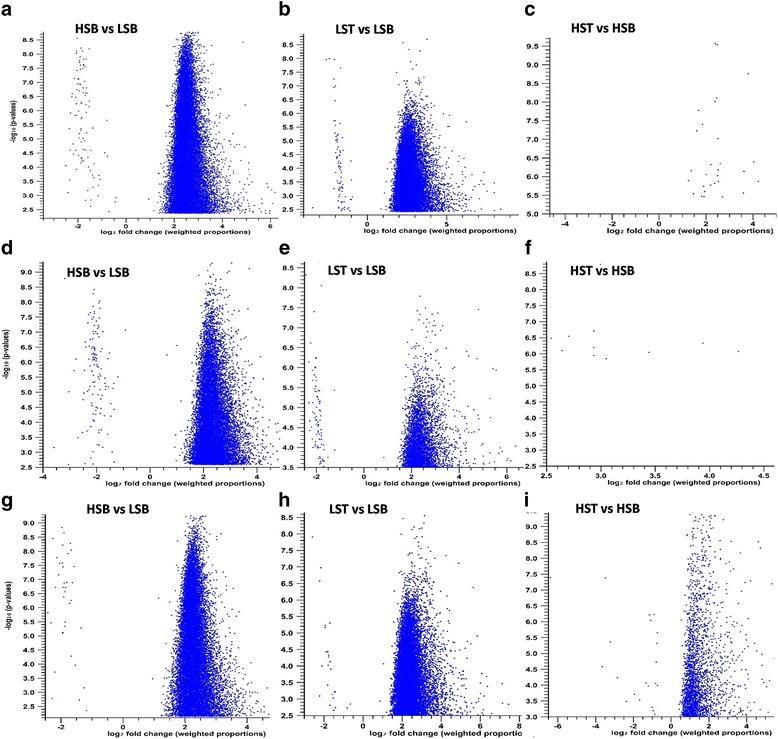
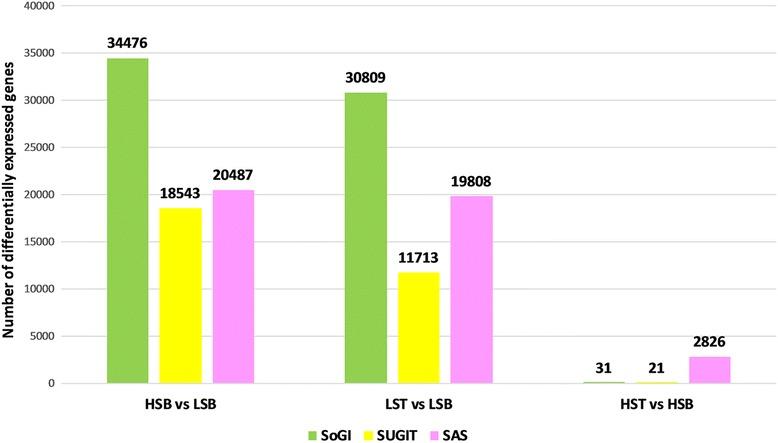
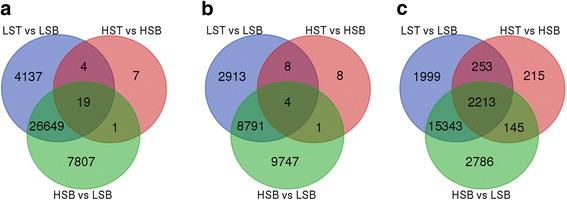
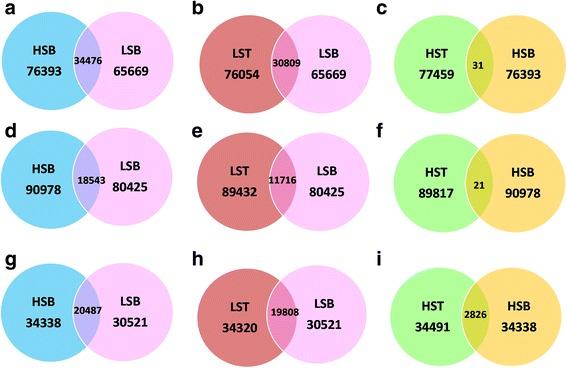
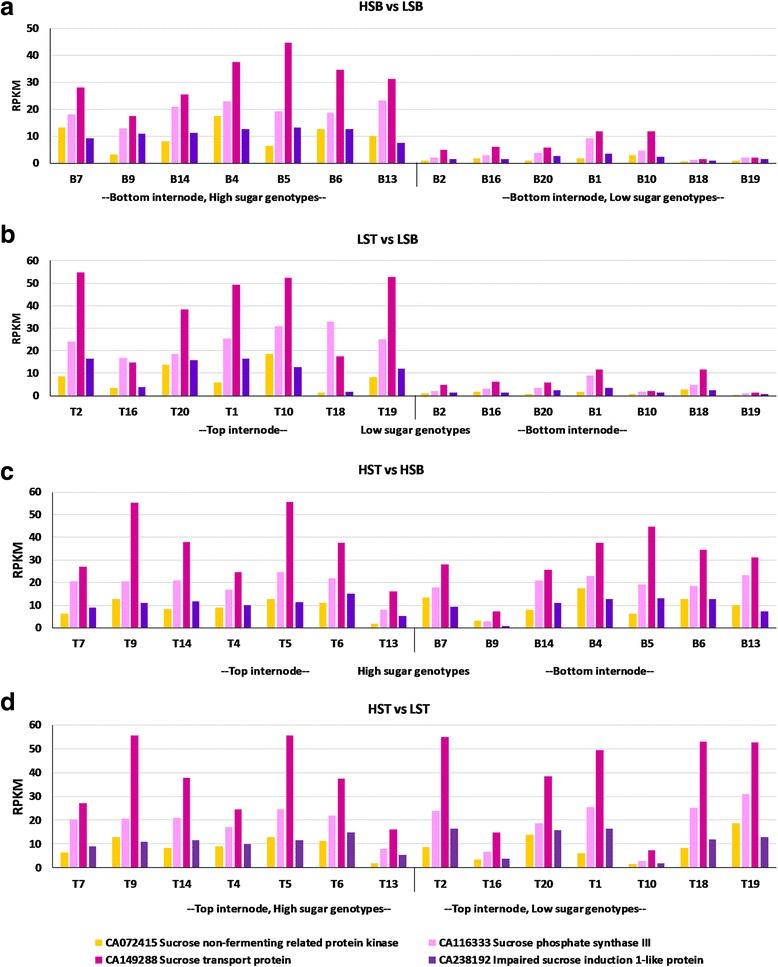
In this study, 28 RNA-Seq libraries from 14 genotypes of sugarcane differing in their sucrose content were used for studying the transcriptional basis of sucrose accumulation. Differential gene expression studies were performed using SoGI (Saccharum officinarum Gene Index, 3.0), SAS (sugarcane assembled sequences) of sugarcane EST database (SUCEST) and SUGIT, a sugarcane Iso-Seq transcriptome database. In total, about 34,476 genes were found to be differentially expressed between high and low sugar genotypes with the SoGI database, 20,487 genes with the SAS database and 18,543 genes with the SUGIT database at FDR < 0.01, using the Baggerley's test. Further, differential gene expression analyses were conducted between immature (top) and mature (bottom) tissues of the culm. The DEGs were functionally annotated using GO classification and the genes consistently associated with sucrose accumulation were identified.
CONCLUSIONS
The large number of DEGs may be due to the large number of genes that influence sucrose content or are regulated by sucrose content. These results indicate that apart from being a primary metabolite and storage and transport sugar, sucrose may serve as a signalling molecule that regulates many aspects of growth and development in sugarcane. Further studies are needed to confirm if sucrose regulates the expression of the identified DEGs or vice versa. The DEGs identified in this study may lead to identification of genes/pathways regulating sucrose accumulation and/or regulated by sucrose levels in sugarcane. We propose identifying the master regulators of sucrose if any in the future.
背景
甘蔗是热带地区的主要作物,主要因其高含量的蔗糖而种植。由于其复杂的多倍体基因组,该作物的遗传研究较少。蔗糖的合成和积累是一个复杂的过程,受生理、生化和遗传因素以及生长环境的影响。最近人们对该作物纤维和生物燃料的关注,使得人们对理解蔗糖和生物质特性的分子基础重新产生了兴趣。本转录组研究旨在鉴定与成熟阶段甘蔗蔗糖合成和积累相关并受其调控的基因。通过对高糖和低糖基因型以及成熟和不成熟茎组织的茎转录组 RNA-Seq,研究了基因表达模式。
结果
本研究使用了来自蔗糖含量不同的 14 个甘蔗基因型的 28 个 RNA-Seq 文库,用于研究蔗糖积累的转录基础。使用 SoGI(甘蔗 officinarum 基因索引,3.0)、蔗糖 EST 数据库(SUCEST)的 SAS(sugarcane 组装序列)和蔗糖 Iso-Seq 转录组数据库 SUGIT 进行差异基因表达研究。总共发现约 34476 个基因在高糖和低糖基因型之间差异表达,SoGI 数据库中有 20487 个基因,SAS 数据库中有 18543 个基因,FDR<0.01,使用 Baggerley 检验。此外,还对茎的不成熟(顶部)和成熟(底部)组织之间的差异基因表达进行了分析。使用 GO 分类对差异表达基因进行功能注释,并鉴定了与蔗糖积累一致的基因。
结论
大量的差异表达基因可能是由于大量影响蔗糖含量或受蔗糖含量调控的基因。这些结果表明,蔗糖除了作为一种主要代谢物和储存及运输糖外,还可能作为一种信号分子,调节甘蔗生长和发育的许多方面。需要进一步的研究来确认蔗糖是否调节鉴定的差异表达基因的表达,或者反之。本研究中鉴定的差异表达基因可能导致鉴定出调节蔗糖积累的基因/途径或受蔗糖水平调节的基因。我们建议在未来确定蔗糖是否存在主调控因子。
 Zotero 插件