
用于替代抗菌疗法的纳米材料。
Nanomaterials for alternative antibacterial therapy.
作者信息
Hemeg Hassan A
机构信息
Department of Medical Laboratories Technology, Faculty of Applied Medical Sciences, Taibah University, Medina, Kingdom of Saudi Arabia.
出版信息
Int J Nanomedicine. 2017 Nov 10;12:8211-8225. doi: 10.2147/IJN.S132163. eCollection 2017.
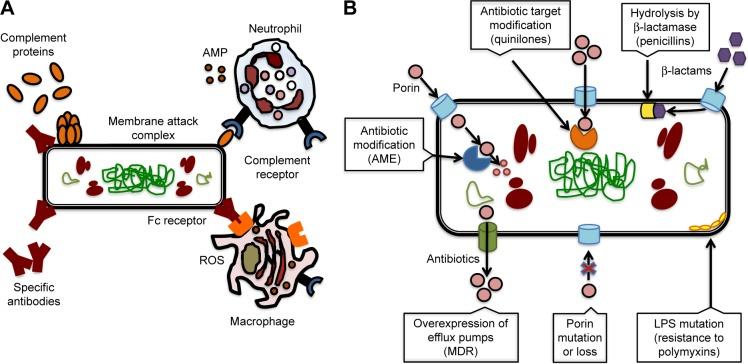
Despite an array of cogent antibiotics, bacterial infections, notably those produced by nosocomial pathogens, still remain a leading factor of morbidity and mortality around the globe. They target the severely ill, hospitalized and immunocompromised patients with incapacitated immune system, who are prone to infections. The choice of antimicrobial therapy is largely empirical and not devoid of toxicity, hypersensitivity, teratogenicity and/or mutagenicity. The emergence of multidrug-resistant bacteria further intensifies the clinical predicament as it directly impacts public health due to diminished potency of current antibiotics. In addition, there is an escalating concern with respect to biofilm-associated infections that are refractory to the presently available antimicrobial armory, leaving almost no therapeutic option. Hence, there is a dire need to develop alternate antibacterial agents. The past decade has witnessed a substantial upsurge in the global use of nanomedicines as innovative tools for combating the high rates of antimicrobial resistance. Antibacterial activity of metal and metal oxide nanoparticles (NPs) has been extensively reported. The microbes are eliminated either by microbicidal effects of the NPs, such as release of free metal ions culminating in cell membrane damage, DNA interactions or free radical generation, or by microbiostatic effects coupled with killing potentiated by the host's immune system. This review encompasses the magnitude of multidrug resistance in nosocomial infections, bacterial evasion of the host immune system, mechanisms used by bacteria to develop drug resistance and the use of nanomaterials based on metals to overcome these challenges. The diverse annihilative effects of conventional and biogenic metal NPs for antibacterial activity are also discussed. The use of polymer-based nanomaterials and nanocomposites, alone or functionalized with ligands, antibodies or antibiotics, as alternative antimicrobial agents for treating severe bacterial infections is also discussed. Combinatorial therapy with metallic NPs, as adjunct to the existing antibiotics, may aid to restrain the mounting menace of bacterial resistance and nosocomial threat.
尽管有一系列有效的抗生素,但细菌感染,尤其是医院病原体引起的感染,仍然是全球发病和死亡的主要因素。它们针对的是病情严重、住院且免疫系统受损的患者,这些患者容易感染。抗菌治疗的选择很大程度上是经验性的,且并非没有毒性、超敏反应、致畸性和/或致突变性。多重耐药细菌的出现进一步加剧了临床困境,因为当前抗生素效力下降直接影响了公共卫生。此外,人们越来越关注与生物膜相关的感染,这些感染对目前可用的抗菌药物具有耐药性,几乎没有治疗选择。因此,迫切需要开发替代抗菌剂。在过去十年中,全球纳米药物的使用大幅增加,成为对抗高抗菌耐药率的创新工具。金属和金属氧化物纳米颗粒(NPs)的抗菌活性已得到广泛报道。微生物的消除要么是通过纳米颗粒的杀菌作用,如释放游离金属离子最终导致细胞膜损伤、DNA相互作用或自由基产生,要么是通过抑菌作用以及宿主免疫系统增强的杀伤作用。本综述涵盖了医院感染中多重耐药的程度、细菌对宿主免疫系统的逃避、细菌产生耐药性的机制以及使用基于金属的纳米材料来克服这些挑战。还讨论了传统和生物源金属纳米颗粒抗菌活性的不同消灭作用。还讨论了使用基于聚合物的纳米材料和纳米复合材料,单独使用或用配体、抗体或抗生素功能化,作为治疗严重细菌感染的替代抗菌剂。与金属纳米颗粒联合治疗作为现有抗生素的辅助手段,可能有助于抑制细菌耐药性和医院感染威胁的不断增加。

 Zotero 插件