
一种用于基因操作的简单通用系统:组装的Cas9-引导RNA核糖核蛋白与微同源性修复模板相结合。 (注:原文中“in : -Assembled”表述似乎有误,推测可能是“in vitro-Assembled”之类的正确表述,这里按给定原文翻译)
A Simple and Universal System for Gene Manipulation in : -Assembled Cas9-Guide RNA Ribonucleoproteins Coupled with Microhomology Repair Templates.
作者信息
Al Abdallah Qusai, Ge Wenbo, Fortwendel Jarrod R
机构信息
Department of Clinical Pharmacy and Translational Science, University of Tennessee Health Science Center, Memphis, Tennessee, USA.
出版信息
mSphere. 2017 Nov 22;2(6). doi: 10.1128/mSphere.00446-17. eCollection 2017 Nov-Dec.
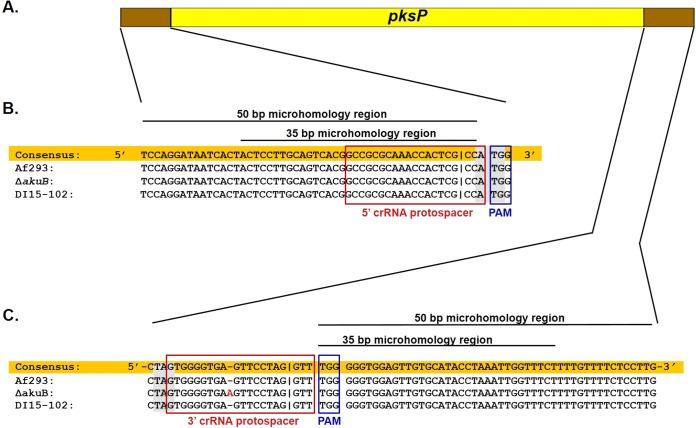
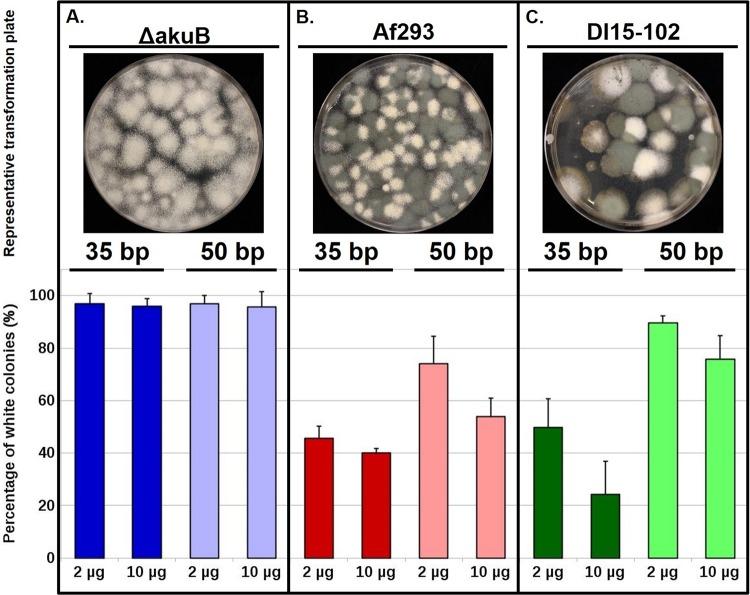
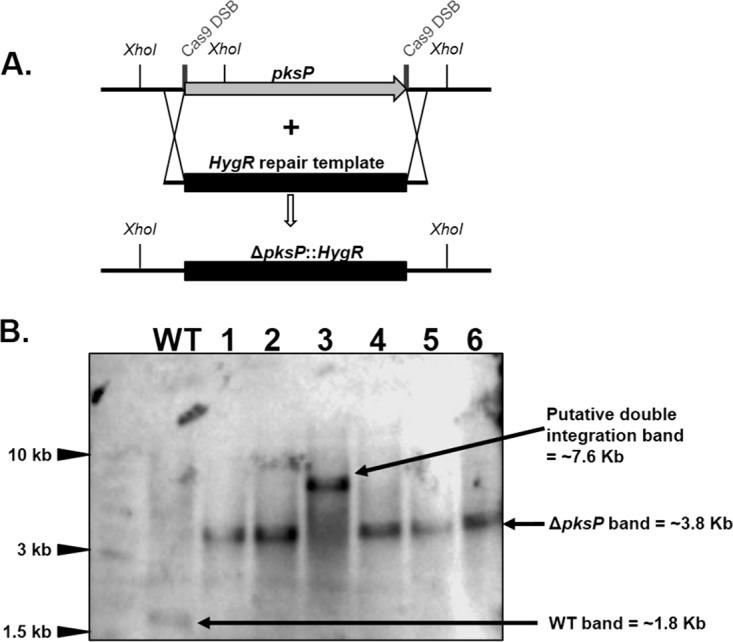
CRISPR (clustered regularly interspaced short palindromic repeat)-Cas9 is a novel genome-editing system that has been successfully established in . However, the current state of the technology relies heavily on DNA-based expression cassettes for delivering Cas9 and the guide RNA (gRNA) to the cell. Therefore, the power of the technology is limited to strains that are engineered to express Cas9 and gRNA. To overcome such limitations, we developed a simple and universal CRISPR-Cas9 system for gene deletion that works across different genetic backgrounds of . The system employs assembly of dual Cas9 ribonucleoproteins (RNPs) for targeted gene deletion. Additionally, our CRISPR-Cas9 system utilizes 35 to 50 bp of flanking regions for mediating homologous recombination at Cas9 double-strand breaks (DSBs). As a proof of concept, we first tested our system in the Δ (Δ ) laboratory strain and generated high rates (97%) of gene deletion using 2 µg of the repair template flanked by homology regions as short as 35 bp. Next, we inspected the portability of our system across other genetic backgrounds of , namely, the wild-type strain Af293 and a clinical isolate, DI15-102. In the Af293 strain, 2 µg of the repair template flanked by 35 and 50 bp of homology resulted in highly efficient gene deletion (46% and 74%, respectively) in comparison to classical gene replacement systems. Similar deletion efficiencies were also obtained in the clinical isolate DI15-102. Taken together, our data show that -assembled Cas9 RNPs coupled with microhomology repair templates are an efficient and universal system for gene manipulation in . Tackling the multifactorial nature of virulence and antifungal drug resistance in requires the mechanistic interrogation of a multitude of genes, sometimes across multiple genetic backgrounds. Classical fungal gene replacement systems can be laborious and time-consuming and, in wild-type isolates, are impeded by low rates of homologous recombination. Our simple and universal CRISPR-Cas9 system for gene manipulation generates efficient gene targeting across different genetic backgrounds of . We anticipate that our system will simplify genome editing in , allowing for the generation of single- and multigene knockout libraries. In addition, our system will facilitate the delineation of virulence factors and antifungal drug resistance genes in different genetic backgrounds of .
CRISPR(成簇规律间隔短回文重复序列)-Cas9是一种已在……成功建立的新型基因组编辑系统。然而,目前该技术的状态严重依赖基于DNA的表达盒将Cas9和引导RNA(gRNA)递送至细胞。因此,该技术的能力仅限于经过工程改造以表达Cas9和gRNA的菌株。为克服此类限制,我们开发了一种简单通用的用于基因缺失的CRISPR-Cas9系统,该系统适用于……的不同遗传背景。该系统采用双Cas9核糖核蛋白(RNP)组装进行靶向基因缺失。此外,我们的CRISPR-Cas9系统利用35至50个碱基对的侧翼区域在Cas9双链断裂(DSB)处介导同源重组。作为概念验证,我们首先在Δ(Δ)实验室菌株中测试了我们的系统,并使用2μg侧翼同源区域短至35个碱基对的修复模板产生了高基因缺失率(97%)。接下来,我们检查了我们的系统在……的其他遗传背景中的可移植性,即野生型菌株Af293和临床分离株DI15-102。在Af293菌株中,与经典基因替换系统相比,2μg侧翼有35和50个碱基对同源性的修复模板导致了高效的基因缺失(分别为46%和74%)。在临床分离株DI15-102中也获得了类似的缺失效率。综上所述,我们的数据表明,……组装的Cas9核糖核蛋白与微同源性修复模板相结合是一种用于……基因操作的高效通用系统。解决……中毒力和抗真菌药物耐药性的多因素性质需要对众多基因进行机制研究,有时需要跨越多个遗传背景。经典的真菌基因替换系统可能费力且耗时,并且在野生型分离株中,会受到同源重组率低的阻碍。我们用于基因操作的简单通用的CRISPR-Cas9系统在……的不同遗传背景中产生了高效的基因靶向。我们预计我们的系统将简化……中的基因组编辑,允许生成单基因和多基因敲除文库。此外,我们的系统将有助于在……的不同遗传背景中描绘毒力因子和抗真菌药物耐药基因。


 Zotero 插件