
特应性皮炎的发病机制:屏障破坏、免疫紊乱和瘙痒。
The etiopathogenesis of atopic dermatitis: barrier disruption, immunological derangement, and pruritus.
作者信息
Rerknimitr Pawinee, Otsuka Atsushi, Nakashima Chisa, Kabashima Kenji
机构信息
Department of Dermatology, Kyoto University Graduate School of Medicine, 54 Shogoin-Kawara, Sakyo, Kyoto, 606-8507 Japan.
Division of Dermatology, Department of Medicine, Faculty of Medicine, Skin and Allergy Research Unit, Chulalongkorn University, Bangkok, Thailand.
出版信息
Inflamm Regen. 2017 Jun 5;37:14. doi: 10.1186/s41232-017-0044-7. eCollection 2017.
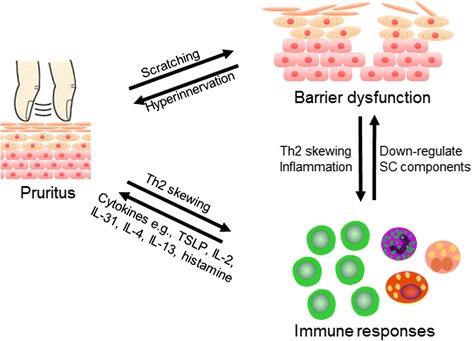
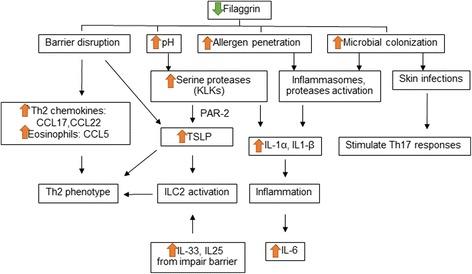
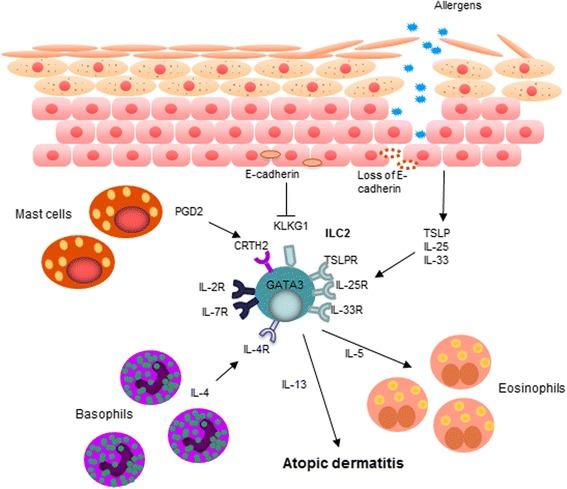
Atopic dermatitis (AD) is a common chronic skin inflammatory disorder characterized by recurrent eczema accompanied by an intractable itch that leads to an impaired quality of life. Extensive recent studies have shed light on the multifaceted pathogenesis of the disease. The complex interplay among skin barrier deficiency, immunological derangement, and pruritus contributes to the development, progression, and chronicity of the disease. Abnormalities in filaggrin, other stratum corneum constituents, and tight junctions induce and/or promote skin inflammation. This inflammation, in turn, can further deteriorate the barrier function by downregulating a myriad of essential barrier-maintaining molecules. Pruritus in AD, which may be due to hyperinnervation of the epidermis, increases pruritogens, and central sensitization compromises the skin integrity and promotes inflammation. There are unmet needs in the treatment of AD. Based on the detailed evidence available to date, certain disease mechanisms can be chosen as treatment targets. Numerous clinical trials of biological agents are currently being conducted and are expected to provide treatments for patients suffering from AD in the future. This review summarizes the etiopathogenesis of the disease and provides a rationale for choosing the novel targeted therapy that will be available in the future.
特应性皮炎(AD)是一种常见的慢性皮肤炎症性疾病,其特征为复发性湿疹,并伴有难以忍受的瘙痒,导致生活质量受损。最近大量的研究揭示了该疾病多方面的发病机制。皮肤屏障缺陷、免疫紊乱和瘙痒之间的复杂相互作用促成了该疾病的发生、发展和慢性化。丝聚蛋白、其他角质层成分以及紧密连接的异常会引发和/或促进皮肤炎症。反过来,这种炎症会通过下调大量维持屏障的关键分子进一步破坏屏障功能。AD中的瘙痒可能归因于表皮神经分布过度、瘙痒原增加,而中枢敏化会损害皮肤完整性并促进炎症。AD的治疗仍存在未满足的需求。基于目前可得的详细证据,可以选择某些疾病机制作为治疗靶点。目前正在进行大量生物制剂的临床试验,有望在未来为AD患者提供治疗方法。本综述总结了该疾病的病因发病机制,并为选择未来可用的新型靶向治疗提供了理论依据。
 Zotero 插件