
常见疾病相关基因座内DNA甲基化组中的强制性和促进性等位基因变异。
Obligatory and facilitative allelic variation in the DNA methylome within common disease-associated loci.
作者信息
Bell Christopher G, Gao Fei, Yuan Wei, Roos Leonie, Acton Richard J, Xia Yudong, Bell Jordana, Ward Kirsten, Mangino Massimo, Hysi Pirro G, Wang Jun, Spector Timothy D
机构信息
Department of Twin Research & Genetic Epidemiology, King's College London, London, SE1 7EH, UK.
MRC Lifecourse Epidemiology Unit, University of Southampton, Southampton, SO16 6YD, UK.
出版信息
Nat Commun. 2018 Jan 2;9(1):8. doi: 10.1038/s41467-017-01586-1.
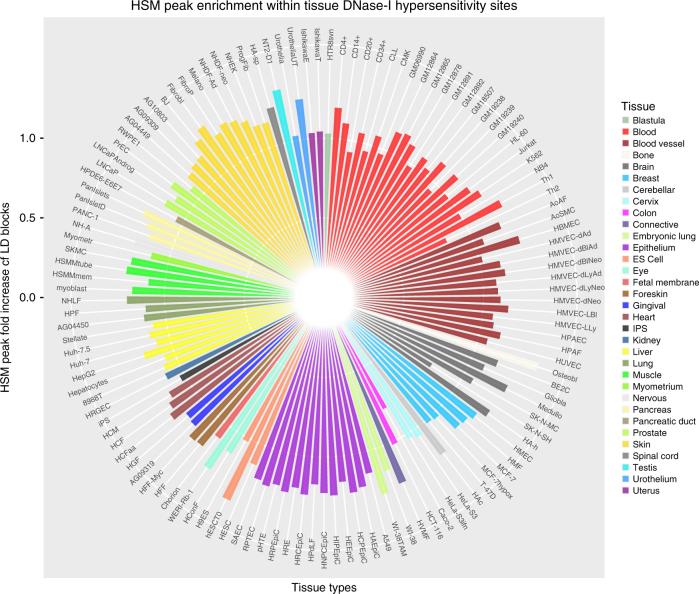
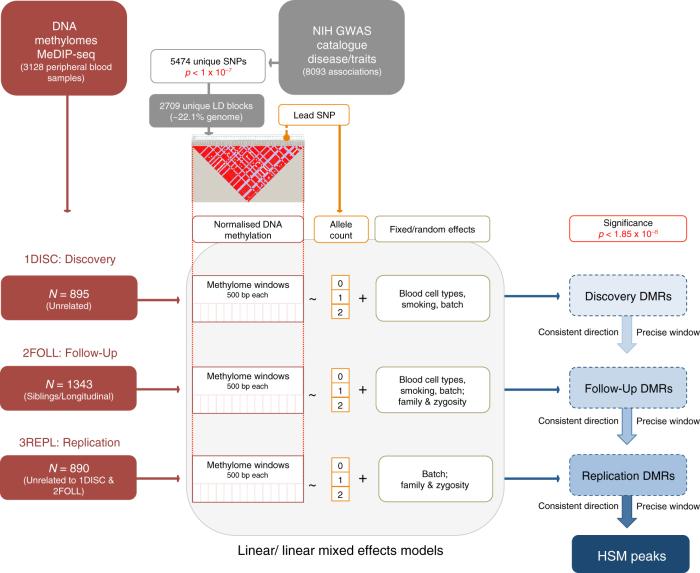
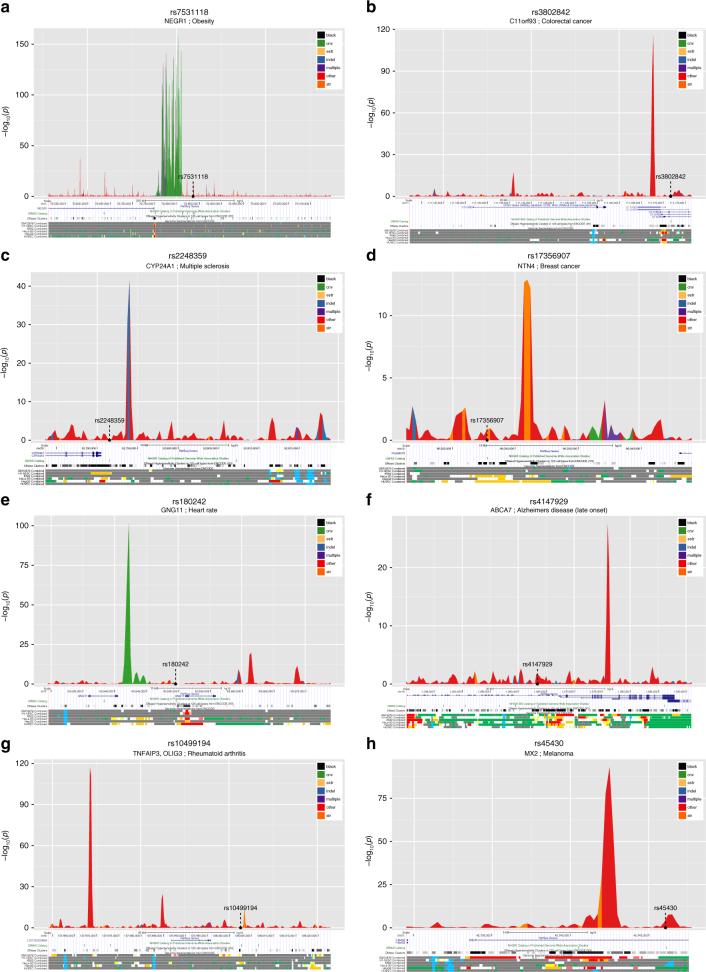
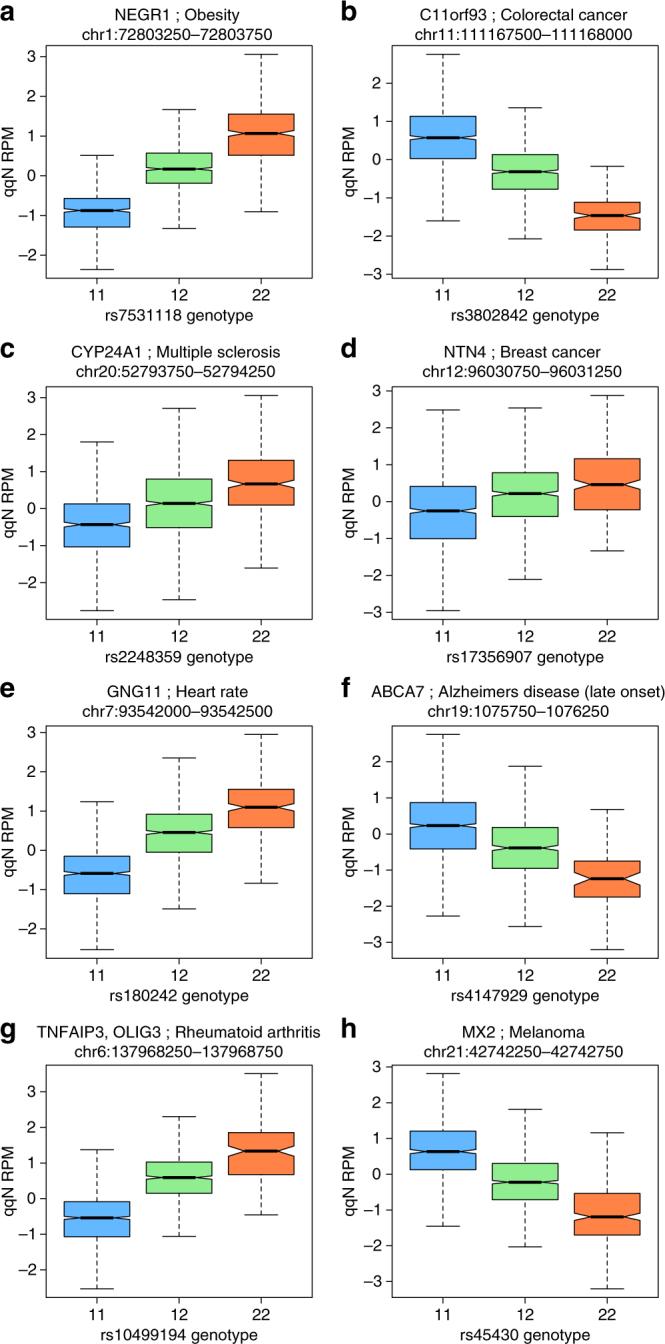
Integrating epigenetic data with genome-wide association study (GWAS) results can reveal disease mechanisms. The genome sequence itself also shapes the epigenome, with CpG density and transcription factor binding sites (TFBSs) strongly encoding the DNA methylome. Therefore, genetic polymorphism impacts on the observed epigenome. Furthermore, large genetic variants alter epigenetic signal dosage. Here, we identify DNA methylation variability between GWAS-SNP risk and non-risk haplotypes. In three subsets comprising 3128 MeDIP-seq peripheral-blood DNA methylomes, we find 7173 consistent and functionally enriched Differentially Methylated Regions. 36.8% can be attributed to common non-SNP genetic variants. CpG-SNPs, as well as facilitative TFBS-motifs, are also enriched. Highlighting their functional potential, CpG-SNPs strongly associate with allele-specific DNase-I hypersensitivity sites. Our results demonstrate strong DNA methylation allelic differences driven by obligatory or facilitative genetic effects, with potential direct or regional disease-related repercussions. These allelic variations require disentangling from pure tissue-specific modifications, may influence array studies, and imply underestimated population variability in current reference epigenomes.
将表观遗传数据与全基因组关联研究(GWAS)结果相结合可以揭示疾病机制。基因组序列本身也塑造着表观基因组,其中CpG密度和转录因子结合位点(TFBSs)强烈编码DNA甲基化组。因此,基因多态性会影响观察到的表观基因组。此外,大的基因变异会改变表观遗传信号剂量。在这里,我们识别了GWAS-SNP风险单倍型和非风险单倍型之间的DNA甲基化变异性。在由3128个MeDIP-seq外周血DNA甲基化组组成的三个子集中,我们发现了7173个一致且功能富集的差异甲基化区域。36.8%可归因于常见的非SNP基因变异。CpG-SNP以及促进性TFBS基序也得到了富集。突出其功能潜力,CpG-SNP与等位基因特异性DNase-I超敏位点强烈相关。我们的结果表明,由强制性或促进性基因效应驱动的DNA甲基化等位基因差异很大,具有潜在的直接或区域疾病相关影响。这些等位基因变异需要与纯组织特异性修饰区分开来,可能会影响阵列研究,并意味着当前参考表观基因组中人群变异性被低估。


 Zotero 插件