
代谢型谷氨酸受体2/3(mGluR2/3)激活SIRT1轴可维持糖尿病性神经病变中的线粒体功能。
mGluR2/3 activation of the SIRT1 axis preserves mitochondrial function in diabetic neuropathy.
作者信息
Chandrasekaran Krish, Muragundla Anjaneyulu, Demarest Tyler G, Choi Joungil, Sagi Avinash R, Najimi Neda, Kumar Pranith, Singh Anmol, Ho Cheng-Ying, Fiskum Gary, Koch Lauren G, Britton Steven L, Russell James W
机构信息
Department of Neurology University of Maryland School of Medicine Baltimore Maryland 21201.
Veterans Affairs Medical Center Baltimore Maryland 21201.
出版信息
Ann Clin Transl Neurol. 2017 Nov 1;4(12):844-858. doi: 10.1002/acn3.484. eCollection 2017 Dec.
OBJECTIVES
There is a critical need to develop effective treatments for diabetic neuropathy. This study determined if a selective mGluR2/3 receptor agonist prevented or treated experimental diabetic peripheral neuropathy (DPN) through glutamate recycling and improved mitochondrial function.
METHODS
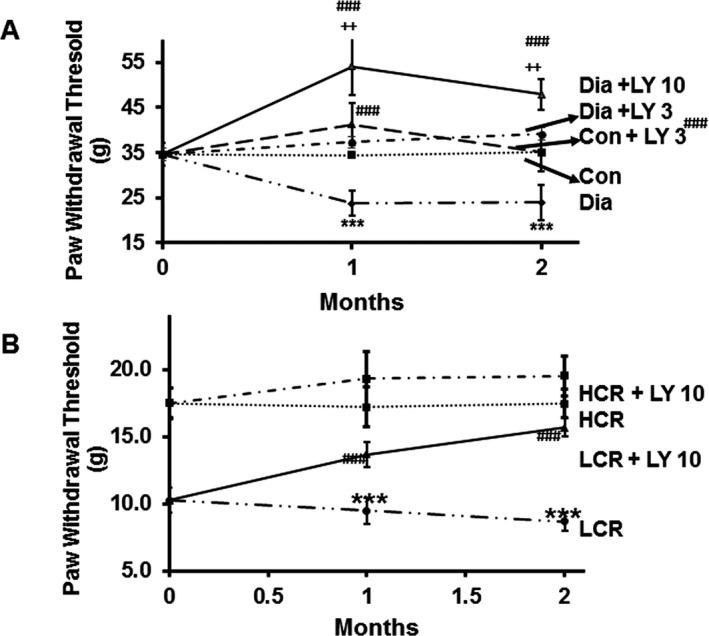
Adult male streptozotocin treated Sprague-Dawley rats with features of type 1 diabetes mellitus (T1DM) or Low Capacity Running (LCR) rats with insulin resistance or glucose intolerance were treated with 3 or 10 mg/kg/day LY379268. Neuropathy end points included mechanical allodynia, nerve conduction velocities (NCV), and intraepidermal nerve fiber density (IENFD). Markers of oxidative stress, antioxidant response, glutamate recycling pathways, and mitochondrial oxidative phosphorylation (OXPHOS) associated proteins were measured in dorsal root ganglia (DRG).
RESULTS
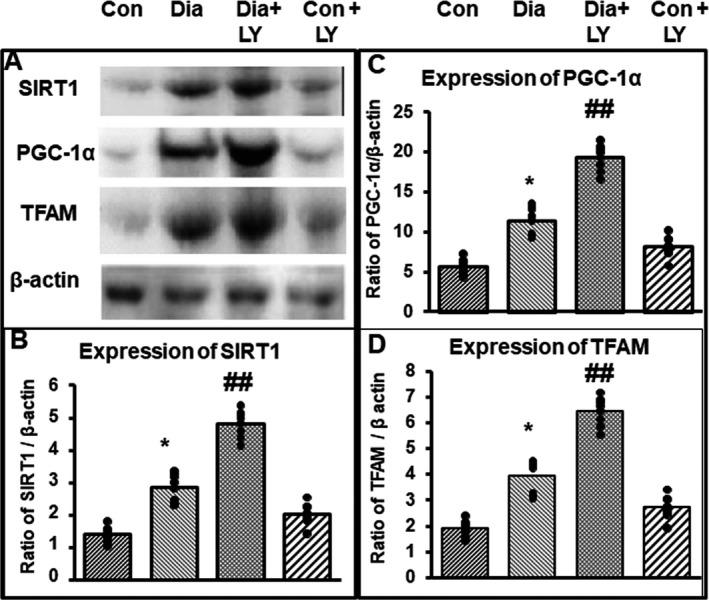
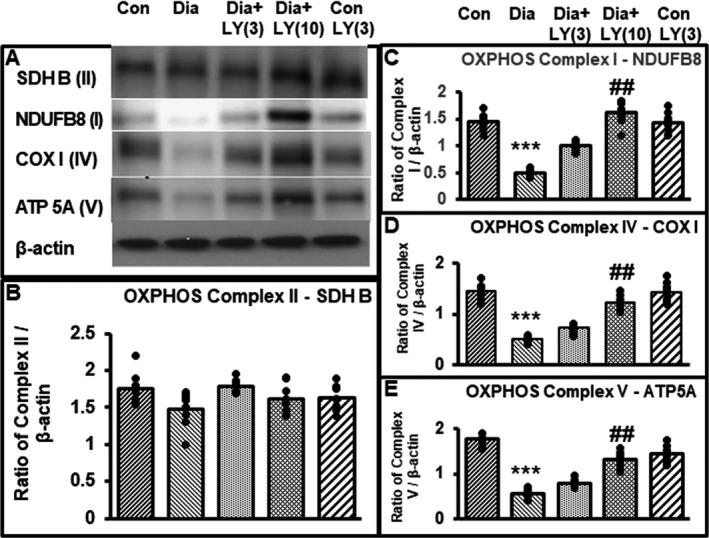
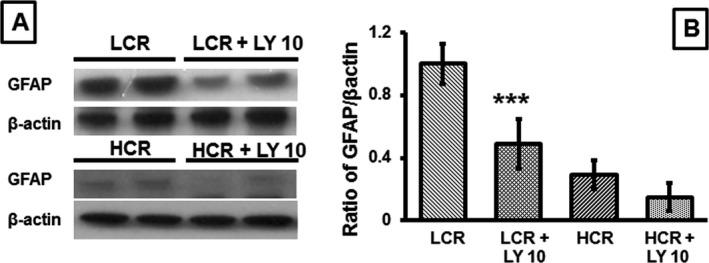
In diabetic rats, NCV and IENFD were decreased. Diabetic rats treated with an mGluR2/3 agonist did not develop neuropathy despite remaining diabetic. Diabetic DRG showed increased levels of oxidized proteins, decreased levels of glutathione, decreased levels of mitochondrial DNA (mtDNA) and OXPHOS proteins. In addition, there was a 20-fold increase in levels of glial fibrillary acidic protein (GFAP) and the levels of glutamine synthetase and glutamate transporter proteins were decreased. When treated with a specific mGluR2/3 agonist, levels of glutathione, GFAP and oxidized proteins were normalized and levels of superoxide dismutase 2 (SOD2), SIRT1, PGC-1, TFAM, glutamate transporter proteins, and glutamine synthetase were increased in DRG neurons.
INTERPRETATION
Activation of glutamate recycling pathways protects diabetic DRG and this is associated with activation of the SIRT1-PGC-1-TFAM axis and preservation of mitochondrial OXPHOS function.
目的
迫切需要开发有效的糖尿病神经病变治疗方法。本研究确定了一种选择性代谢型谷氨酸受体2/3(mGluR2/3)激动剂是否通过谷氨酸再循环预防或治疗实验性糖尿病周围神经病变(DPN)并改善线粒体功能。
方法
用链脲佐菌素处理成年雄性Sprague-Dawley大鼠以诱导1型糖尿病(T1DM)特征,或使用具有胰岛素抵抗或葡萄糖不耐受的低容量跑步(LCR)大鼠,用3或10mg/kg/天的LY379268进行治疗。神经病变终点包括机械性异常性疼痛、神经传导速度(NCV)和表皮内神经纤维密度(IENFD)。在背根神经节(DRG)中测量氧化应激、抗氧化反应、谷氨酸再循环途径和线粒体氧化磷酸化(OXPHOS)相关蛋白的标志物。
结果
在糖尿病大鼠中,NCV和IENFD降低。用mGluR2/3激动剂治疗的糖尿病大鼠尽管仍患有糖尿病,但未发生神经病变。糖尿病DRG显示氧化蛋白水平升高、谷胱甘肽水平降低、线粒体DNA(mtDNA)和OXPHOS蛋白水平降低。此外,胶质纤维酸性蛋白(GFAP)水平增加了20倍,谷氨酰胺合成酶和谷氨酸转运蛋白水平降低。用特异性mGluR2/3激动剂治疗后,DRG神经元中的谷胱甘肽、GFAP和氧化蛋白水平恢复正常,超氧化物歧化酶2(SOD2)、SIRT1、PGC-1、线粒体转录因子A(TFAM)、谷氨酸转运蛋白和谷氨酰胺合成酶水平升高。
解读
谷氨酸再循环途径的激活可保护糖尿病DRG,这与SIRT1-PGC-1-TFAM轴的激活以及线粒体OXPHOS功能的保留有关。




 Zotero 插件