
在人类遗传性白内障小鼠模型中探究α-晶状体蛋白突变导致的基因表达变化。
Probing the changes in gene expression due to α-crystallin mutations in mouse models of hereditary human cataract.
作者信息
Andley Usha P, Tycksen Eric, McGlasson-Naumann Brittney N, Hamilton Paul D
机构信息
Department of Ophthalmology and Visual Sciences, Washington University School of Medicine, St. Louis, Missouri, United States of America.
Genome Technology Access Center, Washington University in St. Louis, St. Louis, Missouri, United States of America.
出版信息
PLoS One. 2018 Jan 16;13(1):e0190817. doi: 10.1371/journal.pone.0190817. eCollection 2018.
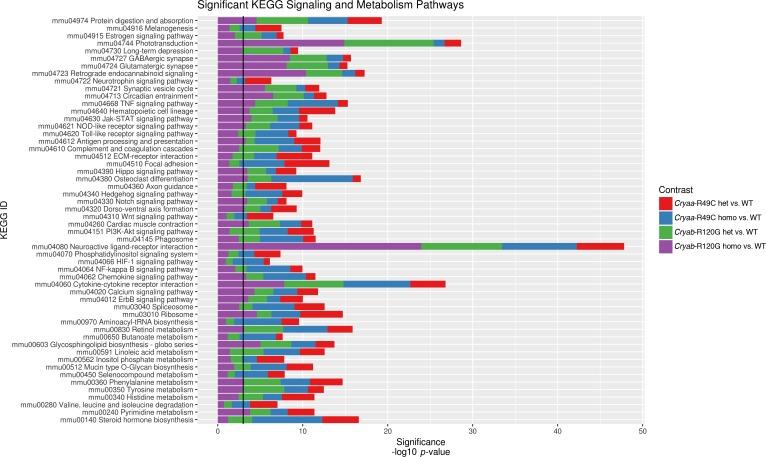
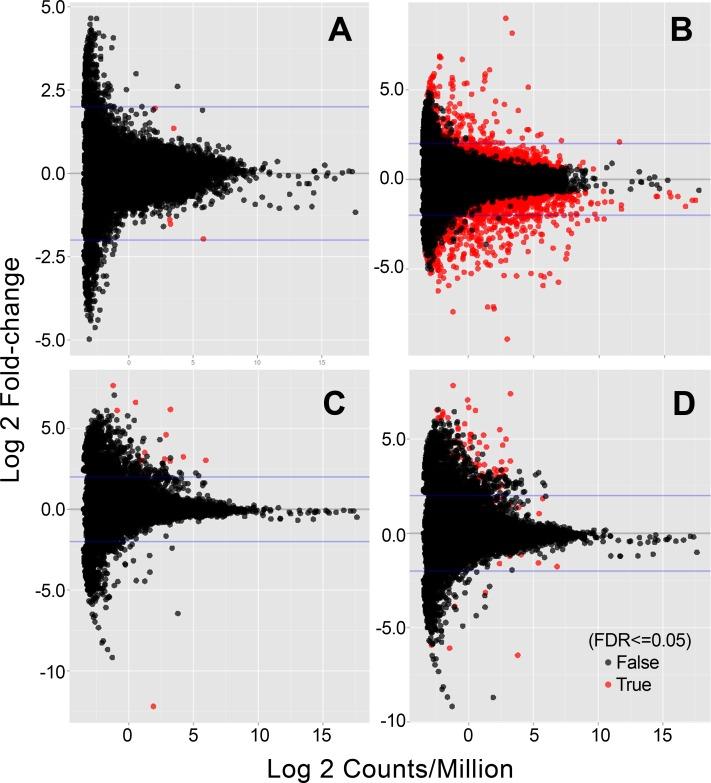
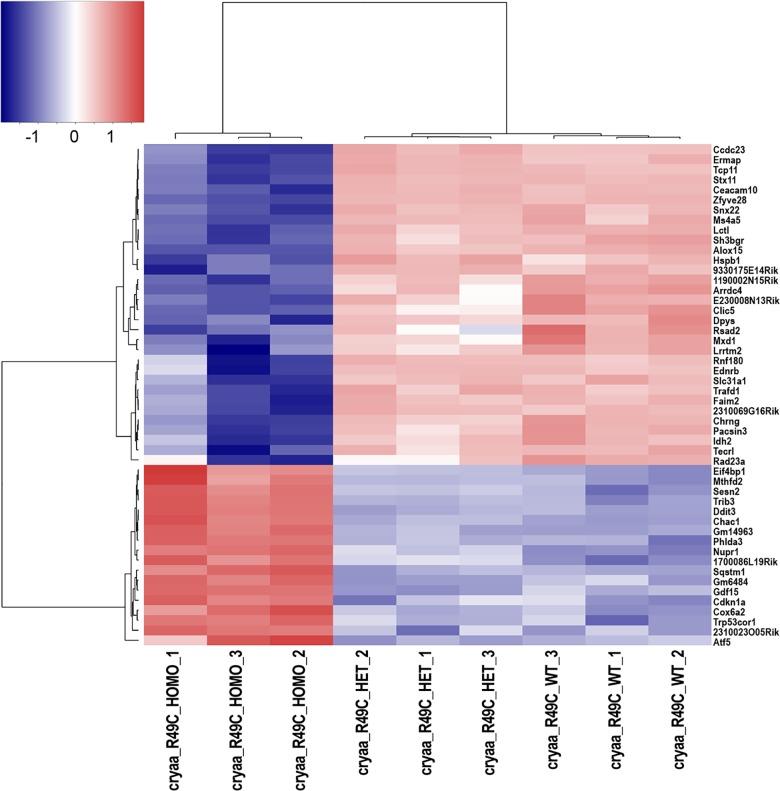
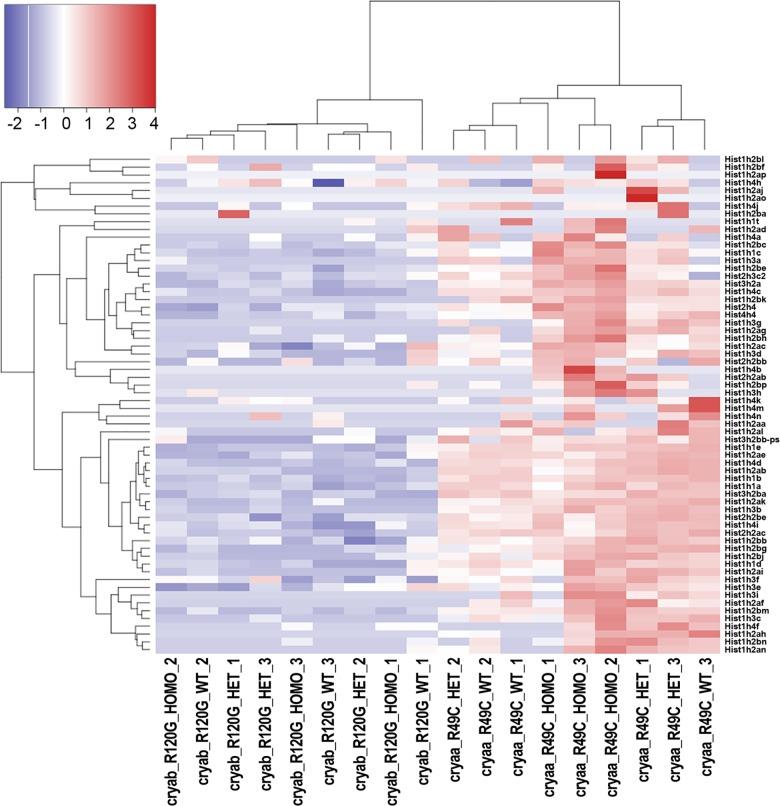
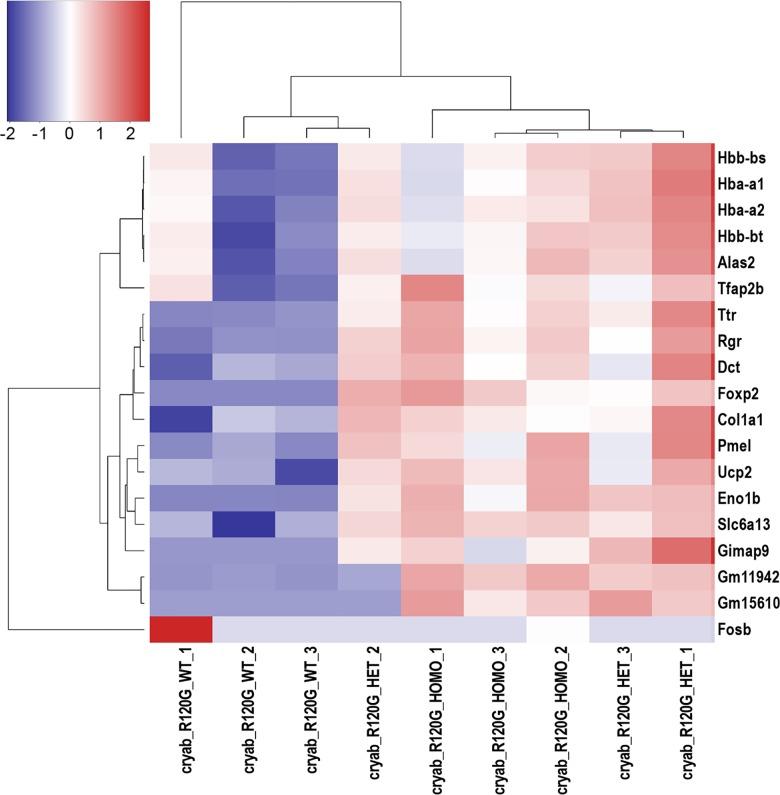
The mammalian eye lens expresses a high concentration of crystallins (α, β and γ-crystallins) to maintain the refractive index essential for lens transparency. Crystallins are long-lived proteins that do not turnover throughout life. The structural destabilization of crystallins by UV exposure, glycation, oxidative stress and mutations in crystallin genes leads to protein aggregation and development of cataracts. Several destabilizing mutations in crystallin genes are linked with human autosomal dominant hereditary cataracts. To investigate the mechanism by which the α-crystallin mutations Cryaa-R49C and Cryab-R120G lead to cataract formation, we determined whether these mutations cause an altered expression of specific transcripts in the lens at an early postnatal age by RNA-seq analysis. Using knock-in mouse models previously generated in our laboratory, in the present work, we identified genes that exhibited altered abundance in the mutant lenses, including decreased transcripts for Clic5, an intracellular water channel in Cryaa-R49C heterozygous mutant lenses, and increased transcripts for Eno1b in Cryab-R120G heterozygous mutant lenses. In addition, RNA-seq analysis revealed increased histones H2B, H2A, and H4 gene expression in Cryaa-R49C mutant lenses, suggesting that the αA-crystallin mutation regulates histone expression via a transcriptional mechanism. Additionally, these studies confirmed the increased expression of histones H2B, H2A, and H4 by proteomic analysis of Cryaa-R49C knock-in and Cryaa;Cryab gene knockout lenses reported previously. Taken together, these findings offer additional insight into the early transcriptional changes caused by Cryaa and Cryab mutations associated with autosomal dominant human cataracts, and indicate that the transcript levels of certain genes are affected by the expression of mutant α-crystallin in vivo.
哺乳动物的眼球晶状体表达高浓度的晶状体蛋白(α、β和γ晶状体蛋白),以维持晶状体透明度所必需的折射率。晶状体蛋白是寿命较长的蛋白质,一生中不会更新。紫外线照射、糖基化、氧化应激和晶状体蛋白基因突变导致的晶状体蛋白结构不稳定会引发蛋白质聚集和白内障的形成。晶状体蛋白基因中的几个不稳定突变与人类常染色体显性遗传性白内障有关。为了研究α晶状体蛋白突变Cryaa-R49C和Cryab-R120G导致白内障形成的机制,我们通过RNA测序分析确定这些突变是否在出生后早期导致晶状体中特定转录本的表达改变。利用我们实验室之前构建的基因敲入小鼠模型,在本研究中,我们鉴定了突变晶状体中丰度发生改变的基因,包括Cryaa-R49C杂合突变晶状体中细胞内水通道蛋白Clic5的转录本减少,以及Cryab-R120G杂合突变晶状体中Eno1b的转录本增加。此外,RNA测序分析显示Cryaa-R49C突变晶状体中组蛋白H2B、H2A和H4基因表达增加,这表明αA晶状体蛋白突变通过转录机制调节组蛋白表达。此外,这些研究通过之前报道的对Cryaa-R49C基因敲入和Cryaa;Cryab基因敲除晶状体的蛋白质组学分析,证实了组蛋白H2B、H2A和H4的表达增加。综上所述,这些发现为常染色体显性遗传性人类白内障相关的Cryaa和Cryab突变引起的早期转录变化提供了更多见解,并表明某些基因的转录水平在体内受到突变α晶状体蛋白表达的影响。
 Zotero 插件