
姜黄补充剂可逆转阿尔茨海默病模型中的神经毒性和行为损伤:系统评价。
Supplementation with Curcuma longa Reverses Neurotoxic and Behavioral Damage in Models of Alzheimer's Disease: A Systematic Review.
机构信息
Laboratory of Experimental Neurology, Department of Biomedical Sciences, Faculty of Health Sciences, University of the State of Rio Grande do Norte, Mossoro/RN, Brazil.
Post graduate in Prescription of Herbal Medicines, Clinical and Sports Nutritional Supplementation, Estácio de Sá University, São Paulo/SP, Brazil.
出版信息
Curr Neuropharmacol. 2019;17(5):406-421. doi: 10.2174/0929867325666180117112610.
BACKGROUND
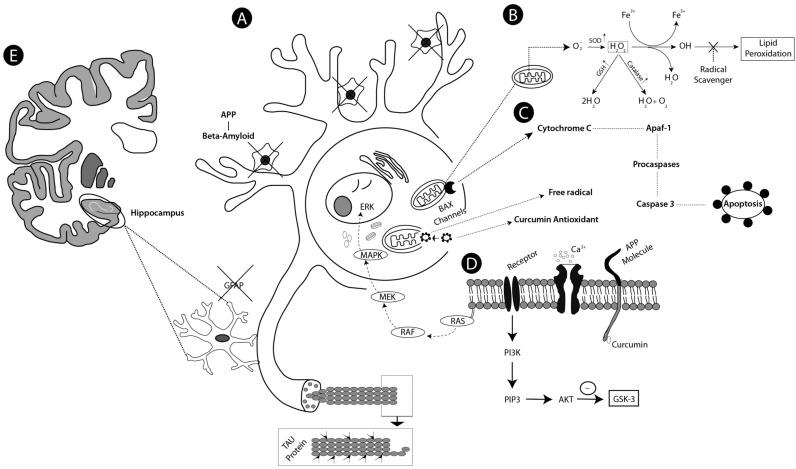
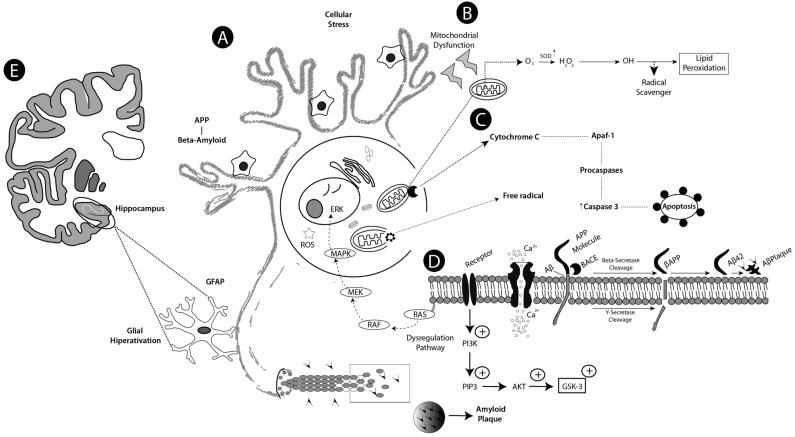
The formation of senile plaques and neurofibrillary tangles of the tau protein are the main pathological mechanism of Alzheimer's disease (AD). Current therapies for AD offer discrete benefits to the clinical symptoms and do not prevent the continuing degeneration of neuronal cells. Therefore, novel therapeutic strategies have long been investigated, where curcumin (Curcuma longa) has shown some properties that can prevent the deleterious processes involved in neurodegenerative diseases.
OBJECTIVE
The aim of the present work is to review studies that addressed the effects of curcumin in experimental models (in vivo and in vitro) for AD.
METHOD
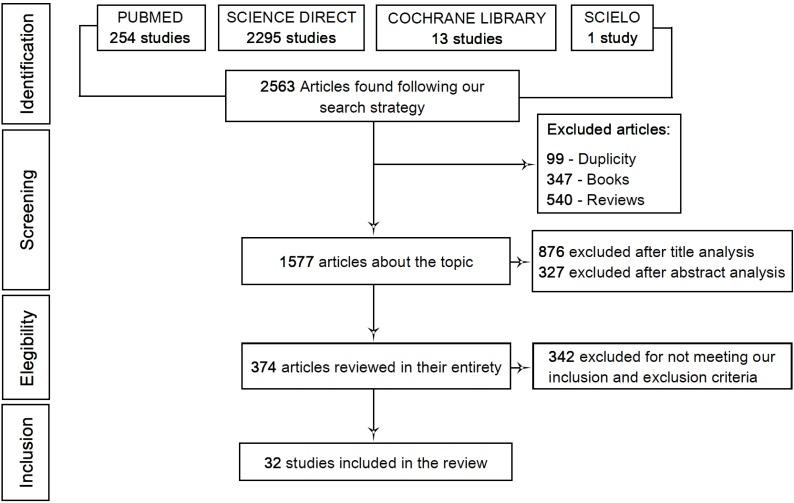
This study is a systematic review conducted between January and June 2017, in which a consultation of scientific articles from indexed periodicals was carried out in Science Direct, United States National Library of Medicine (PubMed), Cochrane Library and Scielo databases, using the following descriptors: "Curcuma longa", "Curcumin" and "Alzheimer's disease".
RESULTS
A total of 32 studies were analyzed, which indicated that curcumin supplementation reverses neurotoxic and behavioral damages in both in vivo and in vitro models of AD.
CONCLUSION
The administration of curcumin in experimental models seems to be a promising approach in AD, even though it is suggested that additional studies must be conducted using distinct doses and through other routes of administration.
背景
tau 蛋白老年斑和神经原纤维缠结的形成是阿尔茨海默病(AD)的主要病理机制。目前 AD 的治疗方法仅对临床症状有明显的改善作用,并不能阻止神经元细胞的持续退化。因此,人们长期以来一直在探索新的治疗策略,其中姜黄素(Curcuma longa)表现出一些可以预防神经退行性疾病相关有害过程的特性。
目的
本研究旨在综述姜黄素在 AD 实验模型(体内和体外)中的作用研究。
方法
这是一项 2017 年 1 月至 6 月进行的系统评价研究,在 Science Direct、美国国家医学图书馆(PubMed)、 Cochrane 图书馆和 Scielo 数据库中对索引期刊的科学文章进行了检索,使用了以下术语:“姜黄”、“姜黄素”和“阿尔茨海默病”。
结果
共分析了 32 项研究,结果表明姜黄素补充剂可逆转 AD 体内和体外模型的神经毒性和行为损伤。
结论
在 AD 实验模型中给予姜黄素似乎是一种很有前途的方法,但仍建议进行更多的研究,使用不同的剂量并通过其他给药途径进行研究。
 Zotero 插件