
恶性胸膜间皮瘤发病和进展的异质影响因素:生物学进展及临床意义。
Heterogeneous Contributing Factors in MPM Disease Development and Progression: Biological Advances and Clinical Implications.
机构信息
Thoracic Oncology Program, Department of Surgery, Helen Diller Family Comprehensive Cancer Center, University of California, San Francisco, CA 94115, USA.
出版信息
Int J Mol Sci. 2018 Jan 13;19(1):238. doi: 10.3390/ijms19010238.
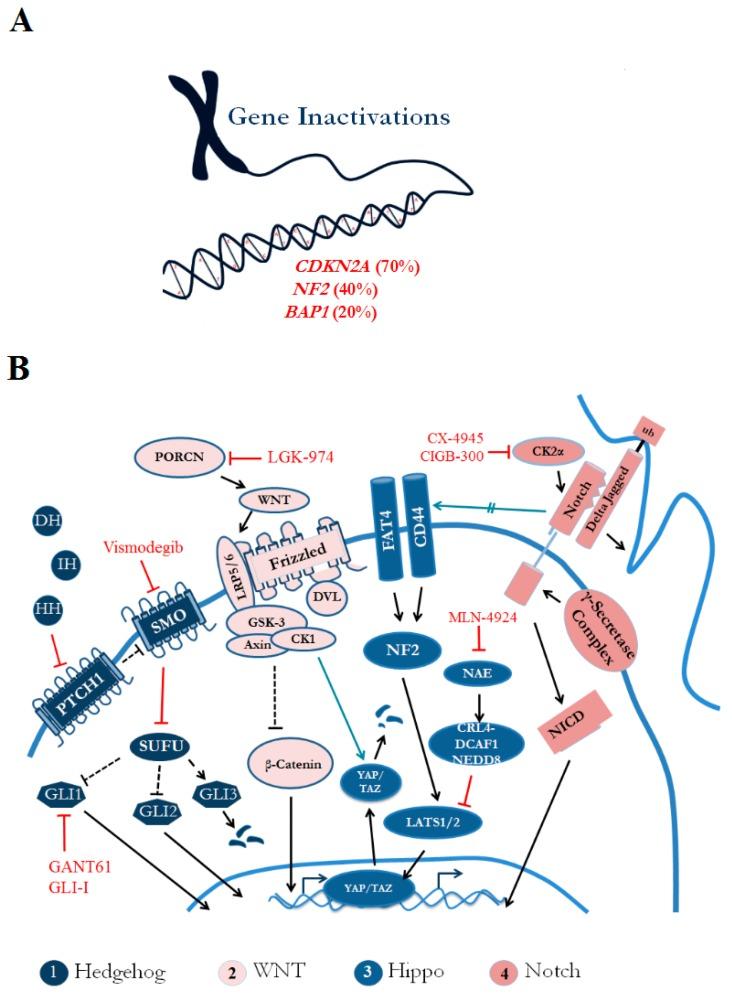
Malignant pleural mesothelioma (MPM) tumors are remarkably aggressive and most patients only survive for 5-12 months; irrespective of stage; after primary symptoms appear. Compounding matters is that MPM remains unresponsive to conventional standards of care; including radiation and chemotherapy. Currently; instead of relying on molecular signatures and histological typing; MPM treatment options are guided by clinical stage and patient characteristics because the mechanism of carcinogenesis has not been fully elucidated; although about 80% of cases can be linked to asbestos exposure. Several molecular pathways have been implicated in the MPM tumor microenvironment; such as angiogenesis; apoptosis; cell-cycle regulation and several growth factor-related pathways predicted to be amenable to therapeutic intervention. Furthermore, the availability of genomic data has improved our understanding of the pathobiology of MPM. The MPM genomic landscape is dominated by inactivating mutations in several tumor suppressor genes; such as ; and . Given the complex heterogeneity of the tumor microenvironment in MPM; a better understanding of the interplay between stromal; endothelial and immune cells at the molecular level is required; to chaperone the development of improved personalized therapeutics. Many recent advances at the molecular level have been reported and several exciting new treatment options are under investigation. Here; we review the challenges and the most up-to-date biological advances in MPM pertaining to the molecular pathways implicated; progress at the genomic level; immunological progression of this fatal disease; and its link with developmental cell pathways; with an emphasis on prognostic and therapeutic treatment strategies.
恶性胸膜间皮瘤 (MPM) 肿瘤极具侵袭性,大多数患者在出现首发症状后仅能存活 5-12 个月,无论分期如何。更为复杂的是,MPM 对常规治疗标准(包括放疗和化疗)无反应。目前,由于致癌机制尚未完全阐明,MPM 的治疗选择不再依赖于分子特征和组织学分型,而是根据临床分期和患者特征进行指导,尽管大约 80%的病例可以与石棉暴露有关。几种分子途径已被牵连到 MPM 肿瘤微环境中,如血管生成、细胞凋亡、细胞周期调控和几种与生长因子相关的途径,这些途径预计可以进行治疗干预。此外,基因组数据的可用性提高了我们对 MPM 病理生物学的理解。MPM 的基因组景观主要由几个肿瘤抑制基因的失活突变主导,如 、 和 。鉴于 MPM 肿瘤微环境的复杂异质性,需要更好地了解基质细胞、内皮细胞和免疫细胞之间在分子水平上的相互作用,以促进更好的个性化治疗方法的发展。最近在分子水平上取得了许多进展,并正在研究几种令人兴奋的新治疗选择。在这里,我们回顾了与涉及的分子途径、基因组水平上的进展、这种致命疾病的免疫学进展及其与发育细胞途径的联系有关的 MPM 的挑战和最新生物学进展,重点介绍了预后和治疗策略。
 Zotero 插件