
一个六长非编码 RNA 标志物可预测黑色素瘤患者的预后。
A six-long non-coding RNA signature predicts prognosis in melanoma patients.
机构信息
Department of Medical Cosmetology, Shanghai Traditional Chinese Medicine Integrated Hospital, Shanghai 200072, P.R. China.
Department of Plastic Surgery, Changhai Hospital, Shanghai 200433, P.R. China.
出版信息
Int J Oncol. 2018 Apr;52(4):1178-1188. doi: 10.3892/ijo.2018.4268. Epub 2018 Feb 7.
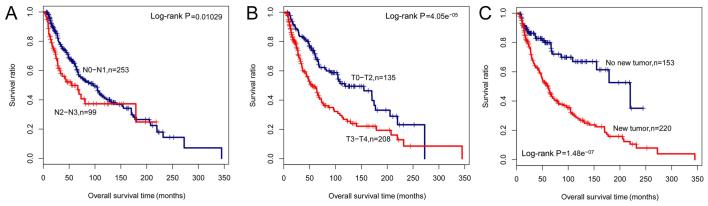
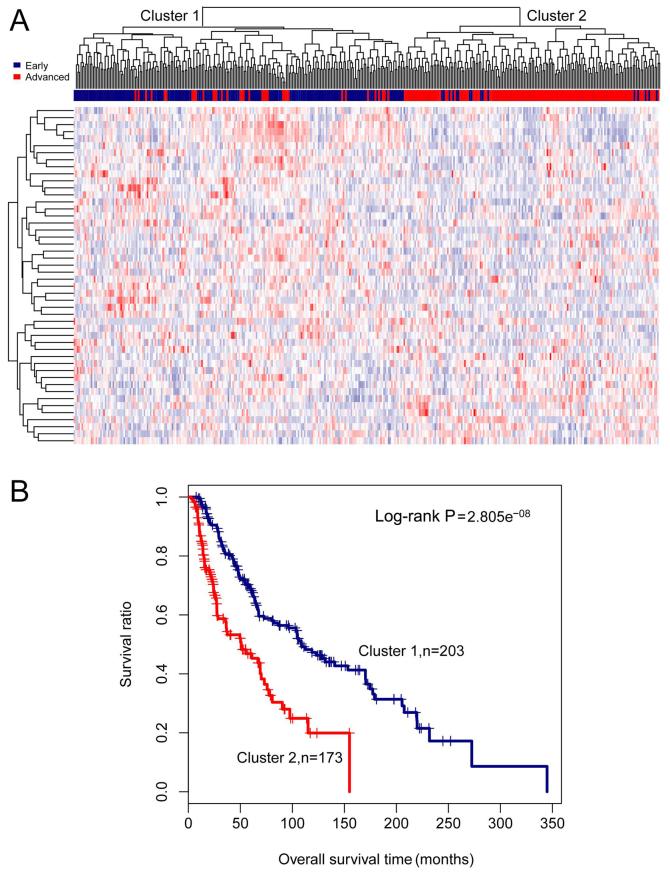
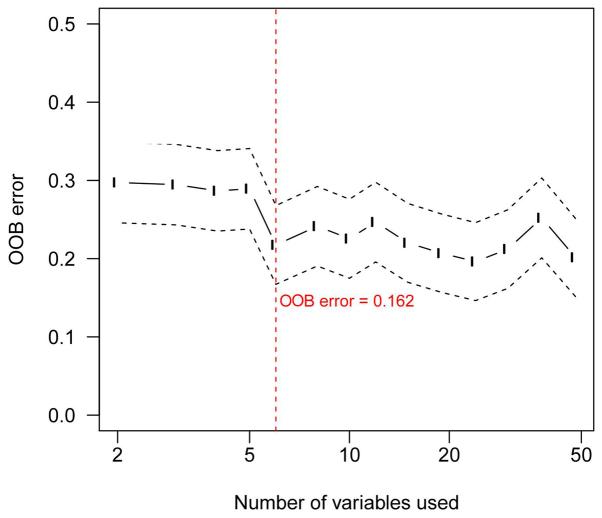
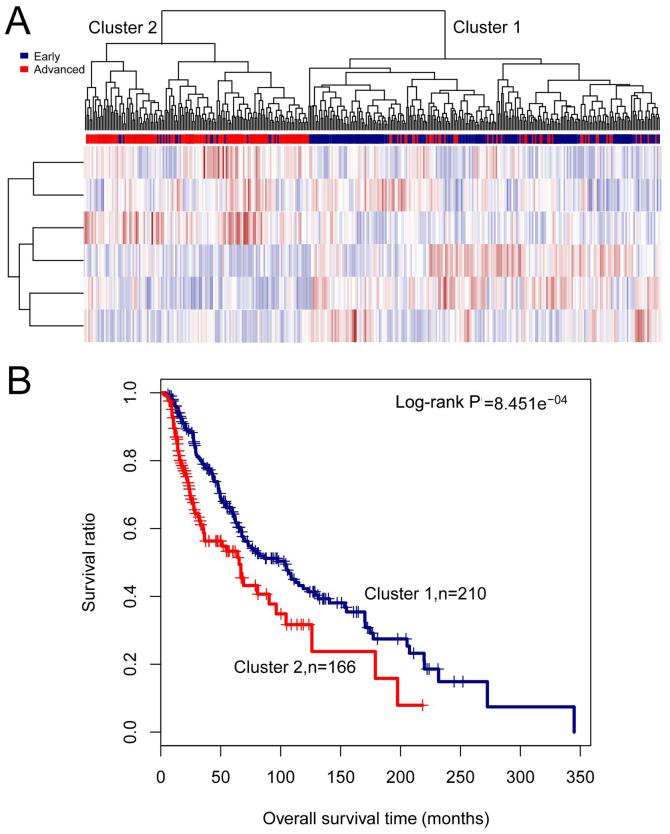
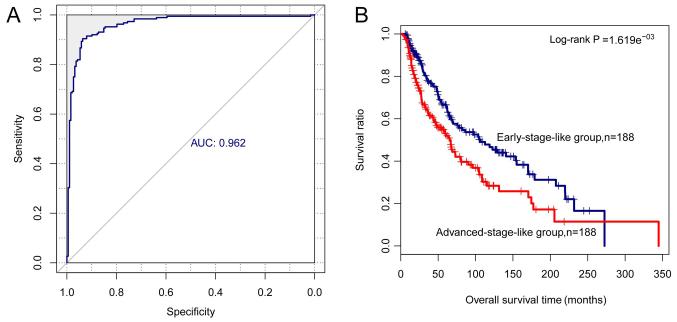
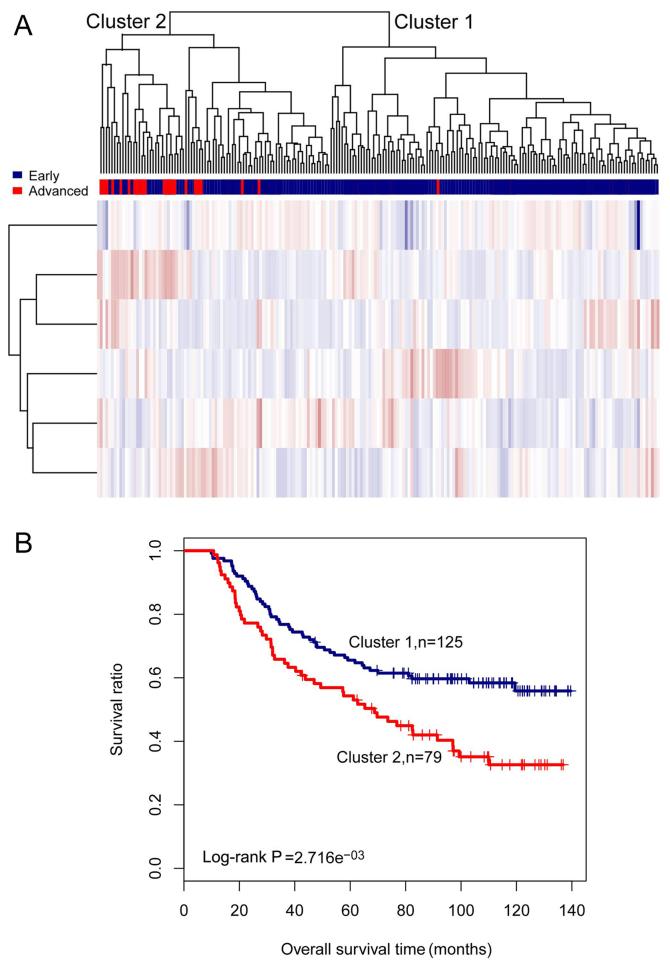
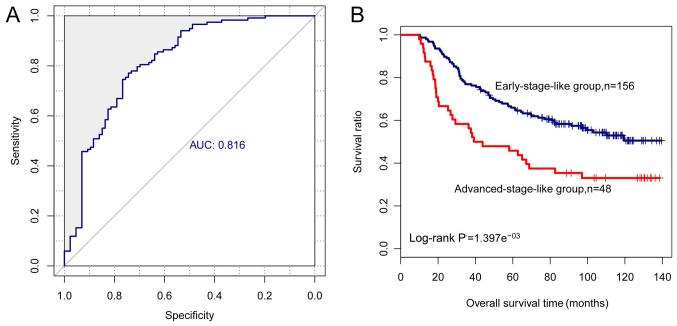
The aim of this study was to identify long non-coding RNAs (lncRNAs) which may prove useful for risk-classifying patients with melanoma. For this purpose, based on a dataset from The Cancer Genome Atlas (TCGA), we selected and analyzed samples from melanoma stages I, II, III and IV, from which differentially expressed lncRNAs were identified. The lncRNAs were classified using two-way hierarchical clustering analysis and analysis of support vector machine (SVM), followed by Kaplan-Meier survival analysis. The prognostic capacity of the signature was verified on an independent dataset. lncRNA-mRNA networks were built using signature lncRNAs and corresponding target genes. The Kyoto Encyclopedia of Genes and Genomes pathway enrichment analysis was conducted on the target genes. A total of 48 differentially expressed lncRNAs were identified, from which 6 signature lncRNAs (AL050303 and LINC00707, LINC01324, RP11-85G21, RP4-794I6.4 and RP5-855F16) were identified. Two-way hierarchical clustering analysis revealed that the accuracy of the six-lncRNA signature in risk-stratifying samples was 84.84%, and the accuracy of the SVM classifier was 85.9%. This predictive signature performed well on the validation dataset [accuracy, 86.76; area under the ROC curve (AUROC), 0.816]. A total of 720 target genes of the 6 lncRNAs were selected for the lncRNA-mRNA networks. These genes were significantly related to mitogen-activated protein kinase (MAPK), the neurotrophin signaling pathway, focal adhesion pathways, and several immune and inflammation-related pathways. On the whole, we identified a six-lncRNA prognostic signature for risk-stratifying patients with melanoma. These lncRNAs may affect prognosis by regulating the MAPK pathway, immune and inflammation‑related pathways, the neurotrophin signaling pathway and focal adhesion pathways.
本研究旨在鉴定可能有助于对黑色素瘤患者进行风险分类的长非编码 RNA(lncRNA)。为此,我们基于癌症基因组图谱(TCGA)中的数据集,选择并分析了 I、II、III 和 IV 期黑色素瘤的样本,从中鉴定出差异表达的 lncRNA。使用双向层次聚类分析和支持向量机(SVM)分析对 lncRNA 进行分类,然后进行 Kaplan-Meier 生存分析。在独立数据集上验证了特征的预后能力。使用特征 lncRNA 和相应的靶基因构建 lncRNA-mRNA 网络。对靶基因进行京都基因与基因组百科全书通路富集分析。共鉴定出 48 个差异表达的 lncRNA,其中 6 个特征 lncRNA(AL050303 和 LINC00707、LINC01324、RP11-85G21、RP4-794I6.4 和 RP5-855F16)。双向层次聚类分析显示,该六 lncRNA 特征在风险分层样本中的准确率为 84.84%,SVM 分类器的准确率为 85.9%。该预测特征在验证数据集上表现良好[准确率为 86.76%;ROC 曲线下面积(AUROC)为 0.816]。6 个 lncRNA 的共 720 个靶基因被选入 lncRNA-mRNA 网络。这些基因与丝裂原活化蛋白激酶(MAPK)、神经营养因子信号通路、焦点黏附通路以及几种免疫和炎症相关通路显著相关。总的来说,我们鉴定了一个用于黑色素瘤患者风险分层的六 lncRNA 预后特征。这些 lncRNA 可能通过调节 MAPK 通路、免疫和炎症相关通路、神经营养因子信号通路和焦点黏附通路来影响预后。

 Zotero 插件