
氨基和酰胺基封端的聚(酰胺胺)-G6树枝状大分子对临床标本分离菌及标准菌株的抗菌活性。
Antibacterial activity of amino- and amido- terminated poly (amidoamine)-G6 dendrimer on isolated bacteria from clinical specimens and standard strains.
作者信息
Rastegar Ayoob, Nazari Shahram, Allahabadi Ahmad, Falanji Farahnaz, Akbari Dourbash Fakhreddin Akbari Dourbash, Rezai Zahra, Alizadeh Matboo Soudabeh, Hekmat-Shoar Reza, Mohseni Seyed Mohsen, Majidi Gharib
机构信息
Department of Environmental Health Engineering, School of Public Health, Sabzevar University of Medical Sciences, Sabzevar, Iran.
Student Research committee, Faculty of Public Health Branch, Iran University of Medical Sciences, Tehran, Iran.
出版信息
Med J Islam Repub Iran. 2017 Sep 24;31:64. doi: 10.14196/mjiri.31.64. eCollection 2017.
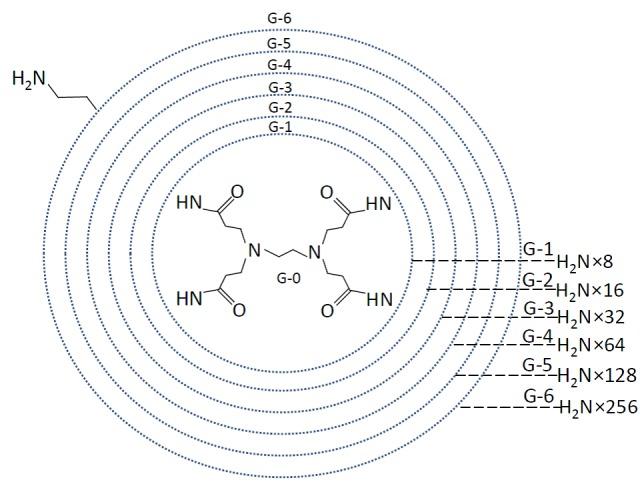
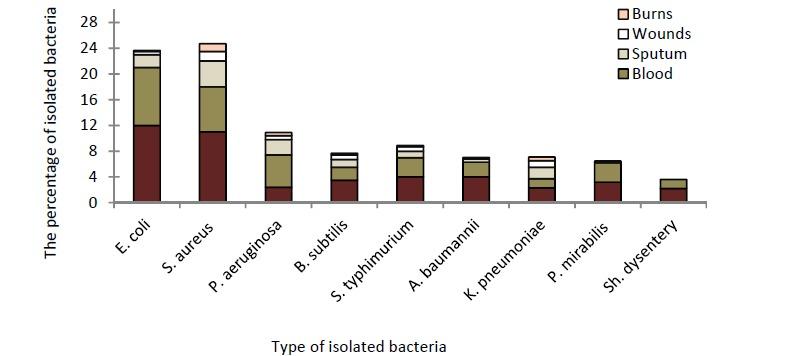
Nanoscale poly (amidoamine) dendrimers have been investigated for their biological demands, but their antibacterial activity has not been widely discovered. Thus, the sixth generation of poly (amidoamine) dendrimer (PAMAM-G6) was synthesized and its antibacterial activities were evaluated on Gram-negative bacteria; , and Gram-positive bacteria, and and , which were isolated from different clinical specimens and standard strains of these bacteria. In this study, 980 specimens including urine (47%), blood (27%), sputum (13%), wounds (8%), and burns (5%) were collected from clinical specimens of 16 hospitals and clinics in city of Sabzevar, Iran. Then, the target bacteria were isolated and identified using standard methods. Minimum inhibitory concentration and minimum bactericidal concentrations against Gram-positive and Gram-negative bacteria were determined according to guidelines described by clinical and laboratory standards institute (CLSI). Standard discs were prepared using 0.025, 0.25, 2.5, and 25 μg/mL concentrations of PAMAM-G6 on Mueller-Hinton agar plates to determinate the zone of inhibition. The cytotoxicity of PAMAM-G6 dendrimer was evaluated in HCT116 cells by MTT assay. The most important isolated bacteria were (23.65%), (24.7%), (10.49%), (7.7%), (8.87%), (7.02%), (7.1%), (6.46%), and (3.6%). Moreover, it was found that poly (amidoamine)-G6 exhibited more antibacterial efficacy on standard strains than isolated bacteria from clinical samples (p<0.05). The cytotoxicity of PAMAM-G6 to the cells showed that cytotoxicity depended on the concentration level and exposure time. The PAMAM-G6 dendrimer showed a positive impact on the removal of dominant bacterial isolated from clinical specimens and standard strains.
纳米级聚(酰胺胺)树枝状大分子已因其生物学需求而受到研究,但其抗菌活性尚未被广泛发现。因此,合成了第六代聚(酰胺胺)树枝状大分子(PAMAM-G6),并对其对革兰氏阴性菌、革兰氏阳性菌进行了抗菌活性评估,这些细菌是从不同临床标本和这些细菌的标准菌株中分离出来的。在本研究中,从伊朗萨卜泽瓦尔市的16家医院和诊所的临床标本中收集了980份标本,包括尿液(47%)、血液(27%)、痰液(13%)、伤口(8%)和烧伤(5%)。然后,使用标准方法分离并鉴定目标细菌。根据临床和实验室标准研究所(CLSI)描述的指南,测定了对革兰氏阳性菌和革兰氏阴性菌的最低抑菌浓度和最低杀菌浓度。在穆勒-欣顿琼脂平板上使用浓度为0.025、0.25、2.5和25μg/mL的PAMAM-G6制备标准圆盘,以确定抑菌圈。通过MTT法在HCT116细胞中评估PAMAM-G6树枝状大分子的细胞毒性。分离出的最重要细菌为大肠杆菌(23.65%)、金黄色葡萄球菌(24.7%)、肺炎克雷伯菌(10.49%)、铜绿假单胞菌(7.7%)、鲍曼不动杆菌(8.87%)、产气肠杆菌(7.02%)、阴沟肠杆菌(7.1%)、嗜麦芽窄食单胞菌(6.46%)和粪肠球菌(3.6%)。此外,发现聚(酰胺胺)-G6对标准菌株的抗菌效果比对临床样本中分离出的细菌更强(p<0.05)。PAMAM-G6对细胞的细胞毒性表明,细胞毒性取决于浓度水平和暴露时间。PAMAM-G6树枝状大分子对从临床标本和标准菌株中分离出的优势细菌的清除显示出积极影响。


 Zotero 插件