
微卫星不稳定性是子宫内膜癌中免疫检查点抑制剂的生物标志物。
Microsatellite instability is a biomarker for immune checkpoint inhibitors in endometrial cancer.
作者信息
Yamashita Hitomi, Nakayama Kentaro, Ishikawa Masako, Nakamura Kohei, Ishibashi Tomoka, Sanuki Kaori, Ono Ruriko, Sasamori Hiroki, Minamoto Toshiko, Iida Kouji, Sultana Razia, Ishikawa Noriyoshi, Kyo Satoru
机构信息
Department of Obstetrics and Gynecology, Shimane University School of Medicine, Izumo, Japan.
Department of Organ Pathology, Shimane University School of Medicine, Izumo, Japan.
出版信息
Oncotarget. 2017 Dec 31;9(5):5652-5664. doi: 10.18632/oncotarget.23790. eCollection 2018 Jan 19.
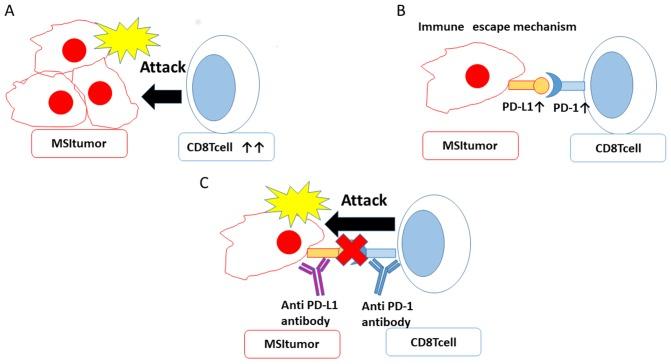
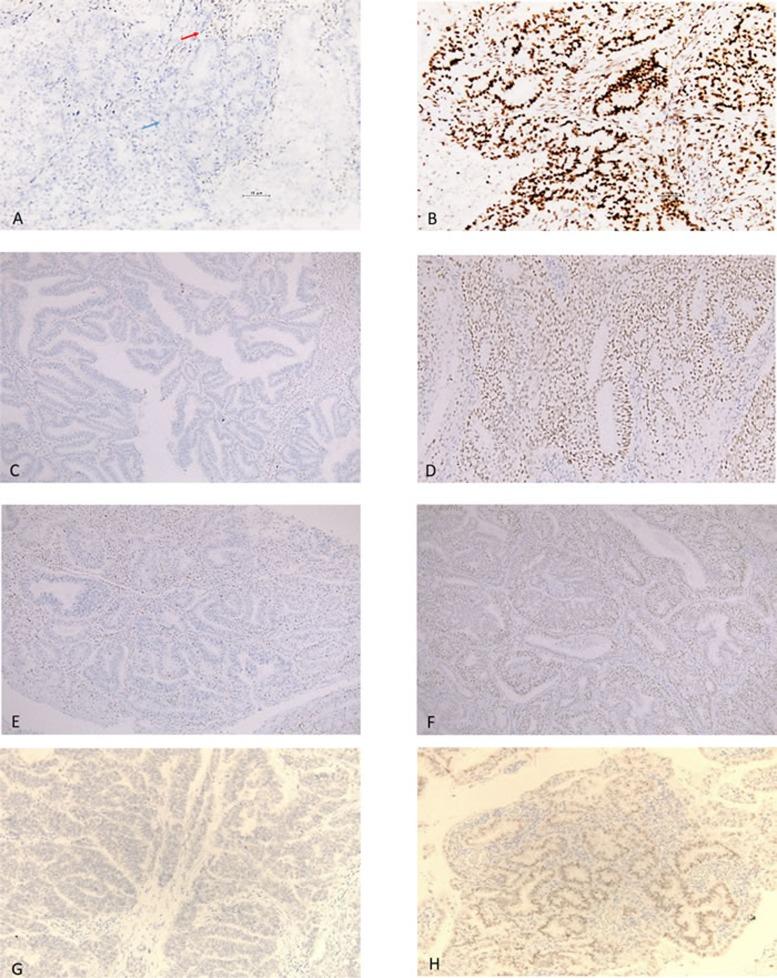
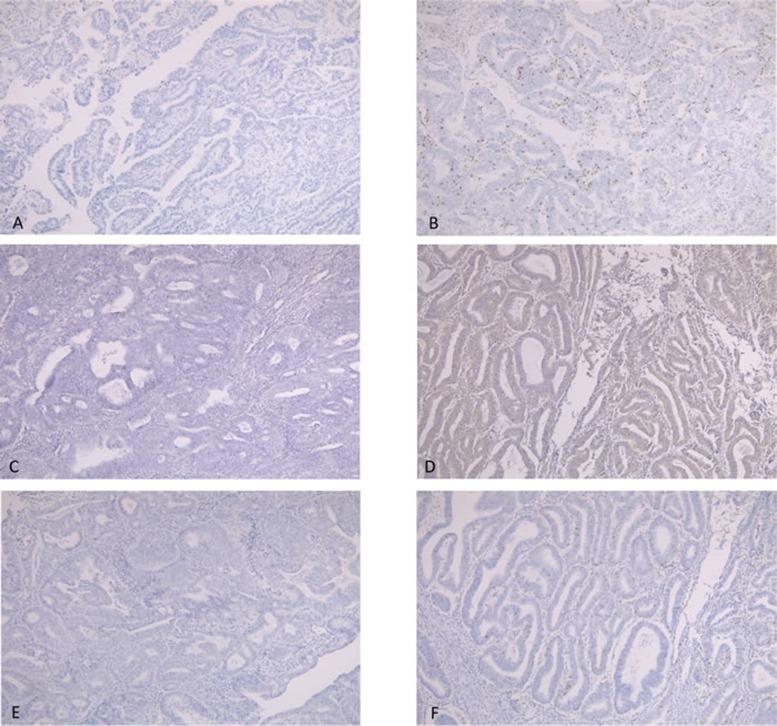
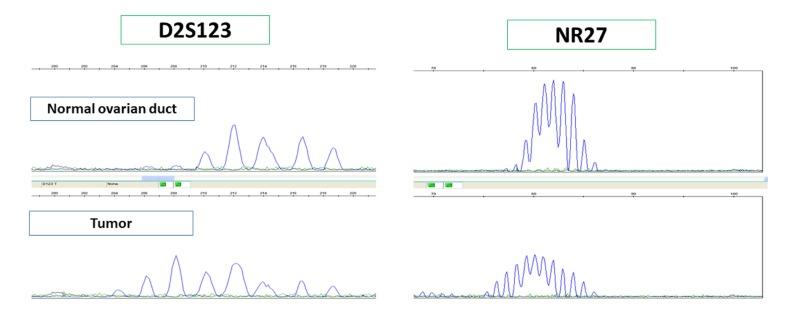
In recent years, it has become evident that tumor cells have immune escape mechanisms, and immune checkpoint inhibitor therapy (anti-PD-1/PD-L1 antibody) has shown benefit in various cancers. In endometrial tumors with microsatellite-instability (MSI), somatic mutations have the potential to encode ''non-self'' immunogenic antigens, and lymphocytes have been shown to infiltrate the tumor. Therefore, immune checkpoint inhibitor therapy might be effective in endometrial cancers with MSI. Expression of mismatch repair (MMR) proteins (MLH1, PMS2, MSH2, and MSH6), the presence of tumor-infiltrating lymphocytes (CD8+), and PD-1/PD-L1 expression were assessed by immunohistochemistry in 149 patients with endometrial cancer. We examined whether tumors with MSI had an enhanced immune microenvironment and whether MSI could be a predictor of the therapeutic effect of PD-1/PD-L1 immunotherapy in endometrial cancer. Loss of MMR protein expression was identified in 42 (28.2%) of 149 patients (MSI group) with endometrial cancer. There was no significant relationship between MSI status and age ( = 0.193), histological grade ( = 0.097), FIGO stage ( = 0.508), pelvic lymph node metastasis ( = 0.139), or depth of myometrial invasion ( = 0.494). However, the presence of tumor-infiltrating lymphocytes (CD8+) and PD-L1/PD-1 expression were significantly higher in the MSI group compared to the microsatellite-stable group ( = 0.002, = 0.001, and p = 0.008, respectively). These results suggest that immune checkpoint inhibitors (anti-PD-1/PD-L1 antibody) could be effective in endometrial cancers with MSI. The presence of MSI may be a biomarker for good response to PD-1/PD-L1 immunotherapy in endometrial cancer.
近年来,肿瘤细胞具有免疫逃逸机制已变得显而易见,并且免疫检查点抑制剂疗法(抗PD-1/PD-L1抗体)已在各种癌症中显示出疗效。在具有微卫星不稳定性(MSI)的子宫内膜肿瘤中,体细胞突变有可能编码“非自身”免疫原性抗原,并且已显示淋巴细胞浸润肿瘤。因此,免疫检查点抑制剂疗法可能对具有MSI的子宫内膜癌有效。通过免疫组织化学对149例子宫内膜癌患者评估错配修复(MMR)蛋白(MLH1、PMS2、MSH2和MSH6)的表达、肿瘤浸润淋巴细胞(CD8+)的存在以及PD-1/PD-L1的表达。我们研究了具有MSI的肿瘤是否具有增强的免疫微环境,以及MSI是否可以作为子宫内膜癌中PD-1/PD-L1免疫疗法治疗效果的预测指标。在149例子宫内膜癌患者(MSI组)中有42例(28.2%)检测到MMR蛋白表达缺失。MSI状态与年龄(P = 0.193)、组织学分级(P = 0.097)、国际妇产科联盟(FIGO)分期(P = 0.508)、盆腔淋巴结转移(P = 0.139)或肌层浸润深度(P = 0.494)之间均无显著相关性。然而,与微卫星稳定组相比,MSI组中肿瘤浸润淋巴细胞(CD8+)的存在以及PD-L1/PD-1的表达显著更高(分别为P = 0.002、P = 0.001和P = 0.008)。这些结果表明,免疫检查点抑制剂(抗PD-1/PD-L1抗体)可能对具有MSI的子宫内膜癌有效。MSI的存在可能是子宫内膜癌对PD-1/PD-L1免疫疗法良好反应的生物标志物。

 Zotero 插件