
地中海饮食依从性评分的评估:一项系统综述。
Evaluation of Mediterranean diet adherence scores: a systematic review.
作者信息
Zaragoza-Martí A, Cabañero-Martínez M J, Hurtado-Sánchez J A, Laguna-Pérez A, Ferrer-Cascales R
机构信息
Department of Nursing, Faculty of Health Sciences, University of Alicante, Alicante, Spain.
Department of Health Psychology, Faculty of Health Sciences, University of Alicante, Alicante, Spain.
出版信息
BMJ Open. 2018 Feb 24;8(2):e019033. doi: 10.1136/bmjopen-2017-019033.
OBJECTIVE
The aim of this review was to evaluate the conceptual suitability, applicability and psychometric properties of scores used internationally to measure adherence to the Mediterranean diet (MD).
DESIGN
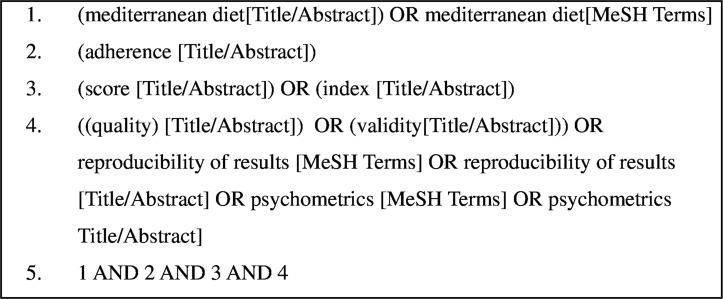
This was a systematic review to identify original articles that examined some aspects of the conceptual suitability, applicability or psychometric properties of the MD adherence score. Electronic searches were carried out on the international databases MEDLINE, Scopus, Web of Science and EMBASE (from January 1980 to 31 December 2015).
ELIGIBILITY CRITERIA FOR SELECTING STUDIES
The study included original articles that examined some aspects of the conceptual suitability, applicability or psychometric properties of the MD adherence score. The studies where MD adherence scores were administered but did not bring forward any evidence about their performance related to conceptual suitability, applicability or psychometric properties were excluded.
DATA EXTRACTION
Information relating to the scales was extracted in accordance with the quality criteria defined by the Scientific Advisory Committee of the Medical Outcomes Trust for measurement of health results and the quality criteria recommended by Terwee: (1) conceptual, (2) applicability and (3) psychometric properties. Three authors independently extracted information from eligible studies.
RESULTS
Twenty-seven studies were identified as meeting the inclusion criteria, yielding 28 MD adherence scores. The results showed that evidence is scarce and that very few scores fulfilled the applicability parameters and psychometric quality. The scores developed by Panagiotakos , Buckland and Sotos-Prieto showed the highest levels of evidence.
CONCLUSIONS
Scores measuring adherence to MD are useful tools for identifying the dietary patterns of a given population. However, further information is required regarding existing scores. In addition, new instruments with greater conceptual and methodological rigour should be developed and evaluated for their psychometric properties.
目的
本综述旨在评估国际上用于衡量地中海饮食(MD)依从性的评分在概念适宜性、适用性和心理测量特性方面的情况。
设计
这是一项系统综述,旨在识别研究MD依从性评分的概念适宜性、适用性或心理测量特性某些方面的原始文章。对国际数据库MEDLINE、Scopus、科学引文索引和EMBASE进行了电子检索(检索时间为1980年1月至2015年12月31日)。
选择研究的纳入标准
该研究包括研究MD依从性评分的概念适宜性、适用性或心理测量特性某些方面的原始文章。那些使用了MD依从性评分但未提供任何有关其在概念适宜性、适用性或心理测量特性方面表现证据的研究被排除。
数据提取
根据医学结局信托科学咨询委员会为衡量健康结果定义的质量标准以及特尔维推荐的质量标准,提取与量表相关的信息:(1)概念性,(2)适用性,(3)心理测量特性。三位作者独立从符合条件的研究中提取信息。
结果
确定有27项研究符合纳入标准,得出28个MD依从性评分。结果表明证据稀少,很少有评分符合适用性参数和心理测量质量。帕纳吉奥塔科斯、巴克兰和索托斯 - 普列托开发的评分显示出最高水平的证据。
结论
衡量MD依从性的评分是识别特定人群饮食模式的有用工具。然而,关于现有评分还需要更多信息。此外,应开发并评估在概念和方法上更严谨的新工具及其心理测量特性。

 Zotero 插件