
代谢传感器 GPR43 受体在肺部感染的控制中发挥作用。
The Metabolic Sensor GPR43 Receptor Plays a Role in the Control of Infection in the Lung.
机构信息
Department of Biochemistry and Immunology, Institute of Biological Sciences, Federal University of Minas Gerais, Belo Horizonte, Brazil.
Department of Genetics, Evolution and Bioagents, Institute of Biology, University of Campinas, Campinas, Brazil.
出版信息
Front Immunol. 2018 Feb 20;9:142. doi: 10.3389/fimmu.2018.00142. eCollection 2018.
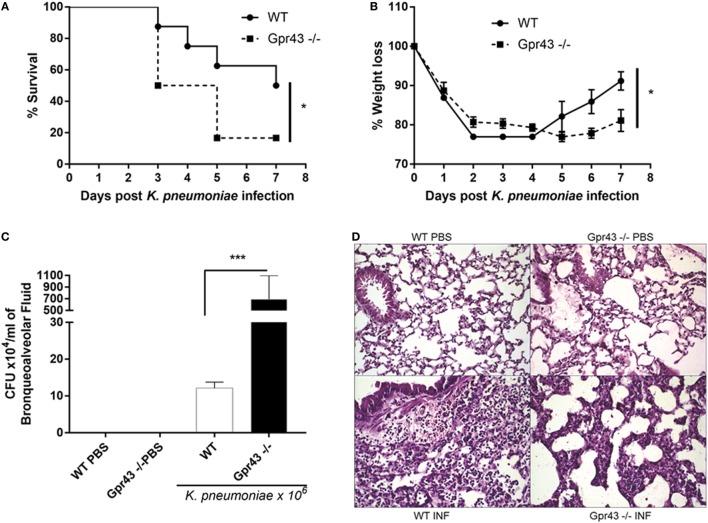
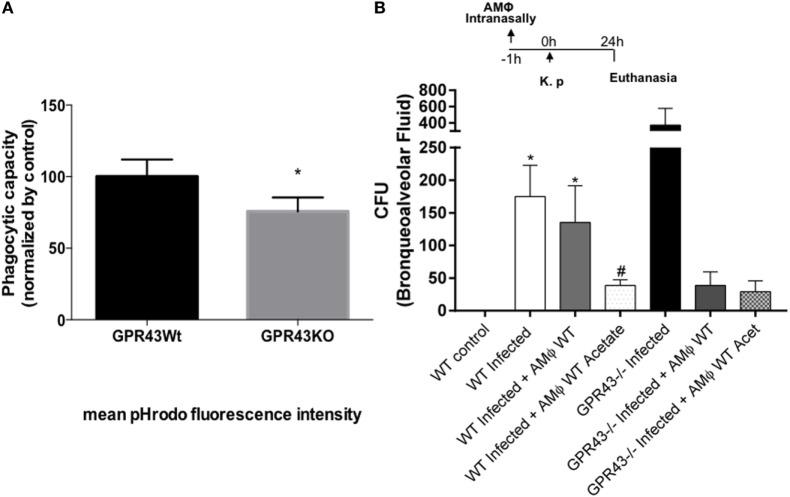
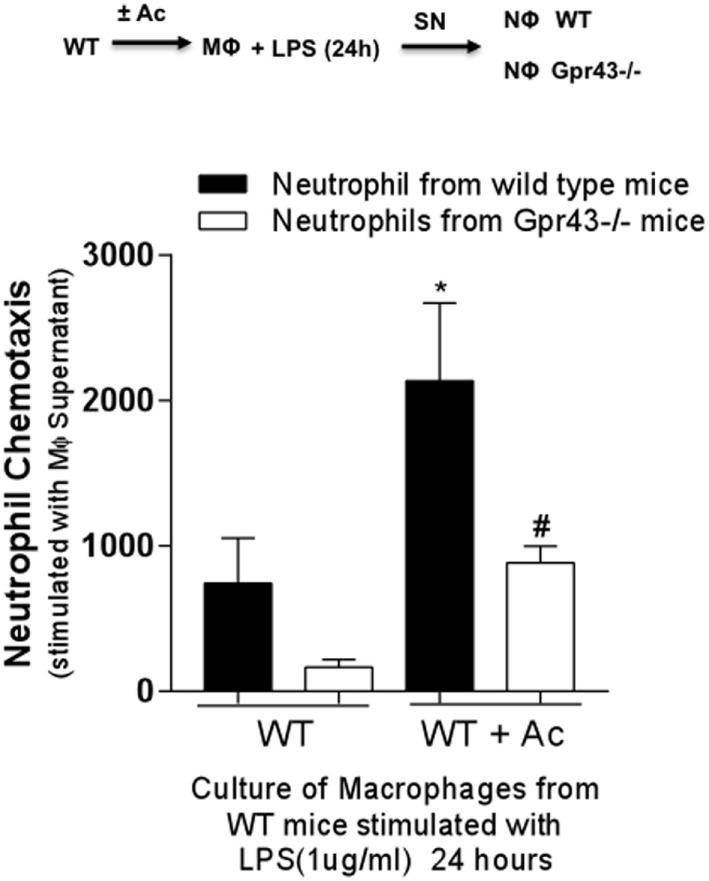
Pneumonia is one of the leading causes of death and mortality worldwide. The inflammatory responses that follow respiratory infections are protective leading to pathogen clearance but can also be deleterious if unregulated. The microbiota is known to be an important protective barrier against infections, mediating both direct inhibitory effects against the potential pathogen and also regulating the immune responses contributing to a proper clearance of the pathogen and return to homeostasis. GPR43 is one receptor for acetate, a microbiota metabolite shown to induce and to regulate important immune functions. Here, we addressed the role of GPR43 signaling during pulmonary bacterial infections. We have shown for the first time that the absence of GPR43 leads to increased susceptibility to infection, which was associated to both uncontrolled proliferation of bacteria and to increased inflammatory response. Mechanistically, we showed that GPR43 expression especially in neutrophils and alveolar macrophages is important for bacterial phagocytosis and killing. In addition, treatment with the GPR43 ligand, acetate, is protective during bacterial lung infection. This was associated to reduction in the number of bacteria in the airways and to the control of the inflammatory responses. Altogether, GPR43 plays an important role in the "gut-lung axis" as a sensor of the host gut microbiota activity through acetate binding promoting a proper immune response in the lungs.
肺炎是全球范围内导致死亡和死亡率的主要原因之一。呼吸道感染后发生的炎症反应具有保护作用,可导致病原体清除,但如果不受调节,也可能具有破坏性。微生物群被认为是防止感染的重要保护屏障,既能直接抑制潜在病原体,又能调节免疫反应,有助于病原体的适当清除和恢复体内平衡。GPR43 是乙酸的一种受体,乙酸是一种微生物群代谢物,已被证明能诱导和调节重要的免疫功能。在这里,我们研究了 GPR43 信号在肺部细菌感染中的作用。我们首次表明,缺乏 GPR43 会导致感染的易感性增加,这与细菌的不受控制的增殖和炎症反应的增加有关。从机制上讲,我们表明 GPR43 的表达,特别是在中性粒细胞和肺泡巨噬细胞中,对细菌的吞噬和杀伤很重要。此外,在细菌性肺感染期间,GPR43 配体乙酸的治疗具有保护作用。这与气道中细菌数量的减少和炎症反应的控制有关。总之,GPR43 通过结合乙酸作为宿主肠道微生物群活动的传感器,在“肠-肺轴”中发挥重要作用,促进肺部的适当免疫反应。



 Zotero 插件