
海绵整体共生体在变化的海洋中:从微生物到生态系统。
The sponge holobiont in a changing ocean: from microbes to ecosystems.
机构信息
RD3 Marine Microbiology, GEOMAR Helmholtz Centre for Ocean Research, Kiel, Germany.
Christian-Albrechts-University of Kiel (CAU), Kiel, Germany.
出版信息
Microbiome. 2018 Mar 9;6(1):46. doi: 10.1186/s40168-018-0428-1.
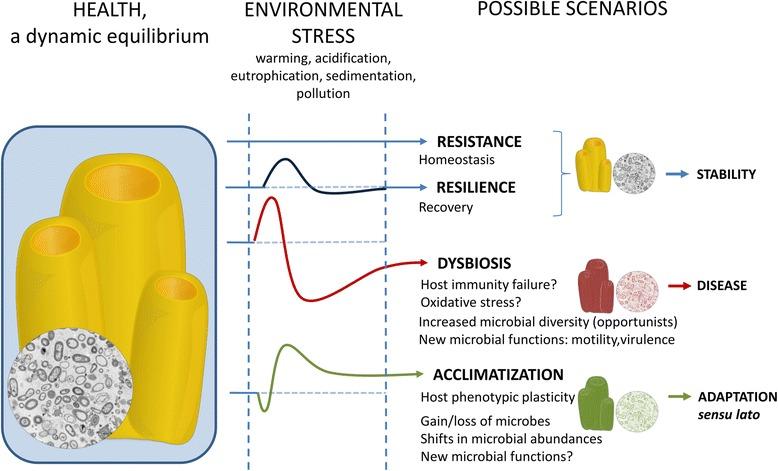
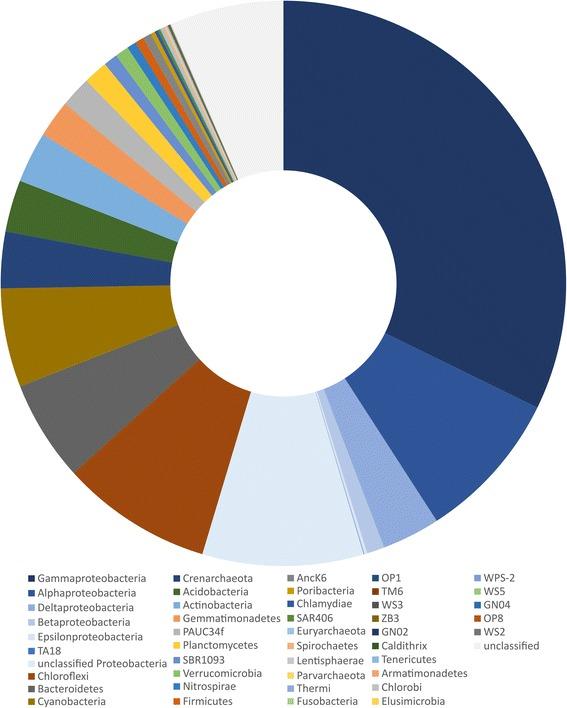
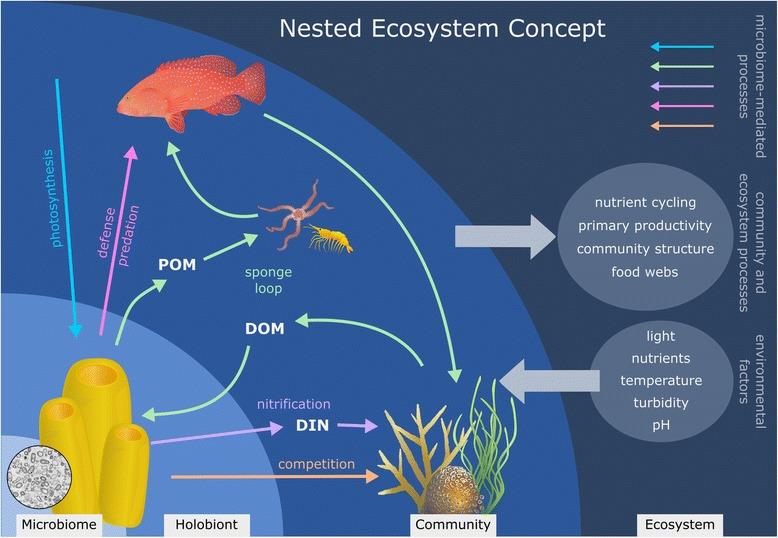
The recognition that all macroorganisms live in symbiotic association with microbial communities has opened up a new field in biology. Animals, plants, and algae are now considered holobionts, complex ecosystems consisting of the host, the microbiota, and the interactions among them. Accordingly, ecological concepts can be applied to understand the host-derived and microbial processes that govern the dynamics of the interactive networks within the holobiont. In marine systems, holobionts are further integrated into larger and more complex communities and ecosystems, a concept referred to as "nested ecosystems." In this review, we discuss the concept of holobionts as dynamic ecosystems that interact at multiple scales and respond to environmental change. We focus on the symbiosis of sponges with their microbial communities-a symbiosis that has resulted in one of the most diverse and complex holobionts in the marine environment. In recent years, the field of sponge microbiology has remarkably advanced in terms of curated databases, standardized protocols, and information on the functions of the microbiota. Like a Russian doll, these microbial processes are translated into sponge holobiont functions that impact the surrounding ecosystem. For example, the sponge-associated microbial metabolisms, fueled by the high filtering capacity of the sponge host, substantially affect the biogeochemical cycling of key nutrients like carbon, nitrogen, and phosphorous. Since sponge holobionts are increasingly threatened by anthropogenic stressors that jeopardize the stability of the holobiont ecosystem, we discuss the link between environmental perturbations, dysbiosis, and sponge diseases. Experimental studies suggest that the microbial community composition is tightly linked to holobiont health, but whether dysbiosis is a cause or a consequence of holobiont collapse remains unresolved. Moreover, the potential role of the microbiome in mediating the capacity for holobionts to acclimate and adapt to environmental change is unknown. Future studies should aim to identify the mechanisms underlying holobiont dynamics at multiple scales, from the microbiome to the ecosystem, and develop management strategies to preserve the key functions provided by the sponge holobiont in our present and future oceans.
生物体与微生物群落共生的认识开创了生物学的一个新领域。现在,动物、植物和藻类被认为是整体生物,即由宿主、微生物群和它们之间的相互作用组成的复杂生态系统。因此,可以应用生态学概念来理解控制整体生物体内相互作用网络动态的宿主来源和微生物过程。在海洋系统中,整体生物进一步整合到更大和更复杂的群落和生态系统中,这一概念被称为“嵌套生态系统”。在这篇综述中,我们讨论了作为在多个尺度上相互作用并对环境变化做出响应的动态生态系统的整体生物概念。我们重点讨论了海绵与其微生物群落的共生关系——这种共生关系导致了海洋环境中最具多样性和复杂性的整体生物之一。近年来,海绵微生物学领域在经过整理的数据库、标准化方案以及有关微生物功能的信息方面取得了显著进展。这些微生物过程就像俄罗斯套娃一样,被翻译成影响周围生态系统的海绵整体生物功能。例如,海绵宿主的高过滤能力为海绵相关微生物代谢提供了动力,这大大影响了关键营养物质(如碳、氮和磷)的生物地球化学循环。由于人类活动的压力越来越威胁到海绵整体生物生态系统的稳定性,我们讨论了环境扰动、微生态失调和海绵疾病之间的联系。实验研究表明,微生物群落组成与整体生物健康密切相关,但微生态失调是整体生物崩溃的原因还是结果仍未解决。此外,微生物组在介导整体生物适应和应对环境变化的能力方面的潜在作用尚不清楚。未来的研究应旨在确定从微生物组到生态系统的多个尺度上的整体生物动态的机制,并制定管理策略来保护海绵整体生物在我们现在和未来海洋中提供的关键功能。
 Zotero 插件