
巨噬细胞外泌体在应对一水草酸钙晶体免疫反应中的作用。
Roles of Macrophage Exosomes in Immune Response to Calcium Oxalate Monohydrate Crystals.
机构信息
Medical Proteomics Unit, Office for Research and Development, Faculty of Medicine Siriraj Hospital, Mahidol University, Bangkok, Thailand.
Immunology Graduate Program, Department of Immunology, Faculty of Medicine Siriraj Hospital, Mahidol University, Bangkok, Thailand.
出版信息
Front Immunol. 2018 Feb 27;9:316. doi: 10.3389/fimmu.2018.00316. eCollection 2018.
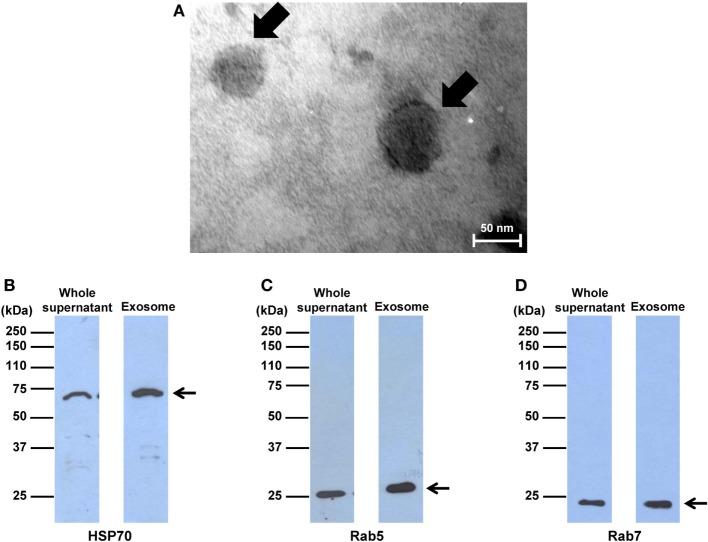
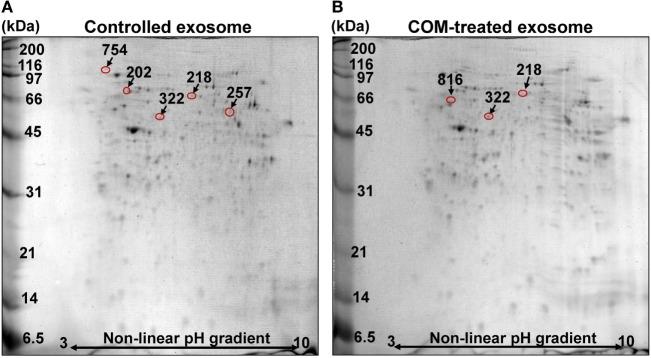
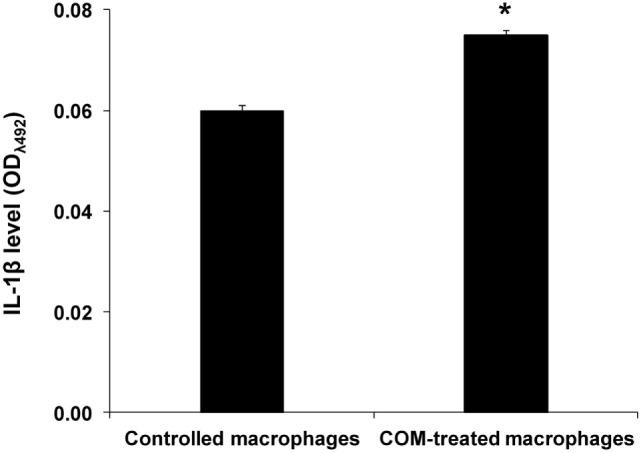
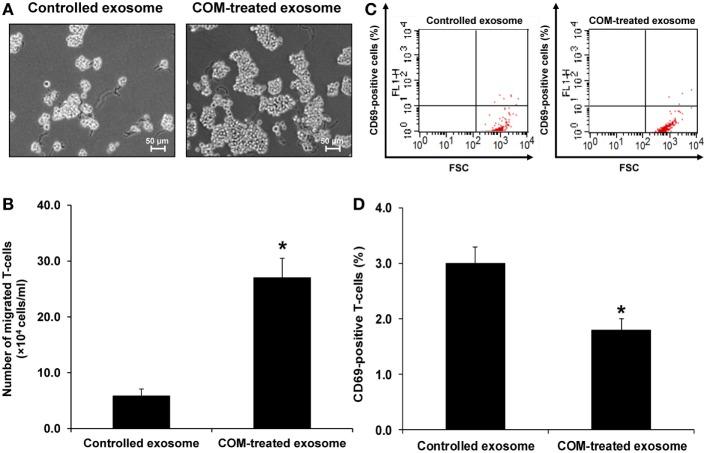
In kidney stone disease, macrophages secrete various mediators classical secretory pathway and cause renal interstitial inflammation. However, whether their extracellular vesicles, particularly exosomes, are involved in kidney stone pathogenesis remained unknown. This study investigated alterations in exosomal proteome of U937-derived macrophages (by phorbol-12-myristate-13-acetate activation) after exposure to calcium oxalate monohydrate (COM) crystals for 16-h using 2-DE-based proteomics approach. Six significantly altered proteins in COM-treated exosomes were successfully identified by nanoscale liquid chromatography-electrospray ionization-electron transfer dissociation tandem mass spectrometry as proteins involved mainly in immune processes, including T-cell activation and homeostasis, Fcγ receptor-mediated phagocytosis, interferon-γ (IFN-γ) regulation, and cell migration/movement. The decreased heat shock protein 90-beta (HSP90β) and increased vimentin were confirmed by Western blotting. ELISA showed that the COM-treated macrophages produced greater level of interleukin-1β (IL-1β), one of the markers for inflammasome activation. Functional studies demonstrated that COM-treated exosomes enhanced monocyte and T-cell migration, monocyte activation and macrophage phagocytic activity, but on the other hand, reduced T-cell activation. In addition, COM-treated exosomes enhanced production of proinflammatory cytokine IL-8 by monocytes that could be restored to its basal level by small-interfering RNA targeting on vimentin (si-Vimentin). Moreover, si-Vimentin could also abolish effects of COM-treated exosomes on monocyte and T-cell migration as well as macrophage phagocytic activity. These findings provided some implications to the immune response during kidney stone pathogenesis exosomal pathway of macrophages after exposure to COM crystals.
在肾结石疾病中,巨噬细胞通过经典分泌途径分泌各种介质,导致肾间质炎症。然而,它们的细胞外囊泡,特别是外泌体,是否参与肾结石的发病机制尚不清楚。本研究采用基于 2-DE 的蛋白质组学方法,研究了 U937 衍生的巨噬细胞(经佛波醇 12-肉豆蔻酸 13-醋酸盐激活)在暴露于草酸钙单水合物(COM)晶体 16 小时后,外泌体蛋白质组的变化。用纳升液相色谱-电喷雾电离-电子转移解离串联质谱法成功鉴定了 COM 处理的外泌体中 6 种明显改变的蛋白质,这些蛋白质主要参与免疫过程,包括 T 细胞激活和稳态、Fcγ 受体介导的吞噬作用、干扰素-γ(IFN-γ)调节和细胞迁移/运动。Western blot 证实了热休克蛋白 90-β(HSP90β)的减少和波形蛋白的增加。ELISA 显示,COM 处理的巨噬细胞产生了更高水平的白细胞介素 1β(IL-1β),这是炎症小体激活的标志物之一。功能研究表明,COM 处理的外泌体增强了单核细胞和 T 细胞的迁移、单核细胞的激活和巨噬细胞的吞噬活性,但另一方面,降低了 T 细胞的激活。此外,COM 处理的外泌体增强了单核细胞产生促炎细胞因子白细胞介素 8(IL-8)的能力,而针对波形蛋白(si-Vimentin)的小干扰 RNA 可将其恢复到基础水平。此外,si-Vimentin 还可以消除 COM 处理的外泌体对单核细胞和 T 细胞迁移以及巨噬细胞吞噬活性的影响。这些发现为 COM 晶体暴露后巨噬细胞在肾结石发病机制中的免疫反应提供了一些启示-外泌体途径。





 Zotero 插件