
轮作对当前甜菜生产中产量形成的影响——一项农场调查和田间试验的结果
Crop Rotational Effects on Yield Formation in Current Sugar Beet Production - Results From a Farm Survey and Field Trials.
作者信息
Koch Heinz-Josef, Trimpler Kerrin, Jacobs Anna, Stockfisch Nicol
机构信息
Institute of Sugar Beet Research (IfZ), Göttingen, Germany.
Institute of Climate-Smart Agriculture, Thünen Institute, Braunschweig, Germany.
出版信息
Front Plant Sci. 2018 Mar 1;9:231. doi: 10.3389/fpls.2018.00231. eCollection 2018.
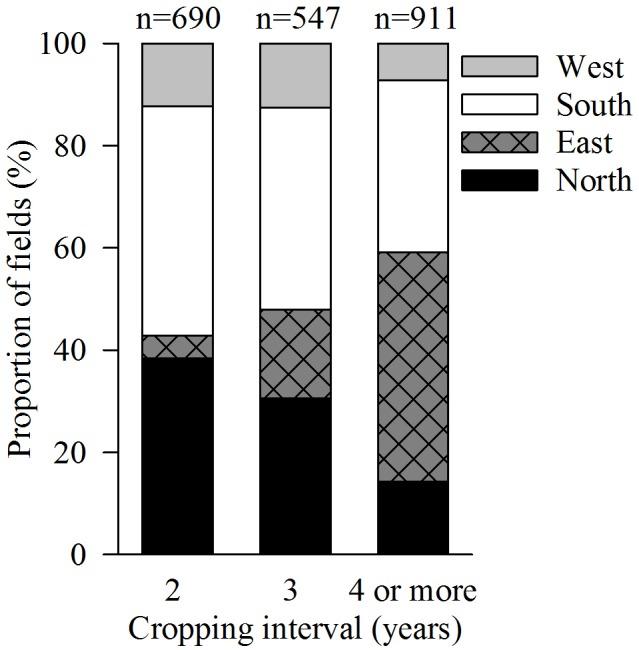
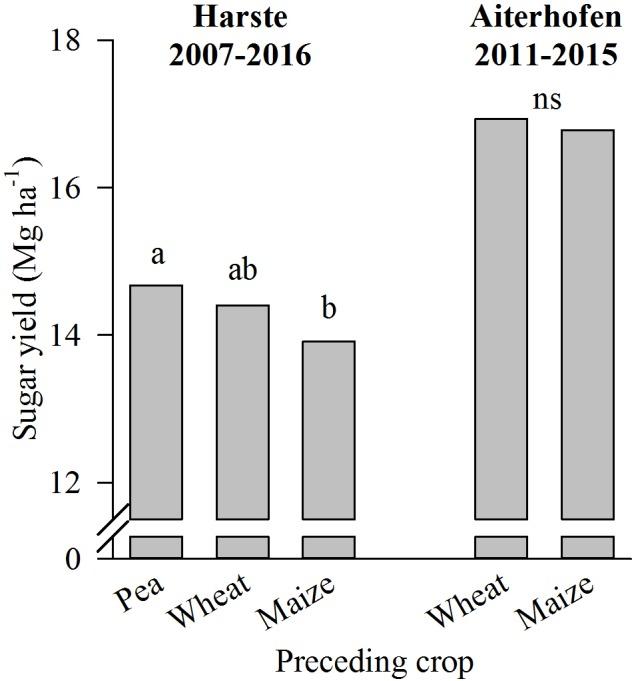
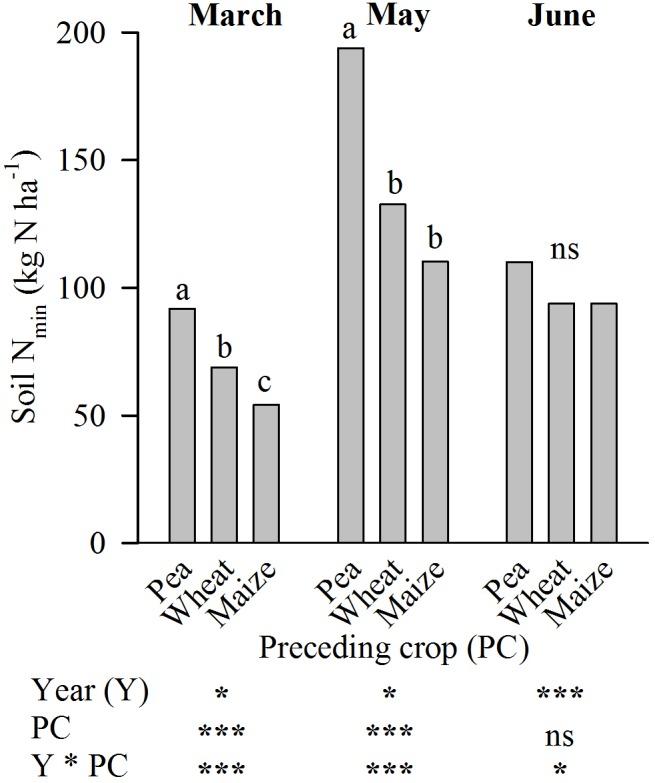
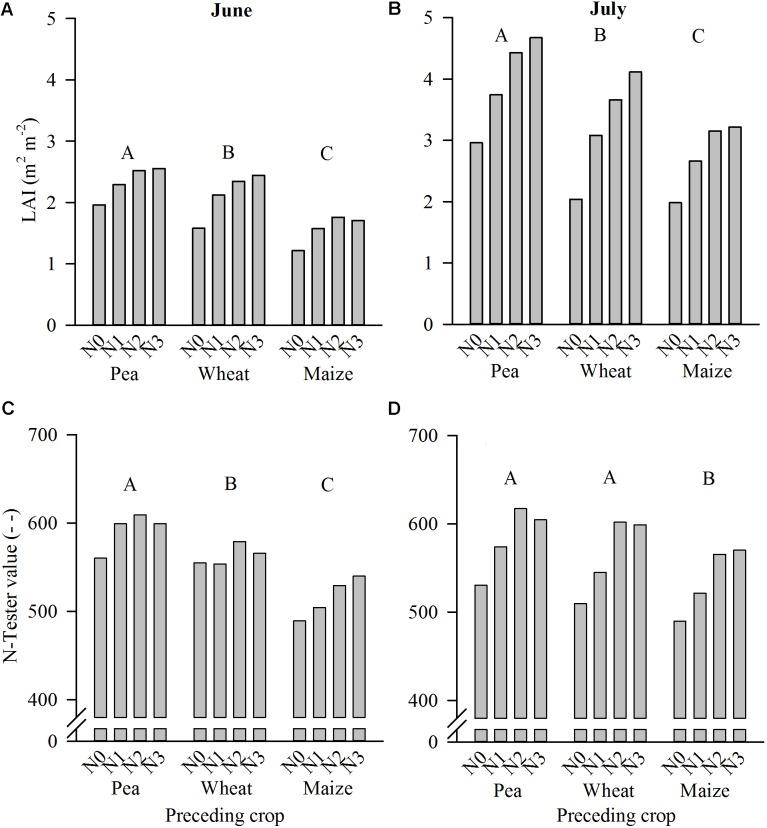
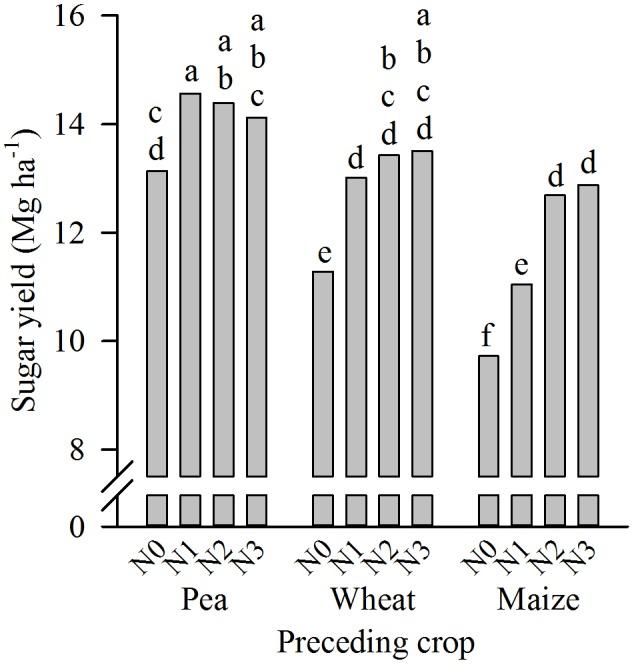
In Europe, the framework for sugar beet ( L.) production was subject to considerable changes and for the future it is expected that sugar beet cultivation might concentrate around the sugar factories for economic reasons. Based on data from a national sugar beet farmers' survey and multi-year crop rotation trials, the effects of cropping interval (number of years in between two subsequent sugar beet crops) and of preceding crops on sugar yield were elucidated under current Central European management conditions. The dominating sugar beet cropping interval was ≥4 years in the farm survey with pronounced differences between regions. However, the cropping intervals 2, 3, and ≥4 years did not affect the sugar yield. Therefore, significant differences in sugar yield between regions were assumed to be caused by multiple interactions between year, site, and farmers' skills. Throughout Germany, the dominating preceding crops in sugar beet cultivation were winter wheat ( L.) and winter barley ( L.). In the field trials, the sugar yield was 5% higher after pea ( L.) compared to maize ( L.) as preceding crop, while differences between the preceding crops pea and winter wheat, and wheat and maize were not significant. Repeated measurements of canopy development and leaf color during the growing season revealed a higher N-availability after pea as preceding crop. However, decreased growth after maize was not completely compensated for by high N-fertilizer doses. Overall, the causes for the differences in sugar yield between the preceding crops remained open. The results do not support concerns about substantial yield losses in sugar beet production due to a reduction in the cropping interval from 3 to 2 years. Nevertheless, short rotations with maize and sugar beet might increase the risk of crown and root rot infestation. Leguminous crops such as pea offer the potential for higher sugar beet yield with lower N-fertilizer doses.
在欧洲,甜菜(L.)生产框架发生了重大变化,预计未来出于经济原因,甜菜种植可能会集中在糖厂周围。基于一项全国甜菜种植户调查数据和多年作物轮作试验,在当前中欧管理条件下,阐明了种植间隔(连续两季甜菜作物之间的年数)和前茬作物对甜菜产糖量的影响。在农场调查中,主要的甜菜种植间隔≥4年,不同地区之间存在显著差异。然而,2年、3年和≥4年的种植间隔对甜菜产糖量没有影响。因此,假定不同地区甜菜产糖量的显著差异是由年份、种植地点和农户技能之间的多重相互作用造成的。在德国全国范围内,甜菜种植中主要的前茬作物是冬小麦(L.)和冬大麦(L.)。在田间试验中,与玉米(L.)作为前茬作物相比,豌豆(L.)作为前茬作物时甜菜产糖量高出5%,而前茬作物豌豆与冬小麦、小麦与玉米之间的差异不显著。在生长季节对冠层发育和叶片颜色进行的重复测量显示,豌豆作为前茬作物时氮素有效性更高。然而,玉米之后生长量的下降并未通过高氮肥用量得到完全补偿。总体而言,前茬作物之间产糖量差异的原因仍不明确。结果并不支持关于甜菜种植间隔从3年减至2年会导致产量大幅损失的担忧。尽管如此,玉米和甜菜的短轮作可能会增加根腐病和冠腐病侵染的风险。豌豆等豆科作物有可能在减少氮肥用量的情况下提高甜菜产量。

 Zotero 插件