
抗表皮生长因子受体单克隆抗体治疗转移性结直肠癌患者的皮肤毒性:系统评价。
Dermatologic Toxicity Occurring During Anti-EGFR Monoclonal Inhibitor Therapy in Patients With Metastatic Colorectal Cancer: A Systematic Review.
机构信息
Memorial Sloan Kettering Cancer Center, New York, NY.
Washington University School of Medicine, St Louis, MO.
出版信息
Clin Colorectal Cancer. 2018 Jun;17(2):85-96. doi: 10.1016/j.clcc.2017.12.004. Epub 2017 Dec 13.
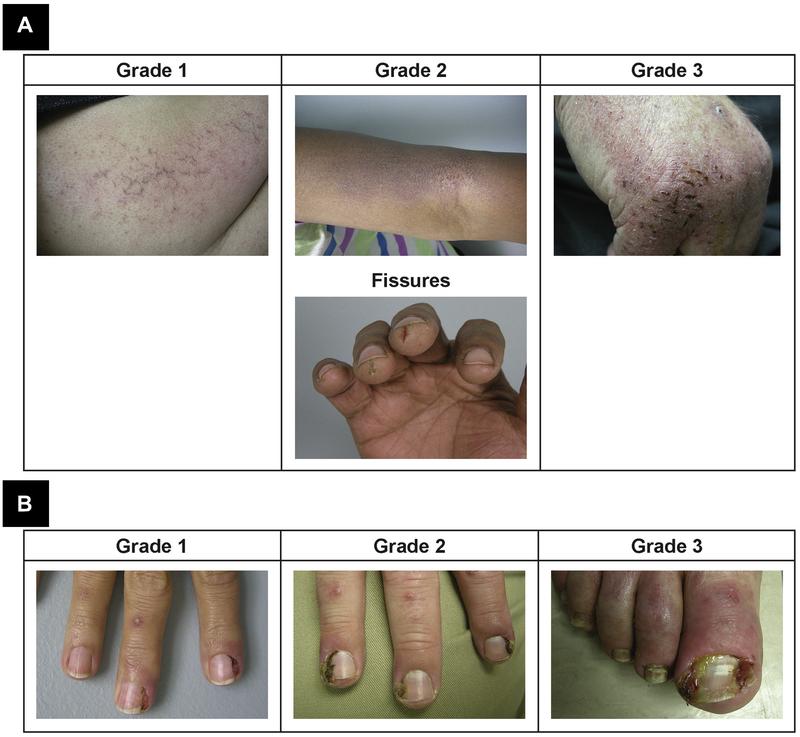
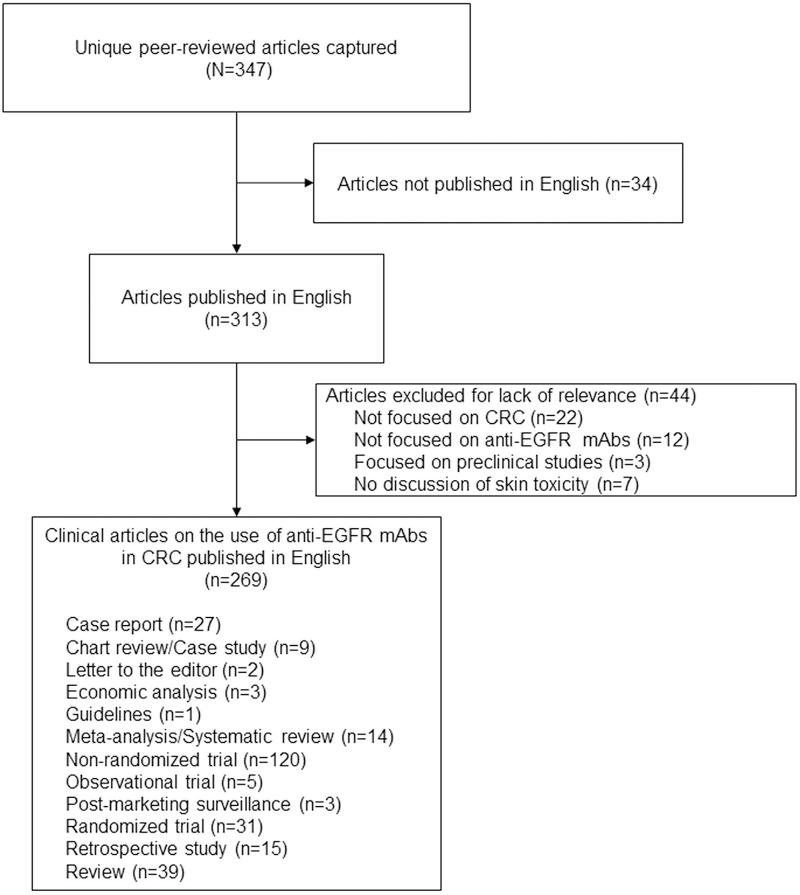
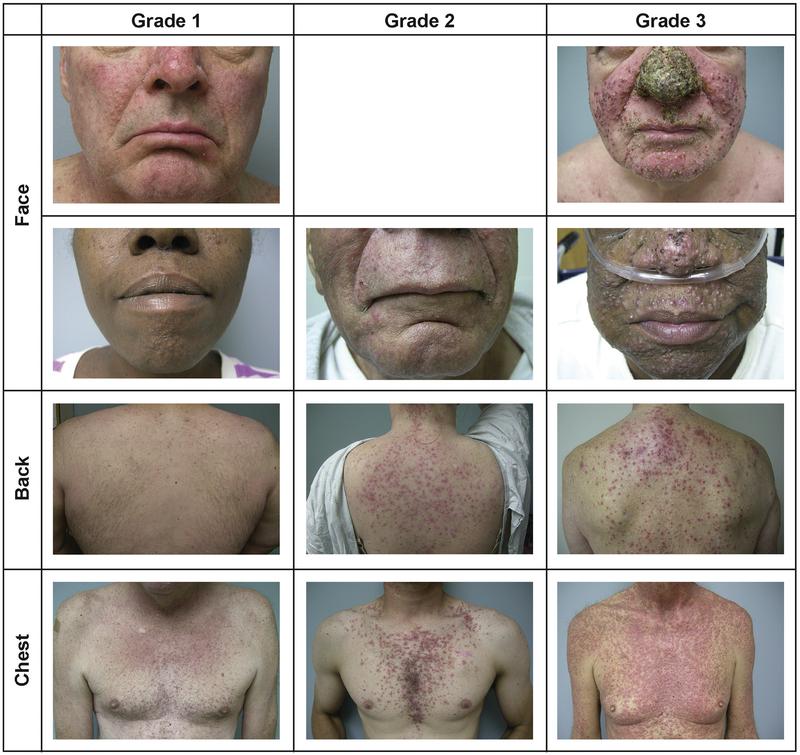
Monoclonal antibody inhibitors of the epidermal growth factor receptor (EGFR) have been shown to improve outcomes for patients with metastatic colorectal cancer (mCRC) without RAS gene mutations. However, treatment with anti-EGFR agents can be associated with toxicities of the skin, nails, hair, and eyes. Because these dermatologic toxicities can result in treatment discontinuation and affect patient quality of life, their management is an important focus when administering anti-EGFR monoclonal antibodies. The present systematic review describes the current data reporting the nature and incidence of, and management and treatment options for, dermatologic toxicities occurring during anti-EGFR treatment of mCRC. A search of the National Library of Medicine PubMed database from January 1, 2009, to August 18, 2016, identified relevant reports discussing dermatologic toxicity management among patients with mCRC receiving anti-EGFR therapy. The studies were grouped by type and rated by level of evidence using the GRADE approach developed by the Agency for Healthcare Research and Quality. Overall, 269 reports were reviewed (nonrandomized trials, n = 120; randomized trials, n = 31; retrospective studies, n = 15; reviews, n = 39). Dermatologic toxicity of any grade occurs in most patients who receive anti-EGFR therapy; approximately 10% to 20% of patients experienced grade 3/4 toxicity. The most common dermatologic toxicities include papulopustular/acneiform rash, xerosis, and pruritus; however, nail changes, hair abnormalities, and ocular conditions also occur. Guidance for managing these toxicities includes the use of inexpensive emollient ointments and moisturizers, avoidance of sun exposure, avoidance of irritants, and the use of short showers. Several studies also found that preemptive treatment was more effective than reactive treatment at limiting the incidence and severity of skin toxicity. With appropriate treatment, the dermatologic toxicities associated with anti-EGFR monoclonal antibody therapy can be managed, minimizing patient discomfort and the need for therapy interruption and/or discontinuation. Additionally, preemptive treatment can reduce dermatologic toxicity severity, ultimately yielding better quality of life.
单克隆抗体抑制剂表皮生长因子受体 (EGFR) 已被证明可改善无 RAS 基因突变的转移性结直肠癌 (mCRC) 患者的预后。然而,抗 EGFR 药物的治疗可能与皮肤、指甲、头发和眼睛的毒性有关。由于这些皮肤毒性可能导致治疗中断并影响患者的生活质量,因此在使用抗 EGFR 单克隆抗体治疗时,对其进行管理是一个重要的关注点。本系统评价描述了目前关于 mCRC 患者接受抗 EGFR 治疗时发生的皮肤毒性的性质、发生率、管理和治疗选择的现有数据。对 2009 年 1 月 1 日至 2016 年 8 月 18 日美国国立医学图书馆 PubMed 数据库的检索确定了讨论接受抗 EGFR 治疗的 mCRC 患者皮肤毒性管理的相关报告。研究按类型分组,并使用医疗保健研究与质量局制定的 GRADE 方法进行证据分级。总体而言,共审查了 269 份报告(非随机试验,n=120;随机试验,n=31;回顾性研究,n=15;综述,n=39)。大多数接受抗 EGFR 治疗的患者均出现任何级别的皮肤毒性;约 10%至 20%的患者出现 3/4 级毒性。最常见的皮肤毒性包括丘疹脓疱样/痤疮样皮疹、干燥和瘙痒;然而,指甲变化、头发异常和眼部疾病也会发生。管理这些毒性的指南包括使用廉价的润肤霜和保湿剂、避免阳光照射、避免刺激物以及使用短时间淋浴。一些研究还发现,预防性治疗比反应性治疗更能有效限制皮肤毒性的发生率和严重程度。通过适当的治疗,可以控制与抗 EGFR 单克隆抗体治疗相关的皮肤毒性,最大程度减少患者的不适以及治疗中断和/或停止的需要。此外,预防性治疗可降低皮肤毒性的严重程度,最终提高生活质量。
 Zotero 插件