
HIV-1 感染中自然杀伤细胞的适应性重编程。
Adaptive Reconfiguration of Natural Killer Cells in HIV-1 Infection.
机构信息
Division of Infection and Immunity, University College London (UCL), London, United Kingdom.
Nuffield Department of Clinical Medicine, University of Oxford, Oxford, United Kingdom.
出版信息
Front Immunol. 2018 Mar 16;9:474. doi: 10.3389/fimmu.2018.00474. eCollection 2018.
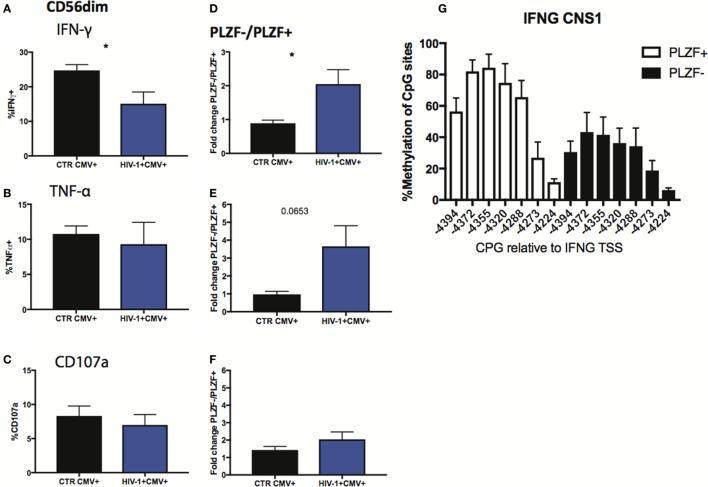
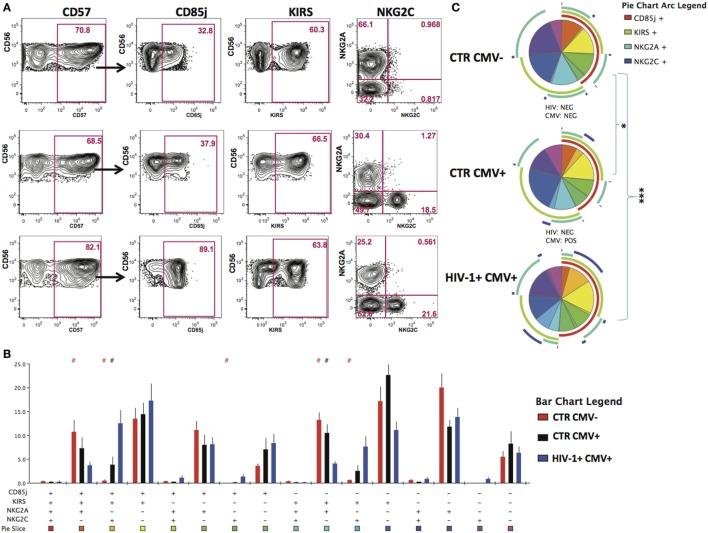
Human cytomegalovirus (HCMV) co-infection is highly prevalent within HIV-1 cohorts and is an important cofactor in driving ongoing immune activation, even during effective antiretroviral treatment. HCMV infection has recently been associated with expansion of adaptive-like natural killer (NK) cells, which harbor epigenetic alterations that impact on their cellular function and phenotype. The influence of HCMV co-infection on the considerable heterogeneity among NK cells and their functional responses to different stimuli was assessed in a cohort of HIV-1-infected individuals sampled during different stages of infection, compared with healthy subjects stratified according to HCMV serostatus. Our data demonstrate a reshaping of the NK cell pool in HIV-1 infection of HCMV-seropositive individuals, with an accentuated peripheral transition of CD56dim NK cells toward a mature CD57+ CD85j+ NKG2C+ NKG2A- phenotype. Lack of PLZF further distinguishes adaptive NK cells from other NK cells expressing CD57 or NKG2C. PLZF- NK cells from HIV-infected individuals had high expression of CD2, were Siglec-7 negative and exhibited downregulation of key signaling molecules, SYK and FcεRI-γ, overwhelmingly displaying features of adaptive NK cells that correlated with HCMV serum Ab levels. Notably this adaptive-like signature was detected during early HIV-1 infection and persisted during treatment. Adaptive-like NK cell subsets in HIV-1-infected individuals displayed enhanced IFN-γ production following Fc receptor triggering compared with their conventional NK cell counterparts, and their ability to produce TNF-α and degranulate was preserved. Together, these data suggest that HMCV infection/reactivation, a hallmark of HIV-1 infection, plays a role in driving a relative expansion of NK cells with adaptive features during HIV-1 infection. The identification of selective NK subsets with retained effector activity in HIV-1-infected subjects raises the possibility of developing therapeutic strategies that exploit specific NK subpopulations to achieve better HIV-1 control.
人巨细胞病毒(HCMV)合并感染在 HIV-1 队列中非常普遍,并且是驱动持续免疫激活的重要协同因素,即使在有效的抗逆转录病毒治疗期间也是如此。HCMV 感染最近与适应性样自然杀伤(NK)细胞的扩增有关,这些细胞具有影响其细胞功能和表型的表观遗传改变。在 HIV-1 感染个体的队列中,评估了 HCMV 合并感染对 NK 细胞之间相当大的异质性及其对不同刺激的功能反应的影响,该队列是根据 HCMV 血清状态分层的健康受试者进行比较。我们的数据表明,在 HIV-1 感染的 HCMV 血清阳性个体中,NK 细胞池发生了重塑,外周 CD56dim NK 细胞向成熟的 CD57+ CD85j+ NKG2C+ NKG2A-表型的过渡更加明显。PLZF 的缺乏进一步将适应性 NK 细胞与表达 CD57 或 NKG2C 的其他 NK 细胞区分开来。来自 HIV 感染个体的 PLZF-NK 细胞高表达 CD2,Siglec-7 阴性,并表现出关键信号分子 SYK 和 FcεRI-γ 的下调,表现出适应性 NK 细胞的特征,与 HCMV 血清 Ab 水平相关。值得注意的是,这种适应性样特征在 HIV-1 感染早期即可检测到,并在治疗期间持续存在。与传统的 NK 细胞相比,HIV-1 感染个体中的适应性样 NK 细胞亚群在 Fc 受体触发后产生 IFN-γ 的能力增强,并且其产生 TNF-α 和脱颗粒的能力得以保留。总之,这些数据表明,HMCV 感染/再激活是 HIV-1 感染的标志之一,在 HIV-1 感染期间,它在驱动具有适应性特征的 NK 细胞相对扩增中起作用。在 HIV-1 感染个体中,鉴定出具有保留效应子活性的选择性 NK 亚群,这为开发利用特定 NK 亚群实现更好的 HIV-1 控制的治疗策略提供了可能性。



 Zotero 插件