
癌症基因组图谱中 DNA 损伤修复缺陷的基因组和分子特征。
Genomic and Molecular Landscape of DNA Damage Repair Deficiency across The Cancer Genome Atlas.
机构信息
Institute for Systems Biology, Seattle, WA 98109, USA.
Department of Genomic Medicine, Division of Cancer Medicine, University of Texas MD Anderson Cancer Center, Houston, TX 77054, USA; Human Genome Sequencing Center, Baylor College of Medicine, Houston, TX 77030, USA.
出版信息
Cell Rep. 2018 Apr 3;23(1):239-254.e6. doi: 10.1016/j.celrep.2018.03.076.
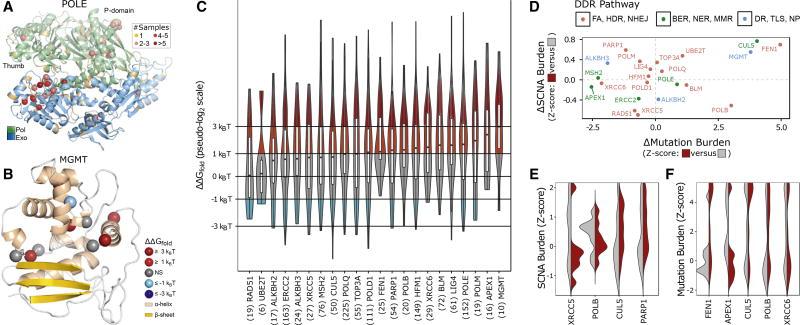
DNA damage repair (DDR) pathways modulate cancer risk, progression, and therapeutic response. We systematically analyzed somatic alterations to provide a comprehensive view of DDR deficiency across 33 cancer types. Mutations with accompanying loss of heterozygosity were observed in over 1/3 of DDR genes, including TP53 and BRCA1/2. Other prevalent alterations included epigenetic silencing of the direct repair genes EXO5, MGMT, and ALKBH3 in ∼20% of samples. Homologous recombination deficiency (HRD) was present at varying frequency in many cancer types, most notably ovarian cancer. However, in contrast to ovarian cancer, HRD was associated with worse outcomes in several other cancers. Protein structure-based analyses allowed us to predict functional consequences of rare, recurrent DDR mutations. A new machine-learning-based classifier developed from gene expression data allowed us to identify alterations that phenocopy deleterious TP53 mutations. These frequent DDR gene alterations in many human cancers have functional consequences that may determine cancer progression and guide therapy.
DNA 损伤修复 (DDR) 途径调节癌症风险、进展和治疗反应。我们系统地分析了体细胞改变,以全面了解 33 种癌症类型中的 DDR 缺陷。超过 1/3 的 DDR 基因发生了伴随杂合性丢失的突变,包括 TP53 和 BRCA1/2。其他常见的改变包括直接修复基因 EXO5、MGMT 和 ALKBH3 的表观遗传沉默,约 20%的样本存在这种情况。同源重组缺陷 (HRD) 在许多癌症类型中以不同的频率存在,在卵巢癌中最为明显。然而,与卵巢癌不同的是,HRD 与几种其他癌症的预后较差相关。基于蛋白质结构的分析允许我们预测 DDR 罕见、反复突变的功能后果。从基因表达数据开发的一种新的基于机器学习的分类器允许我们识别表型模拟有害 TP53 突变的改变。这些在许多人类癌症中频繁发生的 DDR 基因改变具有功能后果,可能决定癌症的进展并指导治疗。


 Zotero 插件