
非典型 Achaete-Scute 同源物作为伤害感受神经元身份的终端选择器的非常规功能。
Unconventional function of an Achaete-Scute homolog as a terminal selector of nociceptive neuron identity.
机构信息
Department of Biological Sciences, Howard Hughes Medical Institute, Columbia University, New York, United States of America.
Department of Systems Biology, Columbia University Medical Center, New York, United States of America.
出版信息
PLoS Biol. 2018 Apr 19;16(4):e2004979. doi: 10.1371/journal.pbio.2004979. eCollection 2018 Apr.
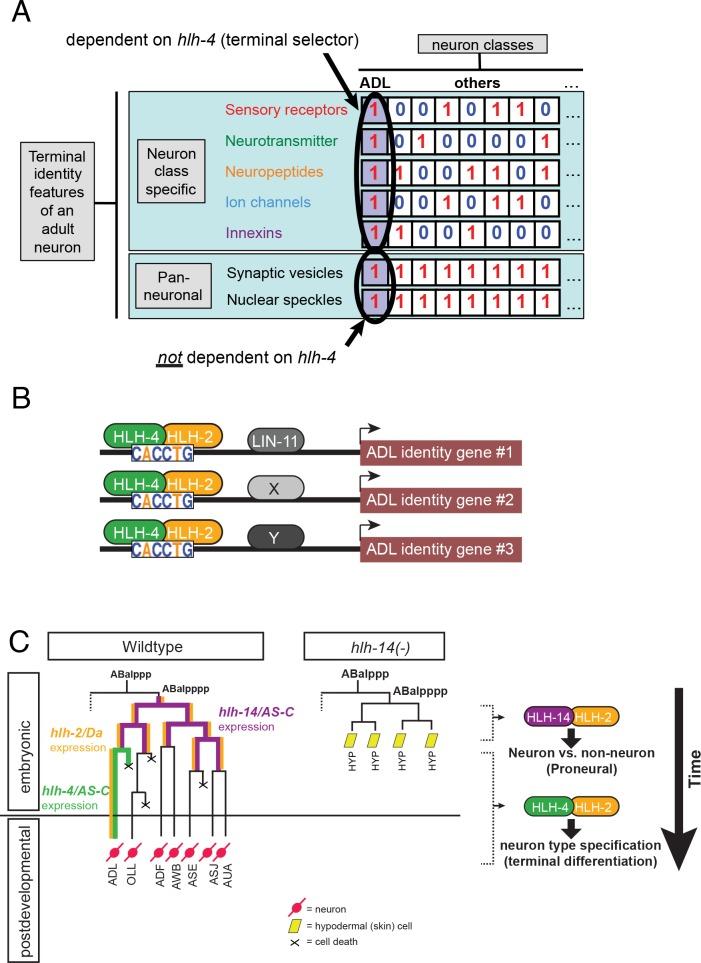
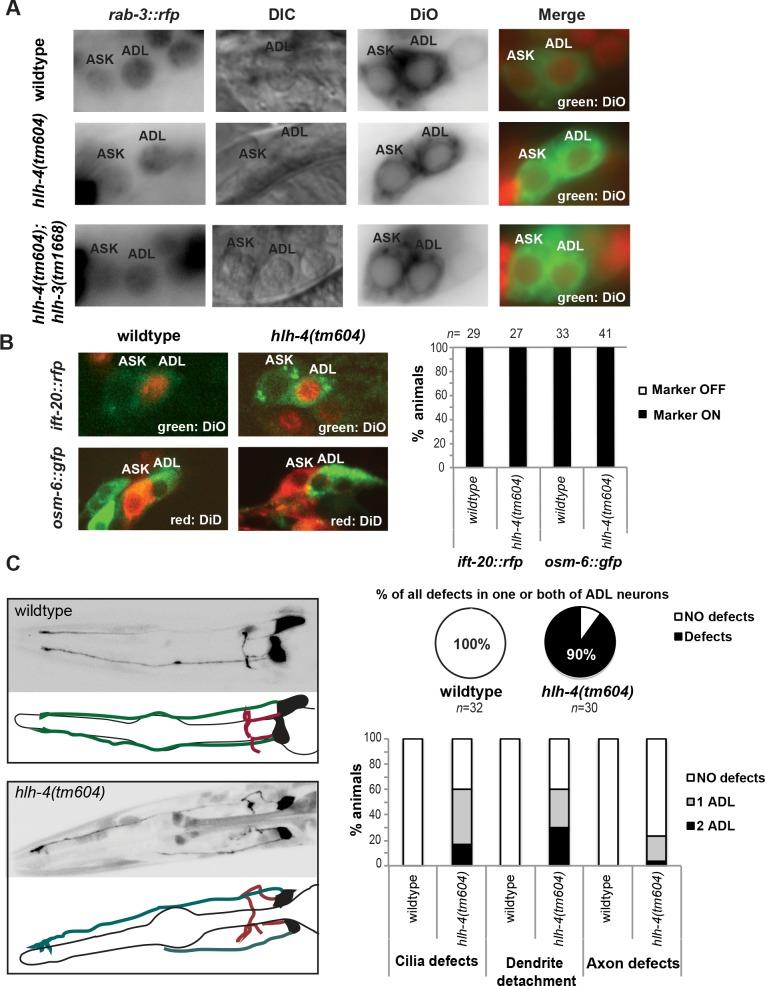
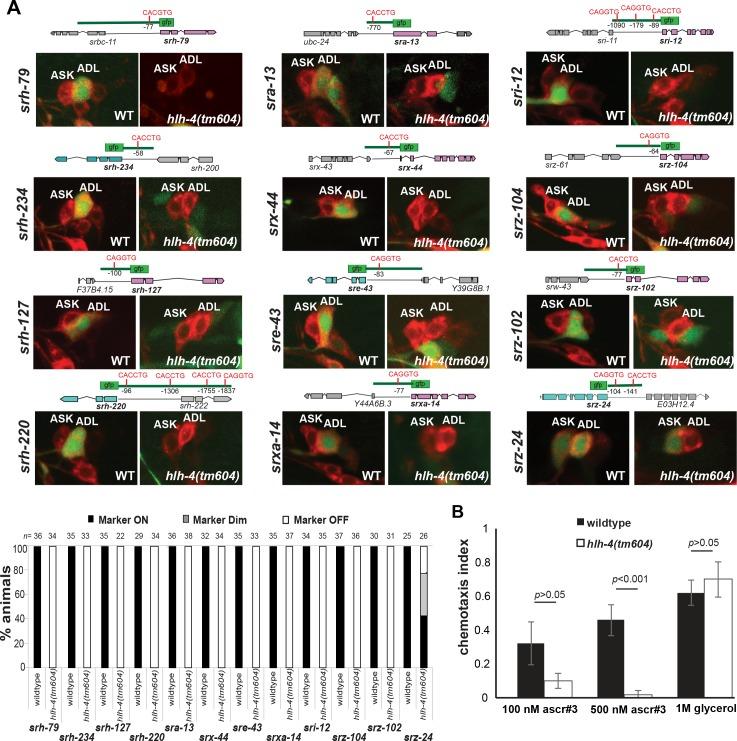
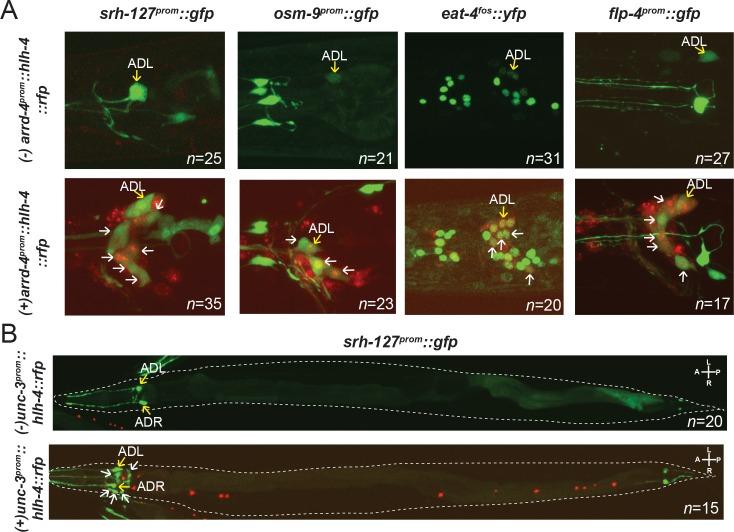
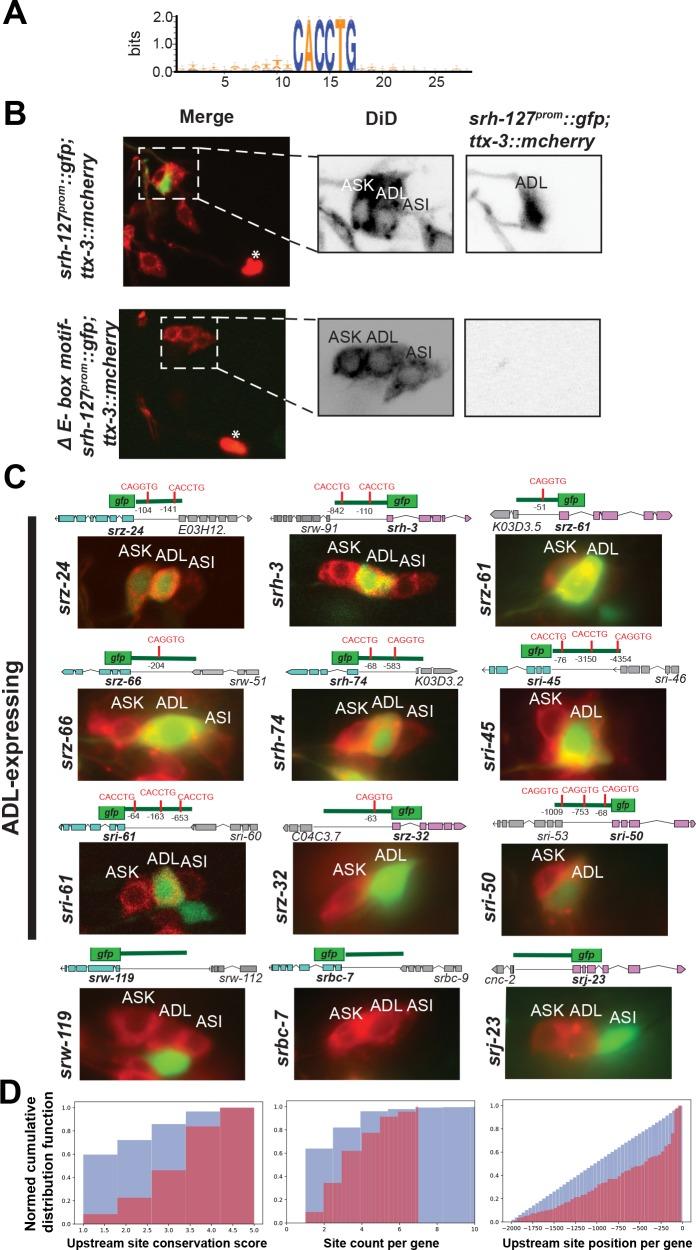
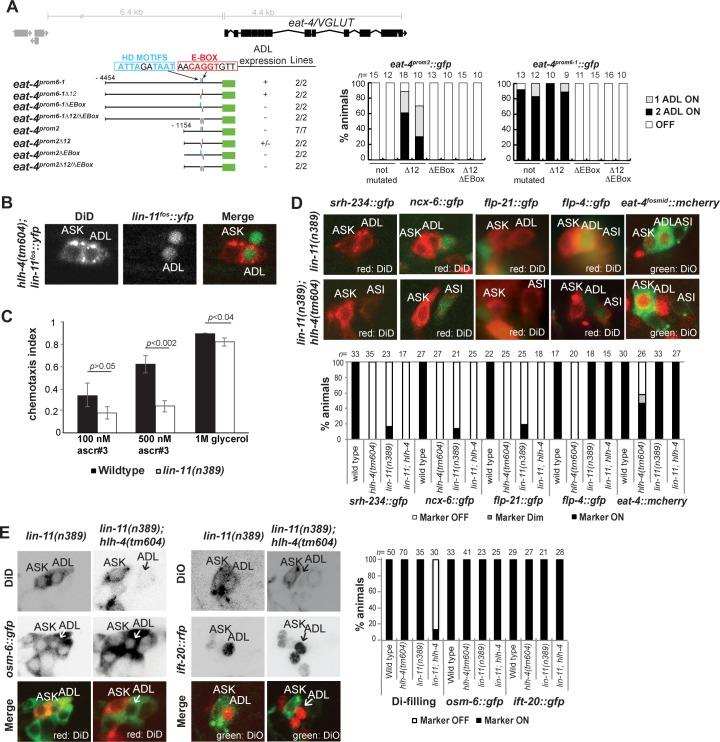
Proneural genes are among the most early-acting genes in nervous system development, instructing blast cells to commit to a neuronal fate. Drosophila Atonal and Achaete-Scute complex (AS-C) genes, as well as their vertebrate orthologs, are basic helix-loop-helix (bHLH) transcription factors with such proneural activity. We show here that a C. elegans AS-C homolog, hlh-4, functions in a fundamentally different manner. In the embryonic, larval, and adult nervous systems, hlh-4 is expressed exclusively in a single nociceptive neuron class, ADL, and its expression in ADL is maintained via transcriptional autoregulation throughout the life of the animal. However, in hlh-4 null mutants, the ADL neuron is generated and still appears neuronal in overall morphology and expression of panneuronal and pansensory features. Rather than acting as a proneural gene, we find that hlh-4 is required for the ADL neuron to function properly, to adopt its correct morphology, to express its unusually large repertoire of olfactory receptor-encoding genes, and to express other known features of terminal ADL identity, including neurotransmitter phenotype, neuropeptides, ion channels, and electrical synapse proteins. hlh-4 is sufficient to induce ADL identity features upon ectopic expression in other neuron types. The expression of ADL terminal identity features is directly controlled by HLH-4 via a phylogenetically conserved E-box motif, which, through bioinformatic analysis, we find to constitute a predictive feature of ADL-expressed terminal identity markers. The lineage that produces the ADL neuron was previously shown to require the conventional, transient proneural activity of another AS-C homolog, hlh-14, demonstrating sequential activities of distinct AS-C-type bHLH genes in neuronal specification. Taken together, we have defined here an unconventional function of an AS-C-type bHLH gene as a terminal selector of neuronal identity and we speculate that such function could be reflective of an ancestral function of an "ur-" bHLH gene.
神经前体细胞基因是神经系统发育过程中最早作用的基因之一,指导成神经细胞向神经元命运分化。果蝇 Atonal 和 Achaete-Scute 复合物 (AS-C) 基因及其脊椎动物同源基因,是具有这种神经前体细胞活性的基本螺旋-环-螺旋 (bHLH) 转录因子。我们在这里展示了一种 C. elegans AS-C 同源物 hlh-4,它以一种完全不同的方式发挥作用。在胚胎、幼虫和成年神经系统中,hlh-4 仅在一个伤害感受神经元类 ADL 中表达,并且其在 ADL 中的表达通过转录自调节在动物的整个生命周期中得以维持。然而,在 hlh-4 缺失突变体中,ADL 神经元仍然被产生,并且在整体形态和 panneuronal 和 pansensory 特征的表达上仍然表现出神经元的特征。hlh-4 不是作为一个神经前体细胞基因,而是我们发现它对于 ADL 神经元的正常功能、正确形态的采用、表达其异常大的嗅觉受体编码基因库以及表达其他已知的 ADL 终末身份特征是必需的,包括神经递质表型、神经肽、离子通道和电突触蛋白。hlh-4 在其他神经元类型中的异位表达足以诱导 ADL 身份特征。ADL 终末身份特征的表达是通过一个进化上保守的 E 盒基序直接由 HLH-4 控制的,通过生物信息学分析,我们发现该基序构成了 ADL 表达的终末身份标记的预测特征。产生 ADL 神经元的谱系以前被证明需要另一个 AS-C 同源物 hlh-14 的传统、短暂的神经前体细胞活性,这表明不同的 AS-C 型 bHLH 基因在神经元特化中具有顺序活性。总之,我们在这里定义了一个 AS-C 型 bHLH 基因作为神经元身份的终末选择器的非传统功能,并推测这种功能可能反映了“原始” bHLH 基因的祖先功能。


 Zotero 插件