
机械化学法合成具有高热稳定性和光催化活性的硅、氮共掺杂纳米二氧化钛
Synthesis of Si, N co-Doped Nano-Sized TiO₂ with High Thermal Stability and Photocatalytic Activity by Mechanochemical Method.
作者信息
Wang Peisan, Qi Chunxia, Wen Pengchao, Hao Luyuan, Xu Xin, Agathopoulos Simeon
机构信息
Chinese Academy of Science, Key Laboratory of Materials for Energy Conversion, Department of Materials Science and Engineering, University of Science and Technology of China, Hefei 230032, China.
Department of Chemistry, Anhui Medical University, Hefei 230032, China.
出版信息
Nanomaterials (Basel). 2018 May 2;8(5):294. doi: 10.3390/nano8050294.
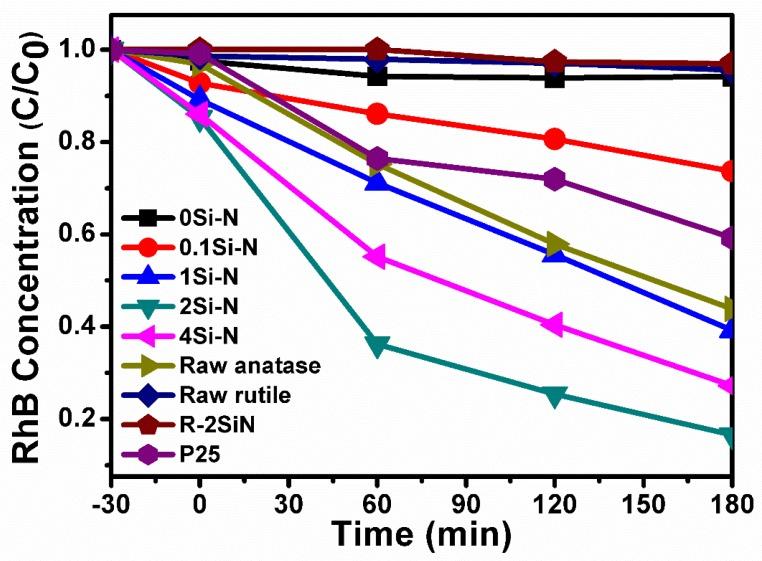
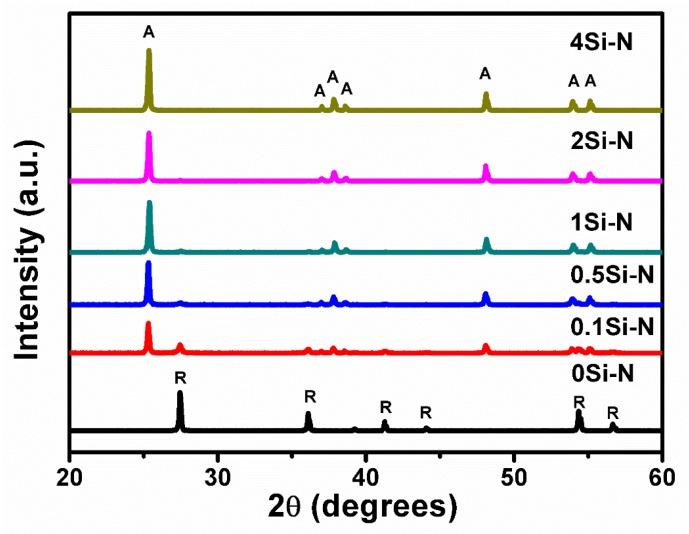
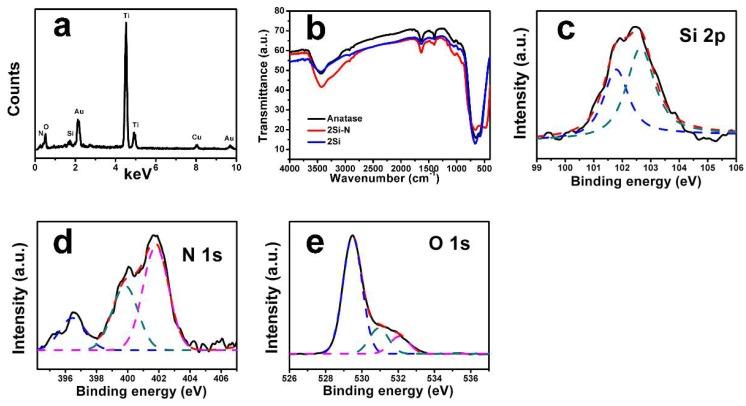
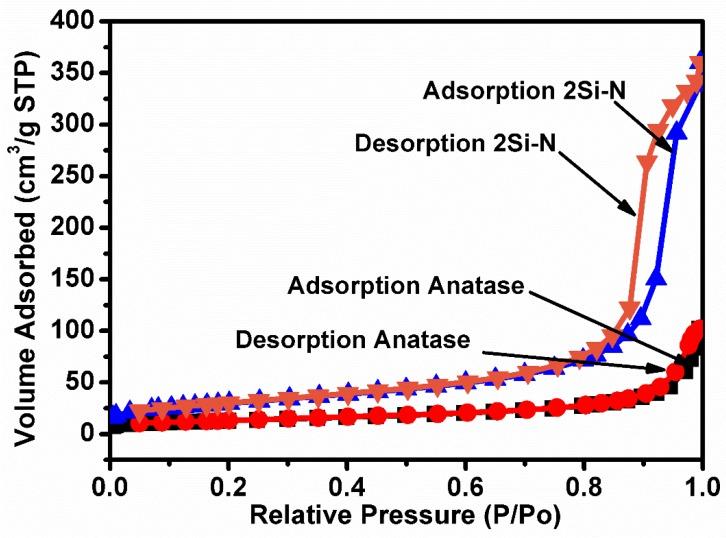
Τhe photocatalytic activity in the range of visible light wavelengths and the thermal stability of the structure were significantly enhanced in Si, N co-doped nano-sized TiO₂, and synthesized through high-energy mechanical milling of TiO₂ and SiO₂ powders, which was followed by calcination at 600 °C in an ammonia atmosphere. High-energy mechanical milling had a pronounced effect on the mixing and the reaction between the starting powders and greatly favored the transformation of the resultant powder mixture into an amorphous phase that contained a large number of evenly-dispersed nanocrystalline TiO₂ particles as anatase seeds. The experimental results suggest that the elements were homogeneously dispersed at an atomic level in this amorphous phase. After calcination, most of the amorphous phase was crystallized, which resulted in a unique nano-sized crystalline-core/disordered-shell morphology. This novel experimental process is simple, template-free, and provides features of high reproducibility in large-scale industrial production.
通过对TiO₂和SiO₂粉末进行高能机械研磨,随后在氨气氛中于600℃煅烧,合成的Si、N共掺杂纳米TiO₂在可见光波长范围内的光催化活性和结构的热稳定性显著增强。高能机械研磨对起始粉末之间的混合和反应有显著影响,极大地促进了所得粉末混合物转变为非晶相,该非晶相中包含大量均匀分散的纳米晶TiO₂颗粒作为锐钛矿晶种。实验结果表明,元素在该非晶相中以原子水平均匀分散。煅烧后,大部分非晶相结晶,形成独特的纳米晶核/无序壳层形态。这种新颖的实验过程简单、无模板,并且在大规模工业生产中具有高重现性的特点。





 Zotero 插件