
丁丙诺啡透皮贴剂用于拇外翻手术的围手术期镇痛:一项前瞻性、随机、对照研究。
Perioperative analgesia with a buprenorphine transdermal patch for hallux valgus surgery: a prospective, randomized, controlled study.
作者信息
Xu Can, Li Mingqing, Wang Chenggong, Li Hui, Liu Hua
机构信息
Department of Orthopaedics, Xiangya Hospital, Central South University, Changsha, Hunan Province, People's Republic of China.
出版信息
J Pain Res. 2018 Apr 26;11:867-873. doi: 10.2147/JPR.S153456. eCollection 2018.
PURPOSE
Hallux valgus surgery often results in significant postoperative pain. Adequate control of pain is essential for patient satisfaction and improves the outcome of the procedure. This study aimed to investigate the perioperative analgesic effect of a buprenorphine transdermal patch in patients who underwent hallux valgus surgery.
PATIENTS AND METHODS
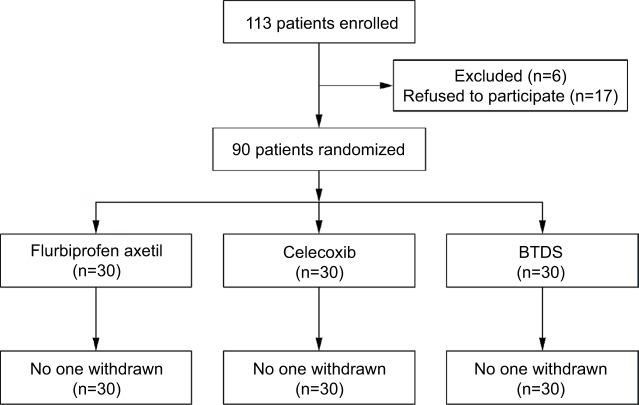
A total of 90 patients were randomly divided into the following three groups based on the perioperative analgesic method: flurbiprofen axetil intravenous injection (Group F), oral celecoxib (Group C), and buprenorphine transdermal delivery system (BTDS) (Group BTDS). The pain status, degree of satisfaction, adverse effects, and administration of tramadol hydrochloride for uncontrolled pain were recorded on the night before surgery, postoperative day 1, postoperative day 2, and postoperative day 3.
RESULTS
The BTDS could effectively control perioperative pain for patients undergoing hallux valgus surgery. The analgesic effect of the BTDS was better than that of oral celecoxib. In addition, statistically significant differences were not observed in the visual analog scale (VAS) scores, adverse effects, and rescue analgesia between the patients who received the BTDS and the patients who received the flurbiprofen axetil intravenous injection. However, the degree of patient satisfaction of the BTDS group was significantly higher (<0.05) than that of the other two groups.
CONCLUSION
The BTDS (a preemptive analgesia regimen) could exert an analgesic effect during the perioperative period for patients who had received hallux valgus surgery, and this effect is beneficial for sustaining postoperative physiological and psychological states and promoting functional rehabilitation.
目的
拇外翻手术术后常伴有明显疼痛。充分控制疼痛对于患者满意度至关重要,并能改善手术效果。本研究旨在探讨丁丙诺啡透皮贴剂在拇外翻手术患者围手术期的镇痛效果。
患者与方法
根据围手术期镇痛方法,将90例患者随机分为以下三组:氟比洛芬酯静脉注射组(F组)、口服塞来昔布组(C组)和丁丙诺啡透皮给药系统组(BTDS组)。记录术前晚、术后第1天、术后第2天和术后第3天的疼痛状况、满意度、不良反应以及因疼痛控制不佳而使用盐酸曲马多的情况。
结果
BTDS能有效控制拇外翻手术患者围手术期疼痛。BTDS的镇痛效果优于口服塞来昔布。此外,接受BTDS的患者与接受氟比洛芬酯静脉注射的患者在视觉模拟评分(VAS)、不良反应及补救性镇痛方面未观察到统计学显著差异。然而,BTDS组患者的满意度明显高于其他两组(<0.05)。
结论
BTDS(一种超前镇痛方案)对拇外翻手术患者围手术期可发挥镇痛作用,这有利于维持术后生理和心理状态并促进功能康复。
 Zotero 插件