
TASI:用于肿瘤球体动力学时空定量的软件工具。
TASI: A software tool for spatial-temporal quantification of tumor spheroid dynamics.
机构信息
Department of Biomedical Informatics, Emory University, Atlanta, GA, USA.
Graduate Program in Cancer Biology, Emory University, Atlanta, GA, USA.
出版信息
Sci Rep. 2018 May 8;8(1):7248. doi: 10.1038/s41598-018-25337-4.
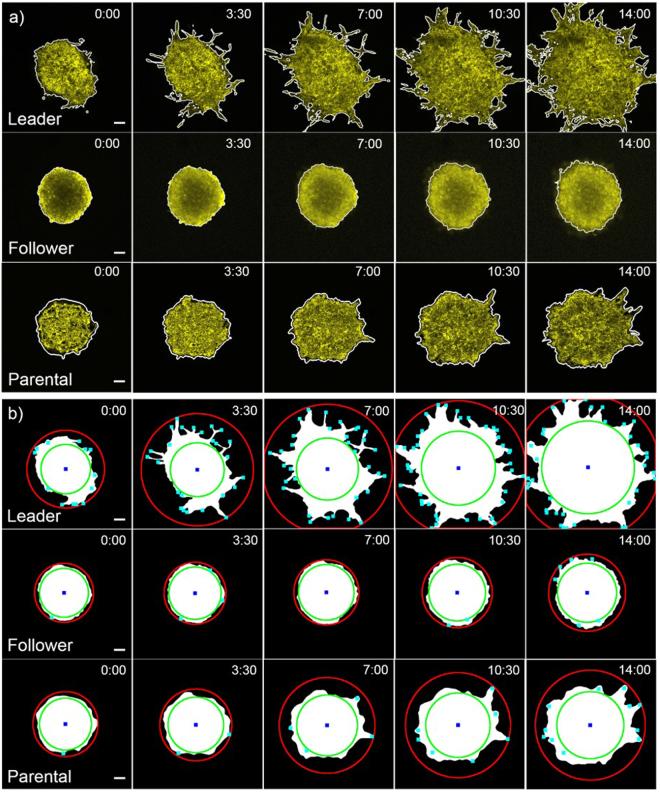
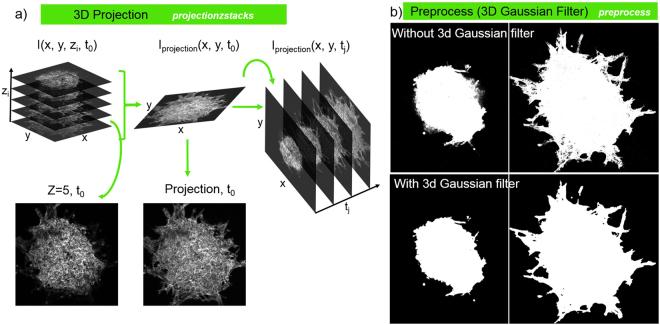
Spheroid cultures derived from explanted cancer specimens are an increasingly utilized resource for studying complex biological processes like tumor cell invasion and metastasis, representing an important bridge between the simplicity and practicality of 2-dimensional monolayer cultures and the complexity and realism of in vivo animal models. Temporal imaging of spheroids can capture the dynamics of cell behaviors and microenvironments, and when combined with quantitative image analysis methods, enables deep interrogation of biological mechanisms. This paper presents a comprehensive open-source software framework for Temporal Analysis of Spheroid Imaging (TASI) that allows investigators to objectively characterize spheroid growth and invasion dynamics. TASI performs spatiotemporal segmentation of spheroid cultures, extraction of features describing spheroid morpho-phenotypes, mathematical modeling of spheroid dynamics, and statistical comparisons of experimental conditions. We demonstrate the utility of this tool in an analysis of non-small cell lung cancer spheroids that exhibit variability in metastatic and proliferative behaviors.
从植入癌症标本中衍生的球体培养物是研究肿瘤细胞侵袭和转移等复杂生物学过程的日益有用的资源,它是在二维单层培养物的简单性和实用性与体内动物模型的复杂性和真实性之间的重要桥梁。球体的时间成像可以捕获细胞行为和微环境的动态,并且与定量图像分析方法结合使用时,可以深入研究生物学机制。本文提出了一种用于球体成像时间分析(TASI)的全面开源软件框架,该框架允许研究人员客观地表征球体的生长和入侵动力学。TASI 执行球体培养物的时空分割,提取描述球体形态表型的特征,对球体动力学进行数学建模,以及对实验条件进行统计比较。我们在对表现出转移性和增殖性行为差异的非小细胞肺癌球体的分析中证明了该工具的实用性。



 Zotero 插件