
氧化锌纳米颗粒的性质及其对微生物的活性。
Properties of Zinc Oxide Nanoparticles and Their Activity Against Microbes.
作者信息
Siddiqi Khwaja Salahuddin, Ur Rahman Aziz, Husen Azamal
机构信息
Department of Chemistry, Aligarh Muslim University, Aligarh, Uttar Pradesh, 202002, India.
Department of Saidla (Unani Pharmacy), Aligarh Muslim University, Aligarh, Uttar Pradesh, 202002, India.
出版信息
Nanoscale Res Lett. 2018 May 8;13(1):141. doi: 10.1186/s11671-018-2532-3.
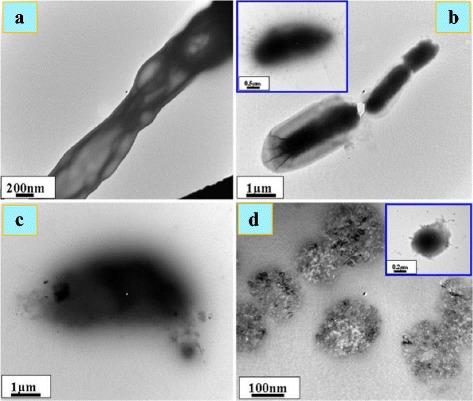
Zinc oxide is an essential ingredient of many enzymes, sun screens, and ointments for pain and itch relief. Its microcrystals are very efficient light absorbers in the UVA and UVB region of spectra due to wide bandgap. Impact of zinc oxide on biological functions depends on its morphology, particle size, exposure time, concentration, pH, and biocompatibility. They are more effective against microorganisms such as Bacillus subtilis, Bacillus megaterium, Staphylococcus aureus, Sarcina lutea, Escherichia coli, Pseudomonas aeruginosa, Klebsiella pneumonia, Pseudomonas vulgaris, Candida albicans, and Aspergillus niger. Mechanism of action has been ascribed to the activation of zinc oxide nanoparticles by light, which penetrate the bacterial cell wall via diffusion. It has been confirmed from SEM and TEM images of the bacterial cells that zinc oxide nanoparticles disintegrate the cell membrane and accumulate in the cytoplasm where they interact with biomolecules causing cell apoptosis leading to cell death.
氧化锌是许多酶、防晒霜以及用于缓解疼痛和瘙痒的药膏的重要成分。由于其宽带隙,其微晶在光谱的UVA和UVB区域是非常有效的光吸收剂。氧化锌对生物功能的影响取决于其形态、粒径、暴露时间、浓度、pH值和生物相容性。它们对诸如枯草芽孢杆菌、巨大芽孢杆菌、金黄色葡萄球菌、藤黄八叠球菌、大肠杆菌、铜绿假单胞菌、肺炎克雷伯菌、普通变形杆菌、白色念珠菌和黑曲霉等微生物更有效。作用机制归因于光对氧化锌纳米颗粒的激活,其通过扩散穿透细菌细胞壁。从细菌细胞的扫描电子显微镜(SEM)和透射电子显微镜(TEM)图像已证实,氧化锌纳米颗粒会使细胞膜解体并积聚在细胞质中,在那里它们与生物分子相互作用,导致细胞凋亡从而导致细胞死亡。


 Zotero 插件