
基于患者视角生成对疾病概念理解的三种方法的比较。
A comparison of three methods to generate a conceptual understanding of a disease based on the patients' perspective.
作者信息
Humphrey Louise, Willgoss Thomas, Trigg Andrew, Meysner Stephanie, Kane Mary, Dickinson Sally, Kitchen Helen
机构信息
Clinical Outcomes Solutions, LLC, Unit 68, Basepoint, Shearway Business Park, Shearway Road, Folkestone, Manchester, CT194RH UK.
Formerly of DRG Abacus, Manchester, UK.
出版信息
J Patient Rep Outcomes. 2017;1(1):9. doi: 10.1186/s41687-017-0013-6. Epub 2017 Dec 19.
BACKGROUND
The Food and Drug Administration patient-reported outcome (PRO) guidance provides standards for PRO development, but these standards bring scientific and logistical challenges which can result in a lengthy and expensive instrument development process. Thus, more pragmatic methods are needed alongside traditional approaches.
METHODS
Partnering with the National Ankylosing Spondylitis (AS) Society, we compared three methods for eliciting patient experiences: 1) concept elicitation (CE) interviews with 12 individuals with AS, 2) "group concept mapping" (GCM) with 16 individuals with AS, 3) a social media review (SMR) of AS online chatrooms. Three conceptual models were developed and compared to explore data breadth/depth, as well as the practicalities and patient-centeredness.
RESULTS
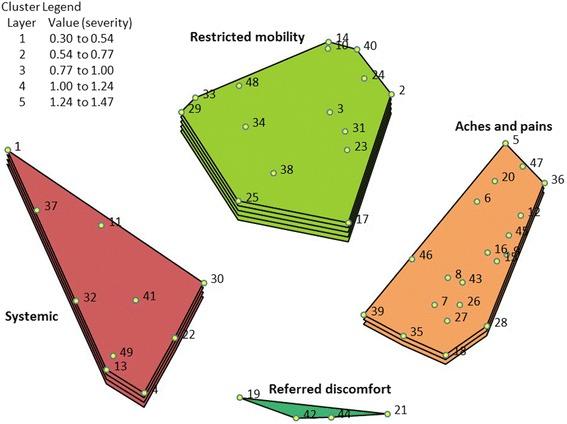
Overlap in concepts was observed between conceptual models; 35% of symptoms were identified by all methods. The SMR approach identified the most concepts ( = 23), followed by CE interviews ( = 18), and GCM ( = 15). Eight symptoms were uniquely identified using GCM and SMR. Eliciting in-depth data was challenging for SMR as detail was not always provided. Insight into the relationships between symptoms was obtained as a "concept map" in GCM, via effective probing within interviews, and through the subject's descriptions in SMR. Practical investment varied; CE interviews were the most resource intensive, whereas SMR was the least. Individuals in GCM and CE interviews reported high engagement.
CONCLUSIONS
Primary CE interviews achieved the greatest depth in conceptual understanding of patient experience; however, novel methods (GCM, SMR) provide complementary approaches for identifying measurement concepts. Each method has strengths and weaknesses and should be selected based on specific research objectives.
背景
美国食品药品监督管理局(FDA)的患者报告结局(PRO)指南为PRO的开发提供了标准,但这些标准带来了科学和后勤方面的挑战,可能导致仪器开发过程漫长且成本高昂。因此,除了传统方法外,还需要更务实的方法。
方法
我们与国家强直性脊柱炎(AS)协会合作,比较了三种获取患者体验的方法:1)对12名AS患者进行概念引出(CE)访谈;2)对16名AS患者进行“群体概念映射”(GCM);3)对AS在线聊天室进行社交媒体回顾(SMR)。开发并比较了三个概念模型,以探索数据的广度/深度以及实用性和以患者为中心的程度。
结果
在概念模型之间观察到概念重叠;所有方法都识别出了35%的症状。SMR方法识别出的概念最多(n = 23),其次是CE访谈(n = 18)和GCM(n = 15)。使用GCM和SMR独特地识别出了8种症状。由于并非总是提供详细信息,因此对SMR来说,获取深入数据具有挑战性。通过GCM中的“概念图”、访谈中的有效探究以及SMR中受试者的描述,获得了对症状之间关系的洞察。实际投入各不相同;CE访谈资源投入最大,而SMR最少。参与GCM和CE访谈的个体表示参与度很高。
结论
初步的CE访谈在对患者体验的概念理解上达到了最大深度;然而,新方法(GCM、SMR)为识别测量概念提供了补充方法。每种方法都有优缺点,应根据具体研究目标进行选择。


 Zotero 插件