
基于代谢组学分析的谷氨酸棒杆菌代谢途径设计与工程改造,以匹配同时利用 D-葡萄糖和 L-阿拉伯糖的速率。
Metabolome analysis-based design and engineering of a metabolic pathway in Corynebacterium glutamicum to match rates of simultaneous utilization of D-glucose and L-arabinose.
机构信息
Graduate School of Science, Technology and Innovation, Kobe University, 1-1 Rokkodai, Nada, Kobe, 657-8501, Japan.
Department of Environmental and Life Sciences, School of Food and Nutritional Sciences, University of Shizuoka, 52-1 Yada, Suruga, Shizuoka, 422-8526, Japan.
出版信息
Microb Cell Fact. 2018 May 17;17(1):76. doi: 10.1186/s12934-018-0927-6.
BACKGROUND
L-Arabinose is the second most abundant component of hemicellulose in lignocellulosic biomass, next to D-xylose. However, few microorganisms are capable of utilizing pentoses, and catabolic genes and operons enabling bacterial utilization of pentoses are typically subject to carbon catabolite repression by more-preferred carbon sources, such as D-glucose, leading to a preferential utilization of D-glucose over pentoses. In order to simultaneously utilize both D-glucose and L-arabinose at the same rate, a modified metabolic pathway was rationally designed based on metabolome analysis.
RESULTS
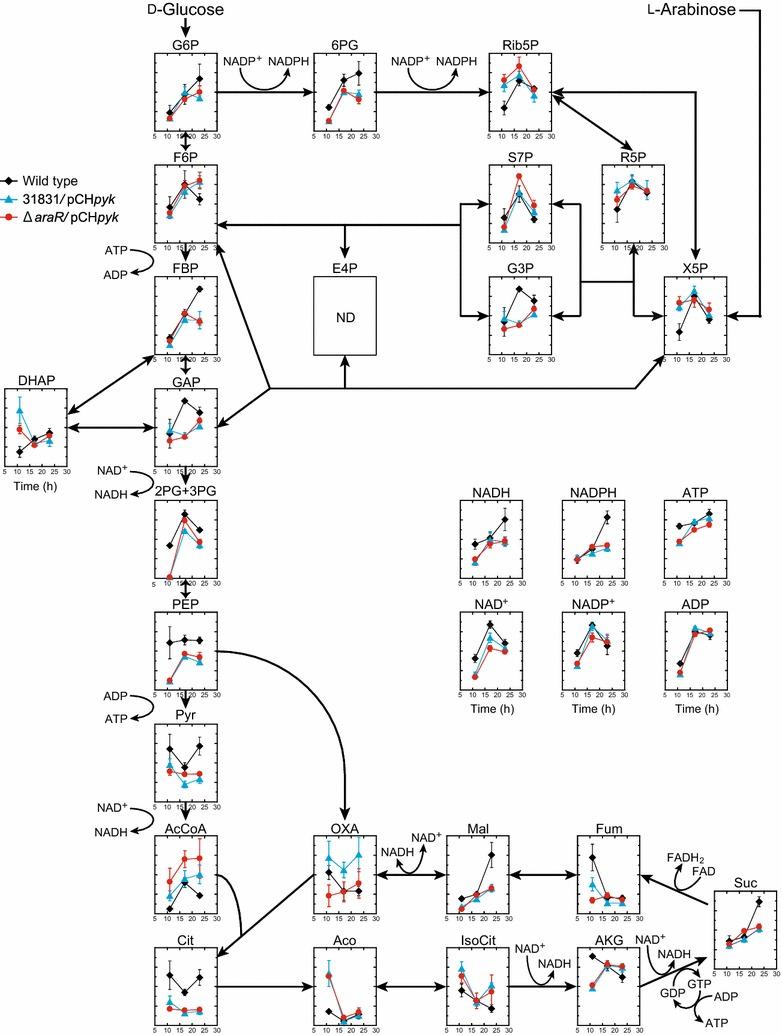
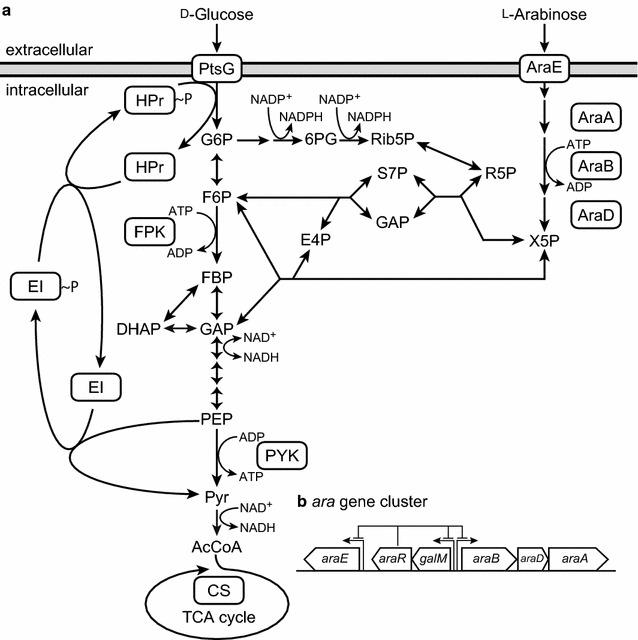
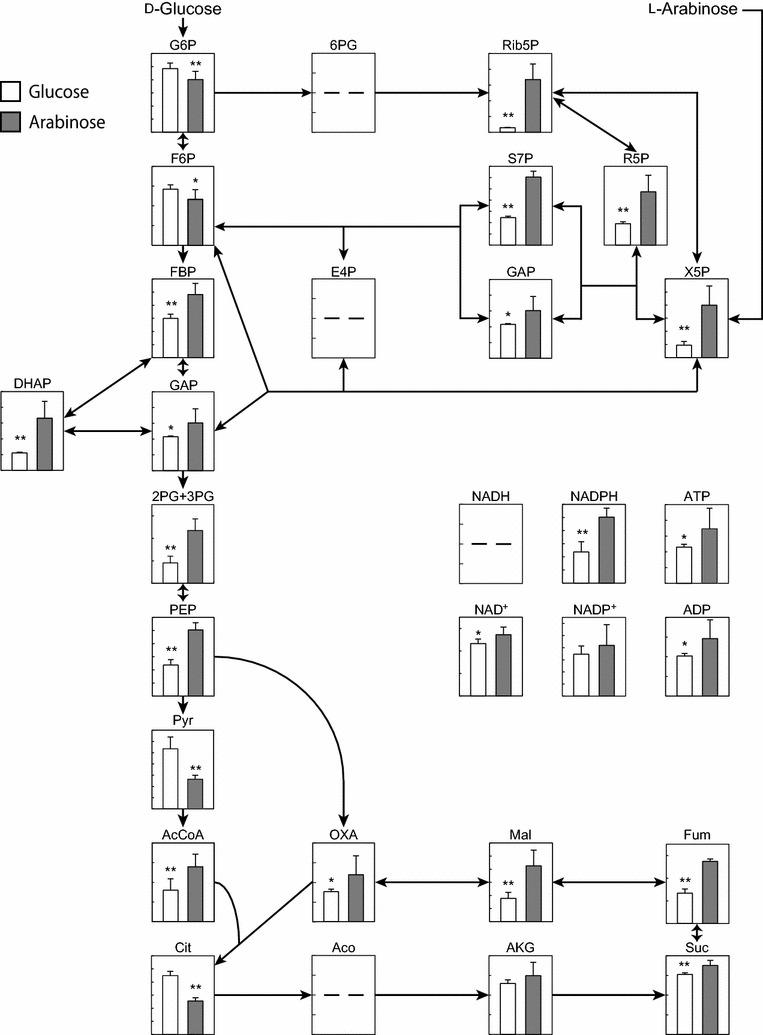
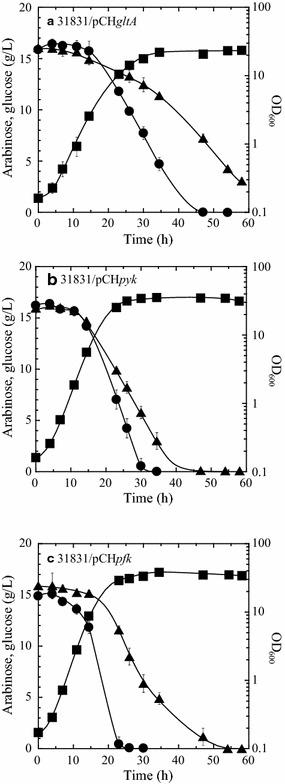
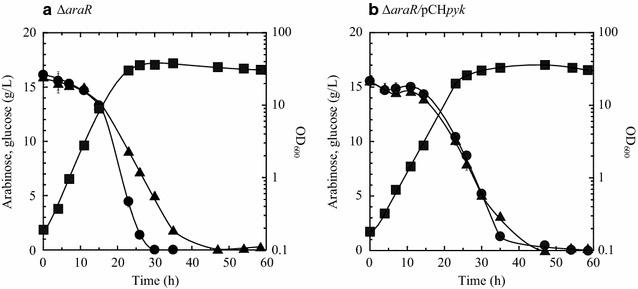
Corynebacterium glutamicum ATCC 31831 utilized D-glucose and L-arabinose simultaneously at a low concentration (3.6 g/L each) but preferentially utilized D-glucose over L-arabinose at a high concentration (15 g/L each), although L-arabinose and D-glucose were consumed at comparable rates in the absence of the second carbon source. Metabolome analysis revealed that phosphofructokinase and pyruvate kinase were major bottlenecks for D-glucose and L-arabinose metabolism, respectively. Based on the results of metabolome analysis, a metabolic pathway was engineered by overexpressing pyruvate kinase in combination with deletion of araR, which encodes a repressor of L-arabinose uptake and catabolism. The recombinant strain utilized high concentrations of D-glucose and L-arabinose (15 g/L each) at the same consumption rate. During simultaneous utilization of both carbon sources at high concentrations, intracellular levels of phosphoenolpyruvate declined and acetyl-CoA levels increased significantly as compared with the wild-type strain that preferentially utilized D-glucose. These results suggest that overexpression of pyruvate kinase in the araR deletion strain increased the specific consumption rate of L-arabinose and that citrate synthase activity becomes a new bottleneck in the engineered pathway during the simultaneous utilization of D-glucose and L-arabinose.
CONCLUSIONS
Metabolome analysis identified potential bottlenecks in D-glucose and L-arabinose metabolism and was then applied to the following rational metabolic engineering. Manipulation of only two genes enabled simultaneous utilization of D-glucose and L-arabinose at the same rate in metabolically engineered C. glutamicum. This is the first report of rational metabolic design and engineering for simultaneous hexose and pentose utilization without inactivating the phosphotransferase system.
背景
L-阿拉伯糖是木质纤维素生物质中半纤维素的第二大组成部分,仅次于 D-木糖。然而,很少有微生物能够利用戊糖,并且能够使细菌利用戊糖的分解代谢基因和操纵子通常受到更优选碳源(如 D-葡萄糖)的碳分解代谢物阻遏,导致优先利用 D-葡萄糖而不是戊糖。为了以相同的速率同时利用 D-葡萄糖和 L-阿拉伯糖,根据代谢组学分析,合理设计了一种改良的代谢途径。
结果
Corynebacterium glutamicum ATCC 31831 以低浓度(每种 3.6 g/L)同时利用 D-葡萄糖和 L-阿拉伯糖,但以高浓度(每种 15 g/L)优先利用 D-葡萄糖而不是 L-阿拉伯糖,尽管在不存在第二种碳源的情况下,L-阿拉伯糖和 D-葡萄糖的消耗速度相当。代谢组学分析表明,磷酸果糖激酶和丙酮酸激酶分别是 D-葡萄糖和 L-阿拉伯糖代谢的主要瓶颈。基于代谢组学分析的结果,通过过表达丙酮酸激酶并删除 araR 来构建代谢途径,araR 编码 L-阿拉伯糖摄取和分解代谢的抑制剂。重组菌株以相同的消耗率利用高浓度的 D-葡萄糖和 L-阿拉伯糖(每种 15 g/L)。在高浓度下同时利用两种碳源时,与优先利用 D-葡萄糖的野生型菌株相比,细胞内磷酸烯醇丙酮酸水平下降,乙酰辅酶 A 水平显著升高。这些结果表明,在 araR 缺失菌株中过表达丙酮酸激酶增加了 L-阿拉伯糖的比消耗速率,并且在同时利用 D-葡萄糖和 L-阿拉伯糖时,柠檬酸合酶活性成为工程途径中的新瓶颈。
结论
代谢组学分析鉴定了 D-葡萄糖和 L-阿拉伯糖代谢中的潜在瓶颈,然后应用于以下合理的代谢工程。仅操纵两个基因就能够使代谢工程化的 C. glutamicum 以相同的速率同时利用 D-葡萄糖和 L-阿拉伯糖。这是首次报道在不使磷酸转移酶系统失活的情况下,合理设计和工程化同时利用六碳糖和五碳糖。

 Zotero 插件