
分析全球贸易和投资对非传染性疾病和风险因素的影响:对定量分析中使用的方法学方法的批判性回顾。
Analyzing the impacts of global trade and investment on non-communicable diseases and risk factors: a critical review of methodological approaches used in quantitative analyses.
机构信息
Department of Health Policy and Management, Bloomberg School of Public Health, Johns Hopkins University, 624 N. Broadway, Hampton House 380A, Baltimore, MD, 21205, USA.
Menzies Centre for Health Policy, School of Public Health, The University of Sydney, D17 Charles Perkins Centre, Sydney, NSW, 2006, Australia.
出版信息
Global Health. 2018 May 24;14(1):53. doi: 10.1186/s12992-018-0371-8.
BACKGROUND
A key mechanism through which globalization has impacted health is the liberalization of trade and investment, yet relatively few studies to date have used quantitative methods to investigate the impacts of global trade and investment policies on non-communicable diseases and risk factors. Recent reviews of this literature have found heterogeneity in results and a range of quality across studies, which may be in part attributable to a lack of conceptual clarity and methodological inconsistencies.
METHODS
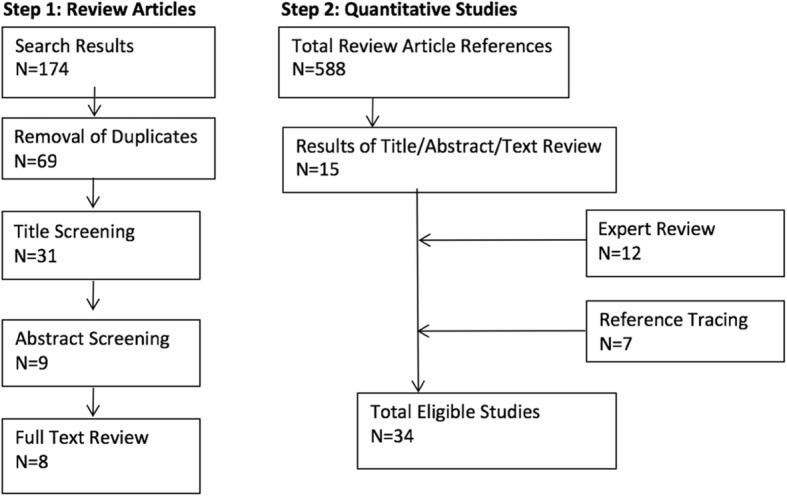
This study is a critical review of methodological approaches used in the quantitative literature on global trade and investment and diet, tobacco, alcohol, and related health outcomes, with the objective of developing recommendations and providing resources to guide future robust, policy relevant research. A review of reviews, expert review, and reference tracing were employed to identify relevant studies, which were evaluated using a novel quality assessment tool designed for this research.
RESULTS
Eight review articles and 34 quantitative studies were identified for inclusion. Important ways to improve this literature were identified and discussed: clearly defining exposures of interest and not conflating trade and investment; exploring mechanisms of broader relationships; increasing the use of individual-level data; ensuring consensus and consistency in key confounding variables; utilizing more sector-specific versus economy-wide trade and investment indicators; testing and adequately adjusting for autocorrelation and endogeneity when using longitudinal data; and presenting results from alternative statistical models and sensitivity analyses. To guide the development of future analyses, recommendations for international data sources for selected trade and investment indicators, as well as key gaps in the literature, are presented.
CONCLUSION
More methodologically rigorous and consistent approaches in future quantitative studies on the impacts of global trade and investment policies on non-communicable diseases and risk factors can help to resolve inconsistencies of existing research and generate useful information to guide policy decisions.
背景
全球化影响健康的一个关键机制是贸易和投资自由化,但迄今为止,相对较少的研究使用定量方法来研究全球贸易和投资政策对非传染性疾病和风险因素的影响。最近对这一文献的综述发现,结果存在异质性,而且研究的质量也存在差异,这可能部分归因于概念上的不清晰和方法上的不一致。
方法
本研究是对定量文献中关于全球贸易和投资与饮食、烟草、酒精和相关健康结果的方法学方法的批判性评价,目的是为未来的稳健、有政策相关性的研究提供建议和资源。采用综述回顾、专家审查和参考文献追溯相结合的方法来确定相关研究,并使用专门为此项研究设计的新的质量评估工具对其进行评估。
结果
确定了 8 篇综述文章和 34 篇定量研究进行纳入。确定并讨论了改进这一文献的重要方法:明确界定感兴趣的暴露因素,不要将贸易和投资混为一谈;探索更广泛关系的机制;增加使用个人层面的数据;确保关键混杂变量的一致性和一致性;利用更具体部门而非整体经济的贸易和投资指标;在使用纵向数据时,测试和充分调整自相关和内生性;以及呈现替代统计模型和敏感性分析的结果。为了指导未来分析的发展,提出了一些关于选定贸易和投资指标的国际数据来源以及文献中的关键空白的建议。
结论
未来关于全球贸易和投资政策对非传染性疾病和风险因素影响的定量研究中,如果采用更严格、更一致的方法,可以帮助解决现有研究的不一致性,并为政策决策提供有用信息。
 Zotero 插件