
景观噬菌体:从噬菌体展示到纳米生物技术的进化。
Landscape Phage: Evolution from Phage Display to Nanobiotechnology.
机构信息
Department of Pathobiology, Auburn University, Auburn, AL 36849-5519, USA.
出版信息
Viruses. 2018 Jun 7;10(6):311. doi: 10.3390/v10060311.
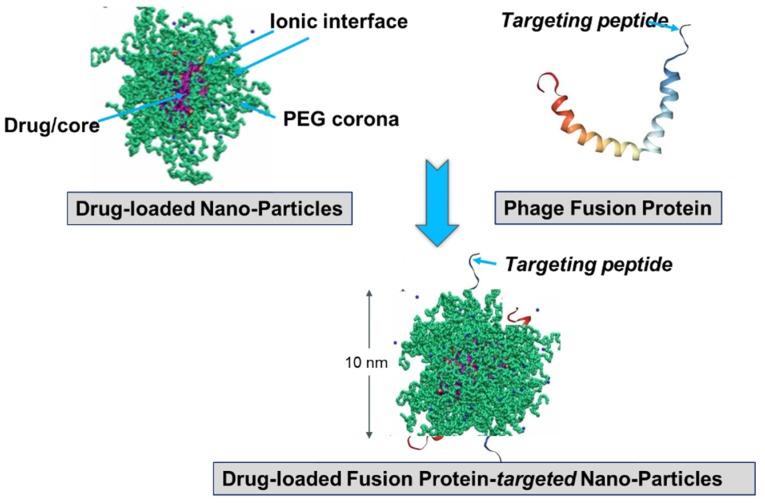
The development of phage engineering technology has led to the construction of a novel type of phage display library-a collection of nanofiber materials with diverse molecular landscapes accommodated on the surface of phage particles. These new nanomaterials, called the "landscape phage", serve as a huge resource of diagnostic/detection probes and versatile construction materials for the preparation of phage-functionalized biosensors and phage-targeted nanomedicines. Landscape-phage-derived probes interact with biological threat agents and generate detectable signals as a part of robust and inexpensive molecular recognition interfaces introduced in mobile detection devices. The use of landscape-phage-based interfaces may greatly improve the sensitivity, selectivity, robustness, and longevity of these devices. In another area of bioengineering, landscape-phage technology has facilitated the development and testing of targeted nanomedicines. The development of high-throughput phage selection methods resulted in the discovery of a variety of cancer cell-associated phages and phage proteins demonstrating natural proficiency to self-assemble into various drug- and gene-targeting nanovehicles. The application of this new "phage-programmed-nanomedicines" concept led to the development of a number of cancer cell-targeting nanomedicine platforms, which demonstrated anticancer efficacy in both in vitro and in vivo experiments. This review was prepared to attract the attention of chemical scientists and bioengineers seeking to develop functionalized nanomaterials and use them in different areas of bioscience, medicine, and engineering.
噬菌体工程技术的发展催生了一种新型噬菌体展示文库——噬菌体颗粒表面容纳的具有多种分子景观的纳米纤维材料集合。这些新型纳米材料被称为“景观噬菌体”,它们是诊断/检测探针的巨大资源,也是制备噬菌体功能化生物传感器和噬菌体靶向纳米药物的多功能构建材料。景观噬菌体衍生的探针与生物威胁剂相互作用,并产生可检测的信号,作为引入移动检测设备中的强大且廉价的分子识别界面的一部分。景观噬菌体基界面的使用可能会极大地提高这些设备的灵敏度、选择性、鲁棒性和寿命。在另一个生物工程领域,景观噬菌体技术促进了靶向纳米药物的开发和测试。高通量噬菌体选择方法的发展导致发现了多种与癌细胞相关的噬菌体和噬菌体蛋白,这些噬菌体蛋白和噬菌体蛋白表现出天然的自组装成各种药物和基因靶向纳米载体的能力。这种新的“噬菌体编程纳米药物”概念的应用导致了许多针对癌细胞的纳米药物平台的开发,这些平台在体外和体内实验中都表现出了抗癌疗效。本文旨在引起寻求开发功能化纳米材料并将其应用于生物科学、医学和工程不同领域的化学科学家和生物工程师的关注。


 Zotero 插件