
蝉类中真菌寄生虫的共生体反复招募。
Recurrent symbiont recruitment from fungal parasites in cicadas.
机构信息
Tropical Biosphere Research Center, University of the Ryukyus, 903-0213 Nishihara, Japan;
Bioproduction Research Institute, National Institute of Advanced Industrial Science and Technology, 305-8566 Tsukuba, Japan.
出版信息
Proc Natl Acad Sci U S A. 2018 Jun 26;115(26):E5970-E5979. doi: 10.1073/pnas.1803245115. Epub 2018 Jun 11.
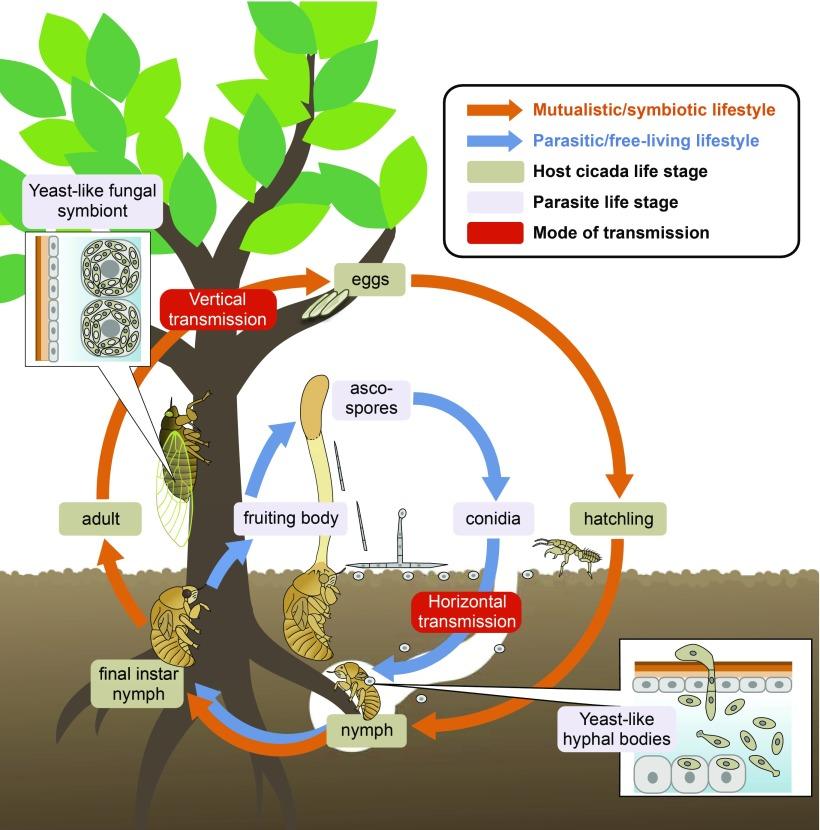
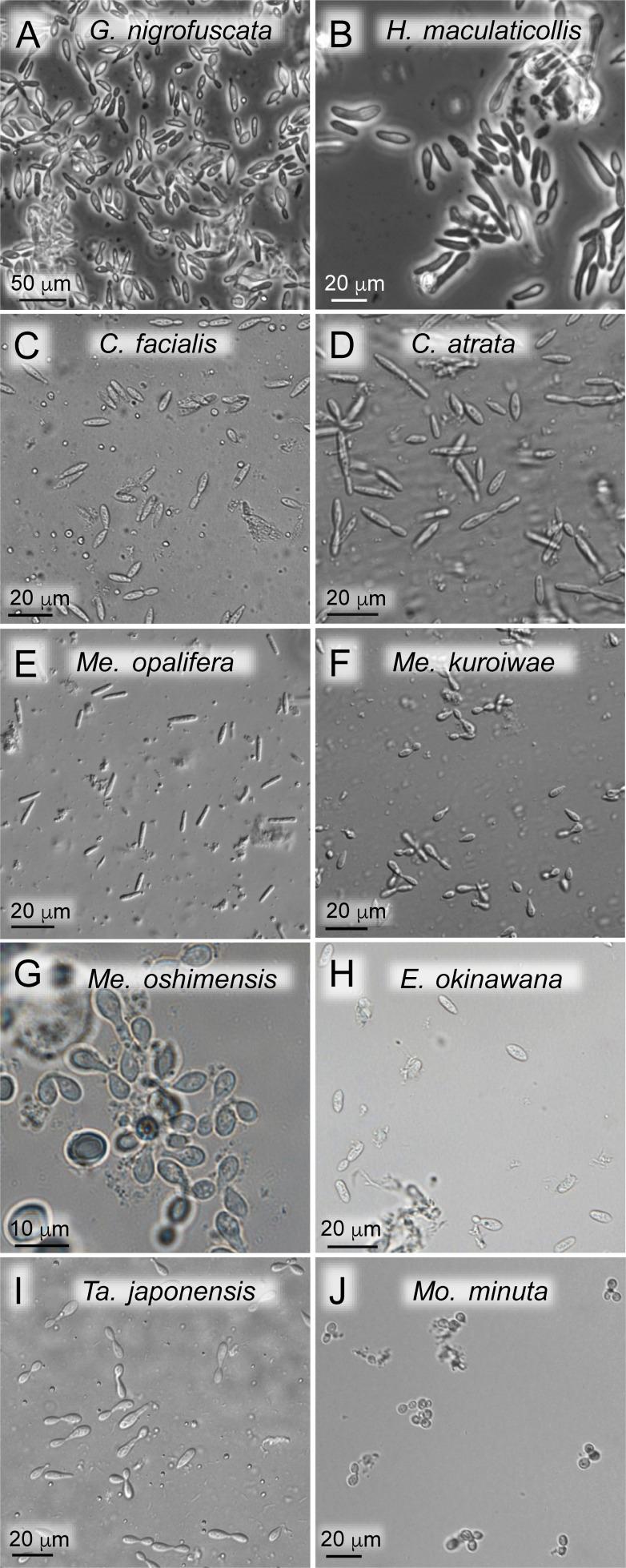
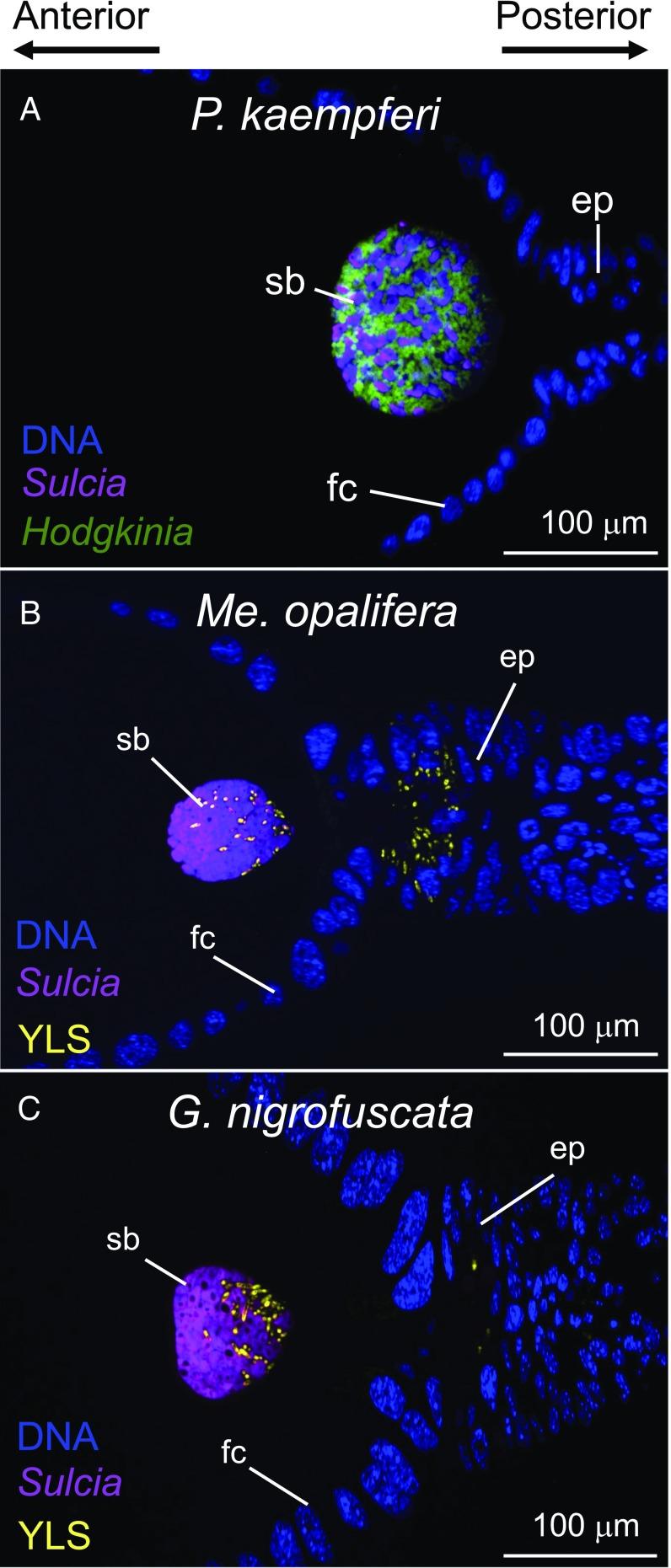
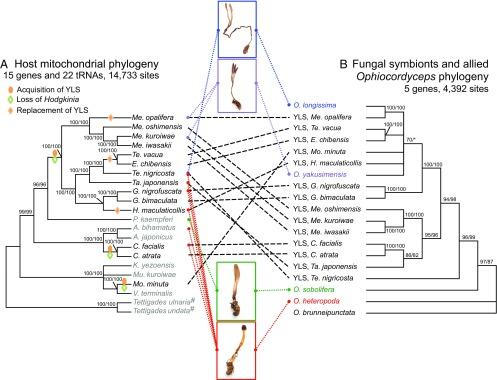
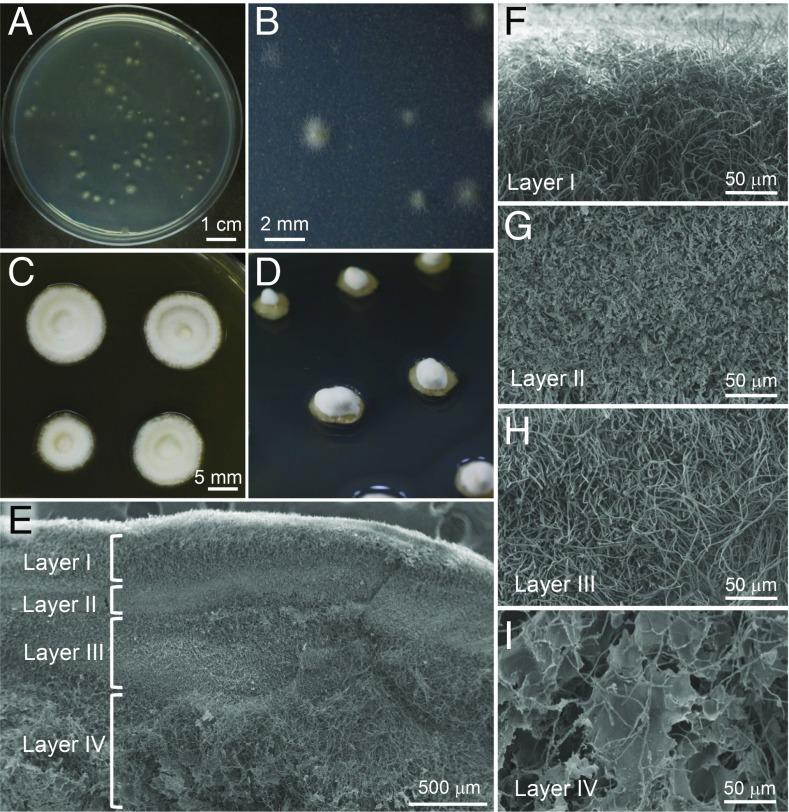
Diverse insects are associated with ancient bacterial symbionts, whose genomes have often suffered drastic reduction and degeneration. In extreme cases, such symbiont genomes seem almost unable to sustain the basic cellular functioning, which comprises an open question in the evolution of symbiosis. Here, we report an insect group wherein an ancient symbiont lineage suffering massive genome erosion has experienced recurrent extinction and replacement by host-associated pathogenic microbes. Cicadas are associated with the ancient bacterial co-obligate symbionts and , whose streamlined genomes are specialized for synthesizing essential amino acids, thereby enabling the host to live on plant sap. However, our inspection of 24 Japanese cicada species revealed that while all species possessed , only nine species retained , and their genomes exhibited substantial structural instability. The remaining 15 species lacked and instead harbored yeast-like fungal symbionts. Detailed phylogenetic analyses uncovered repeated -fungus and fungus-fungus replacements in cicadas. The fungal symbionts were phylogenetically intermingled with cicada-parasitizing fungi, identifying entomopathogenic origins of the fungal symbionts. Most fungal symbionts of cicadas were uncultivable, but the fungal symbiont of was cultivable, possibly because it is at an early stage of fungal symbiont replacement. Genome sequencing of the fungal symbiont revealed its metabolic versatility, presumably capable of synthesizing almost all amino acids, vitamins, and other metabolites, which is more than sufficient to compensate for the loss. These findings highlight a straightforward ecological and evolutionary connection between parasitism and symbiosis, which may provide an evolutionary trajectory to renovate deteriorated ancient symbiosis via pathogen domestication.
不同的昆虫与古老的细菌共生体有关,这些共生体的基因组经常遭受剧烈的减少和退化。在极端情况下,这种共生体的基因组似乎几乎无法维持基本的细胞功能,这是共生进化中的一个悬而未决的问题。在这里,我们报告了一个昆虫群体,其中一个古老的共生体谱系遭受了大规模的基因组侵蚀,经历了反复的灭绝和被宿主相关的致病性微生物取代。蝉与古老的细菌共伴共生体 和 有关,它们简化的基因组专门用于合成必需氨基酸,从而使宿主能够以植物汁液为食。然而,我们对 24 种日本蝉进行了检查,结果表明,尽管所有物种都拥有 ,但只有 9 种保留了 ,而且它们的基因组表现出了显著的结构不稳定性。其余 15 种物种缺乏 ,而是携带了酵母样真菌共生体。详细的系统发育分析揭示了蝉中 - 真菌和真菌-真菌的反复取代。真菌共生体与蝉寄生性真菌在系统发育上相互交织,确定了真菌共生体的昆虫病原起源。大多数蝉的真菌共生体是不可培养的,但 的真菌共生体是可培养的,可能是因为它处于真菌共生体替代的早期阶段。真菌共生体的基因组测序揭示了其代谢的多功能性,大概能够合成几乎所有的氨基酸、维生素和其他代谢物,这足以弥补 的损失。这些发现突出了寄生和共生之间的直接生态和进化联系,这可能为通过病原体驯化来改造恶化的古老共生关系提供了一个进化轨迹。



 Zotero 插件