
斯普斯卡共和国近期为加强门诊护理中抗生素的合理使用所采取的举措;其影响及意义。
Recent Initiatives in the Republic of Srpska to Enhance Appropriate Use of Antibiotics in Ambulatory Care; Their Influence and Implications.
作者信息
Bojanić Ljubica, Marković-Peković Vanda, Škrbić Ranko, Stojaković Nataša, Ðermanović Mirjana, Bojanić Janja, Fürst Jurij, Kurdi Amanj B, Godman Brian
机构信息
Public Health Institute, Banja Luka, Bosnia and Herzegovina.
Department of Pharmacy, Faculty of Medicine, University of Banja Luka, Banja Luka, Bosnia and Herzegovina.
出版信息
Front Pharmacol. 2018 May 29;9:442. doi: 10.3389/fphar.2018.00442. eCollection 2018.
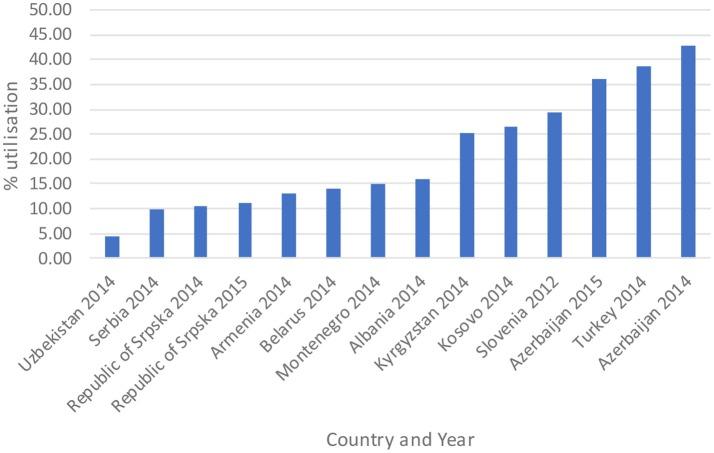
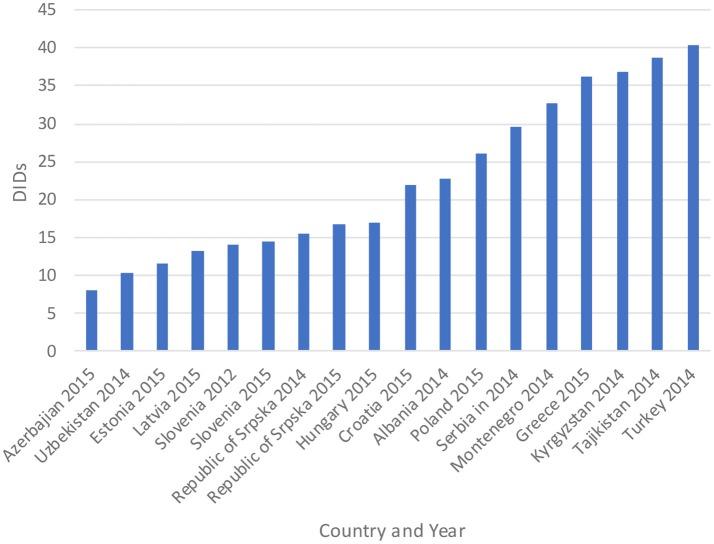
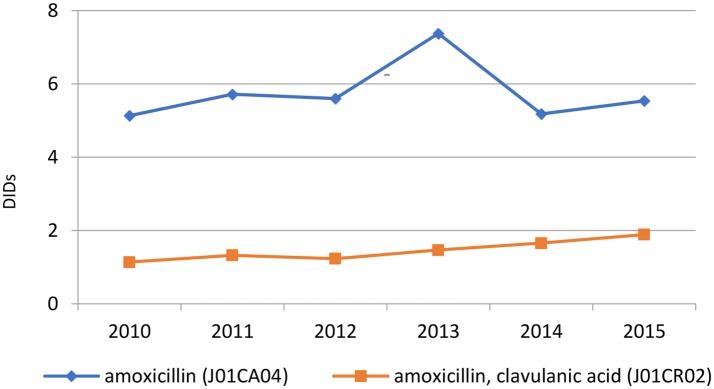
There are increasing concerns world-wide with growing rates of antibiotic resistance necessitating urgent action. There have been a number of initiatives in the Republic of Srpska in recent years to address this and improve rational antibiotic prescribing and dispensing despite limited resources to fund multiple initiatives. Analyse antibiotic utilization patterns in the Republic of Srpska following these multiple initiatives as a basis for developing future programmes in the Republic if needed. Observational retrospective study of total outpatient antibiotic utilization from 2010 to 2015, based on data obtained from the Public Health Institute, alongside documentation of ongoing initiatives to influence utilization. The quality of antibiotic utilization principally assessed according to ESAC, ECDC, and WHO quality indicators and DU 90% (the drug utilization 90%) profile as well as vs. neighboring countries. Following multiple initiatives, antibiotic utilization remained relatively stable in the Republic at 15.6 to 18.4 DIDs, with a decreasing trend in recent years, with rates comparable or lower than neighboring countries. Amoxicillin and the penicillins accounted for 29-40 and 50% of total utilization, respectively. Overall, limited utilization of co-amoxiclav (7-11%), cephalosporins, macrolides, and quinolones, as well as low use of third and fourth generation cephalosporins vs. first and second cephalosporins. However, increasing utilization of co-amoxiclav and azithromycin, as well as higher rates of quinolone utilization compared to some countries, was seen. Multiple interventions in the Republic of Srpska in recent years have resulted in one of the lowest utilization of antibiotics when compared with similar countries, acting as an exemplar to others. However, there are some concerns with current utilization of co-amoxiclav and azithromycin which are being addressed. This will be the subject of future research activities.
全球对抗生素耐药率上升的担忧日益增加,这需要采取紧急行动。近年来,尽管用于资助多项举措的资源有限,但斯普斯卡共和国已经采取了多项举措来应对这一问题,并改善抗生素的合理处方和配药情况。分析斯普斯卡共和国在这些多项举措之后的抗生素使用模式,以便在需要时为该共和国制定未来计划提供依据。基于从公共卫生研究所获得的数据,对2010年至2015年门诊抗生素总使用情况进行观察性回顾研究,并记录影响使用情况的正在进行的举措。抗生素使用质量主要根据欧洲抗菌药物消费监测网络(ESAC)、欧洲疾病预防控制中心(ECDC)和世界卫生组织(WHO)的质量指标以及药物利用90%(DU 90%)概况以及与邻国进行评估。在采取多项举措之后,该共和国的抗生素使用量保持相对稳定,为15.6至18.4日规定剂量数(DIDs),近年来呈下降趋势,其使用率与邻国相当或更低。阿莫西林和青霉素分别占总使用量的29 - 40%和50%。总体而言,阿莫西林克拉维酸钾(7 - 11%)、头孢菌素、大环内酯类和喹诺酮类的使用有限,与第一代和第二代头孢菌素相比,第三代和第四代头孢菌素的使用量较低。然而,观察到阿莫西林克拉维酸钾和阿奇霉素的使用量在增加,与一些国家相比喹诺酮类的使用率也更高。近年来斯普斯卡共和国的多项干预措施使其与类似国家相比成为抗生素使用率最低的国家之一,为其他国家树立了榜样。然而,目前对阿莫西林克拉维酸钾和阿奇霉素的使用存在一些担忧,正在加以解决。这将是未来研究活动的主题。


 Zotero 插件