
定量分析揭示肌动蛋白和Src 家族激酶调控核 YAP1 及其输出。
Quantitative Analysis Reveals that Actin and Src-Family Kinases Regulate Nuclear YAP1 and Its Export.
机构信息
Tumour Cell Biology Laboratory, The Francis Crick Institute, London NW1 1AT, UK; Cell and Developmental Biology Department, University College London, London WC1E 6BT, UK.
Tumour Cell Biology Laboratory, The Francis Crick Institute, London NW1 1AT, UK.
出版信息
Cell Syst. 2018 Jun 27;6(6):692-708.e13. doi: 10.1016/j.cels.2018.05.006. Epub 2018 Jun 18.
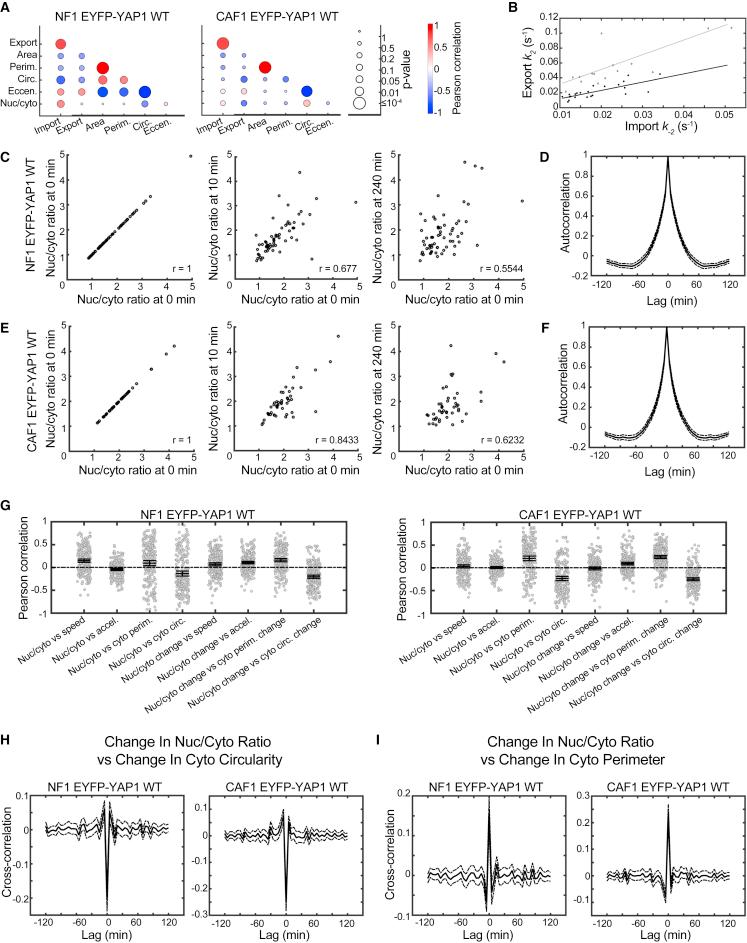
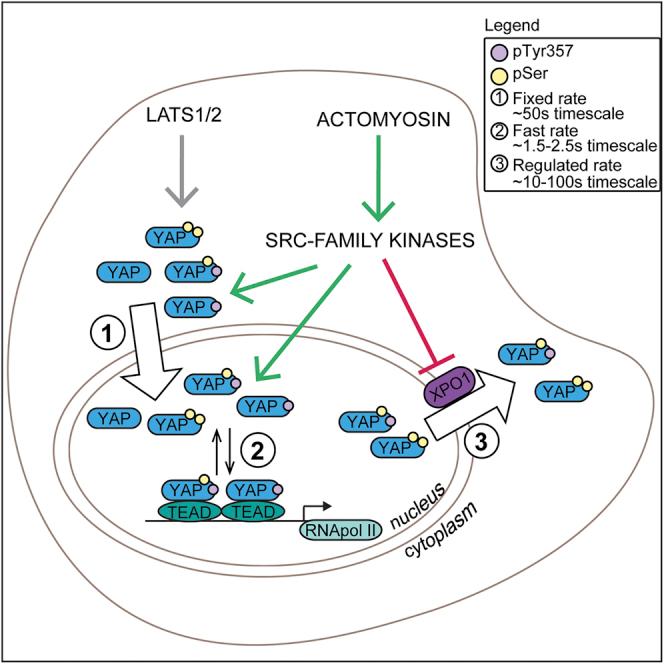
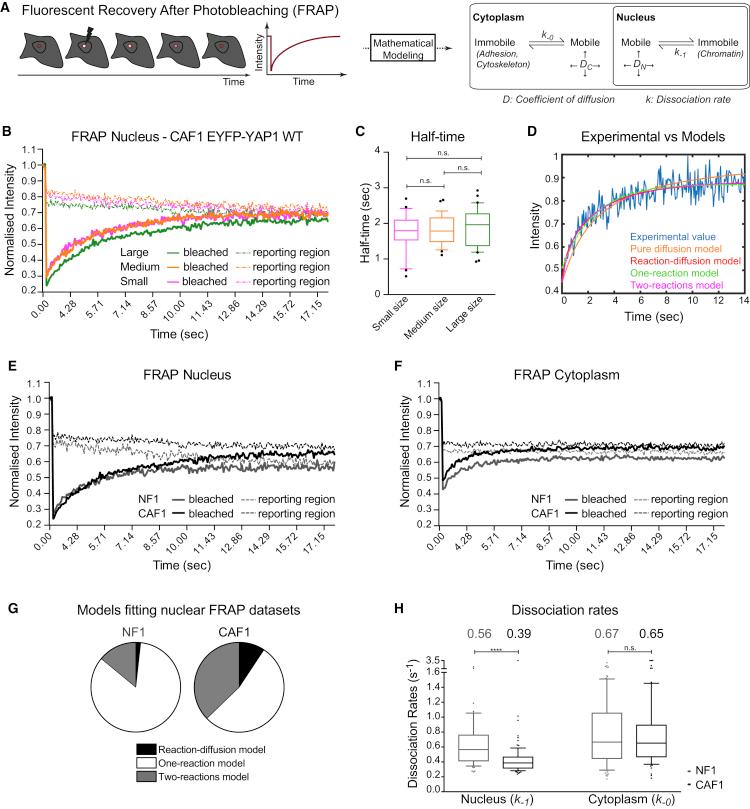
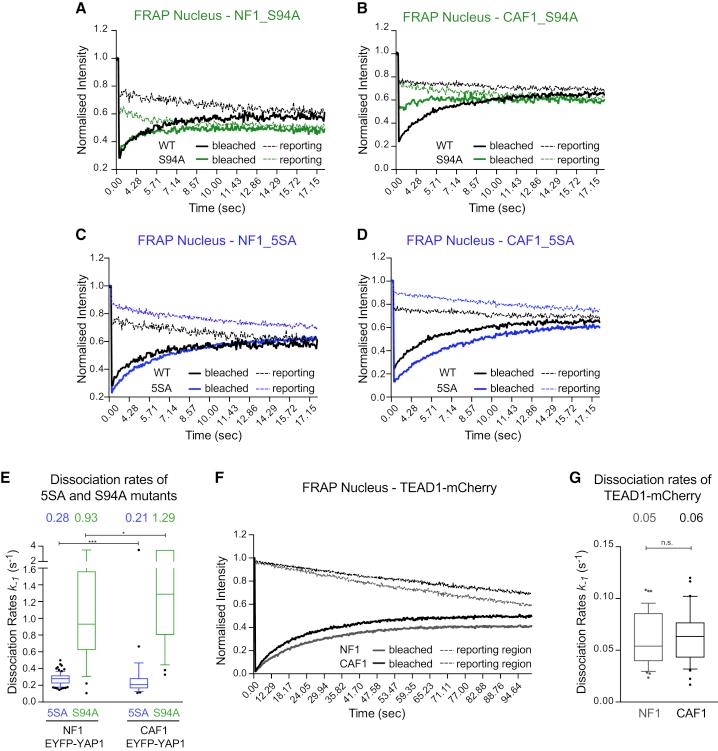
The transcriptional regulator YAP1 is critical for the pathological activation of fibroblasts. In normal fibroblasts, YAP1 is located in the cytoplasm, while in activated cancer-associated fibroblasts, it is nuclear and promotes the expression of genes required for pro-tumorigenic functions. Here, we investigate the dynamics of YAP1 shuttling in normal and activated fibroblasts, using EYFP-YAP1, quantitative photobleaching methods, and mathematical modeling. Imaging of migrating fibroblasts reveals the tight temporal coupling of cell shape change and altered YAP1 localization. Both 14-3-3 and TEAD binding modulate YAP1 shuttling, but neither affects nuclear import. Instead, we find that YAP1 nuclear accumulation in activated fibroblasts results from Src and actomyosin-dependent suppression of phosphorylated YAP1 export. Finally, we show that nuclear-constrained YAP1, upon XPO1 depletion, remains sensitive to blockade of actomyosin function. Together, these data place nuclear export at the center of YAP1 regulation and indicate that the cytoskeleton can regulate YAP1 within the nucleus.
转录调节因子 YAP1 对于成纤维细胞的病理性激活至关重要。在正常成纤维细胞中,YAP1 位于细胞质中,而在激活的癌相关成纤维细胞中,它位于核内,并促进促进肿瘤发生功能所需基因的表达。在这里,我们使用 EYFP-YAP1、定量光漂白方法和数学建模来研究正常和成纤维细胞中 YAP1 的穿梭动力学。对迁移成纤维细胞的成像揭示了细胞形状变化和 YAP1 定位改变之间的紧密时间耦合。14-3-3 和 TEAD 结合都调节 YAP1 的穿梭,但都不影响核输入。相反,我们发现激活的成纤维细胞中 YAP1 的核积累是由于Src 和肌动球蛋白依赖性抑制磷酸化 YAP1 输出所致。最后,我们表明,在 XPO1 耗竭后,核受限的 YAP1 仍然对肌动球蛋白功能的阻断敏感。总之,这些数据将核输出置于 YAP1 调节的中心位置,并表明细胞骨架可以在核内调节 YAP1。


 Zotero 插件