
用于提高全身生物利用度的人参皂苷微/纳米给药系统。
Micro-/nano-sized delivery systems of ginsenosides for improved systemic bioavailability.
作者信息
Kim Hyeongmin, Lee Jong Hyuk, Kim Jee Eun, Kim Young Su, Ryu Choong Ho, Lee Hong Joo, Kim Hye Min, Jeon Hyojin, Won Hyo-Joong, Lee Ji-Yun, Lee Jaehwi
机构信息
College of Pharmacy, Chung-Ang University, Seoul 06974, Korea.
Department of Pharmaceutical Engineering, College of Life and Health Sciences, Hoseo University, Asan, Republic of Korea.
出版信息
J Ginseng Res. 2018 Jul;42(3):361-369. doi: 10.1016/j.jgr.2017.12.003. Epub 2018 Jan 9.
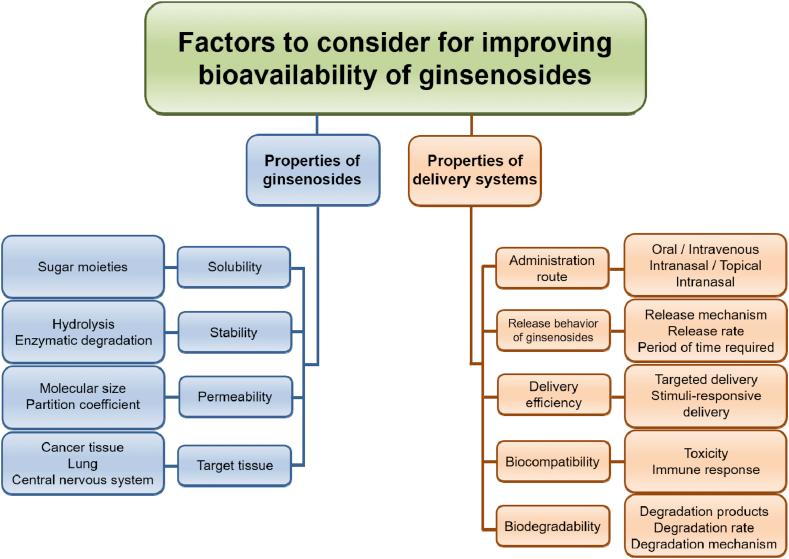
Ginsenosides, dammarane-type triterpene saponins obtained from ginseng, have been used as a natural medicine for many years in the Orient due to their various pharmacological activities. However, the therapeutic potential of ginsenosides has been largely limited by the low bioavailability of the natural products caused mainly by low aqueous solubility, poor biomembrane permeability, instability in the gastrointestinal tract, and extensive metabolism in the body. To enhance the bioavailability of ginsenosides, diverse micro-/nano-sized delivery systems such as emulsions, polymeric particles, and vesicular systems have been investigated. The delivery systems improved the bioavailability of ginsenosides by enhancing solubility, permeability, and stability of the natural products. This mini-review aims to provide comprehensive information on the micro-/nano-sized delivery systems for increasing the bioavailability of ginsenosides, which may be helpful for designing better delivery systems to maximize the versatile therapeutic potential of ginsenosides.
人参皂苷是从人参中提取的达玛烷型三萜皂苷,由于其多种药理活性,在东方已被用作天然药物多年。然而,人参皂苷的治疗潜力在很大程度上受到天然产物低生物利用度的限制,这主要是由于其低水溶性、差的生物膜通透性、胃肠道不稳定性以及体内广泛代谢所致。为了提高人参皂苷的生物利用度,人们研究了多种微/纳米级给药系统,如乳剂、聚合物颗粒和囊泡系统。这些给药系统通过提高天然产物的溶解度、通透性和稳定性,改善了人参皂苷的生物利用度。本综述旨在提供有关提高人参皂苷生物利用度的微/纳米级给药系统的全面信息,这可能有助于设计更好的给药系统,以最大限度地发挥人参皂苷的多种治疗潜力。
 Zotero 插件